

Best Lion's Mane Supplement: Fruiting Body vs. Mycelium, Explained
The best Lion's Mane supplement is an extract that clearly says whether it uses the fruiting body or mycelium, states its dose, lists no grain or fillers, and is third-party tested. The fruiting body and mycelium contain different compounds: hericenones come from the fruiting body, and erinacines come mainly from the mycelium. Most mycelium supplements are grown on grain, and the grain often stays in the product, which dilutes it. Human research on Lion's Mane is still small. One 2023 trial gave healthy young adults 1.8g a day, and the authors said the study was too small to detect modest effects. Choose a format you'll take consistently: powder, capsules, or a dual-extract tincture.
What Is the Difference Between Lion's Mane Fruiting Body and Mycelium?
The fruiting body is the shaggy white mushroom you can see, and the mycelium is the root-like network it grows from.
- Fruiting body: the harvested mushroom. It's what's sold fresh at markets and what traditional use centers on.
- Mycelium: threads that grow through a food source. In supplements, it's often grown on rice or oats, then dried and ground with the grain.
Both are real parts of the same organism. The difference that matters most on a label is whether grain came along with the mycelium.
Hericenones vs. Erinacines: Which Compounds Come From Where?
Hericenones come from the fruiting body, and erinacines come mainly from the mycelium. Both are studied mostly in cell and animal research so far.
| Compound | Found in | Research stage |
|---|---|---|
| Hericenones | Fruiting body | Mostly cell and animal studies |
| Erinacines | Mycelium | Mostly cell and animal studies |
| Beta-glucans | Both | Studied across many mushrooms |
Researchers have isolated hericenones from the fruiting body, and erinacine research centers on mycelium. This is why "fruiting body vs. mycelium" isn't a simple good vs. bad question. They carry different compounds. The practical problem is grain filler, which adds bulk without adding either.
Where Can You Buy a Fruiting Body Lion's Mane Extract?
You can buy Lion's Mane from Naturealm in three forms, all made from organic Lion's Mane fruiting bodies.
- Lion's Mane Extract Powder: stirs into coffee, tea, or smoothies.
- Lion's Mane Extract Capsules: no taste, no prep.
- Lion's Mane Liquid Dual-Extract: alcohol and hot water extraction, taken in drops.
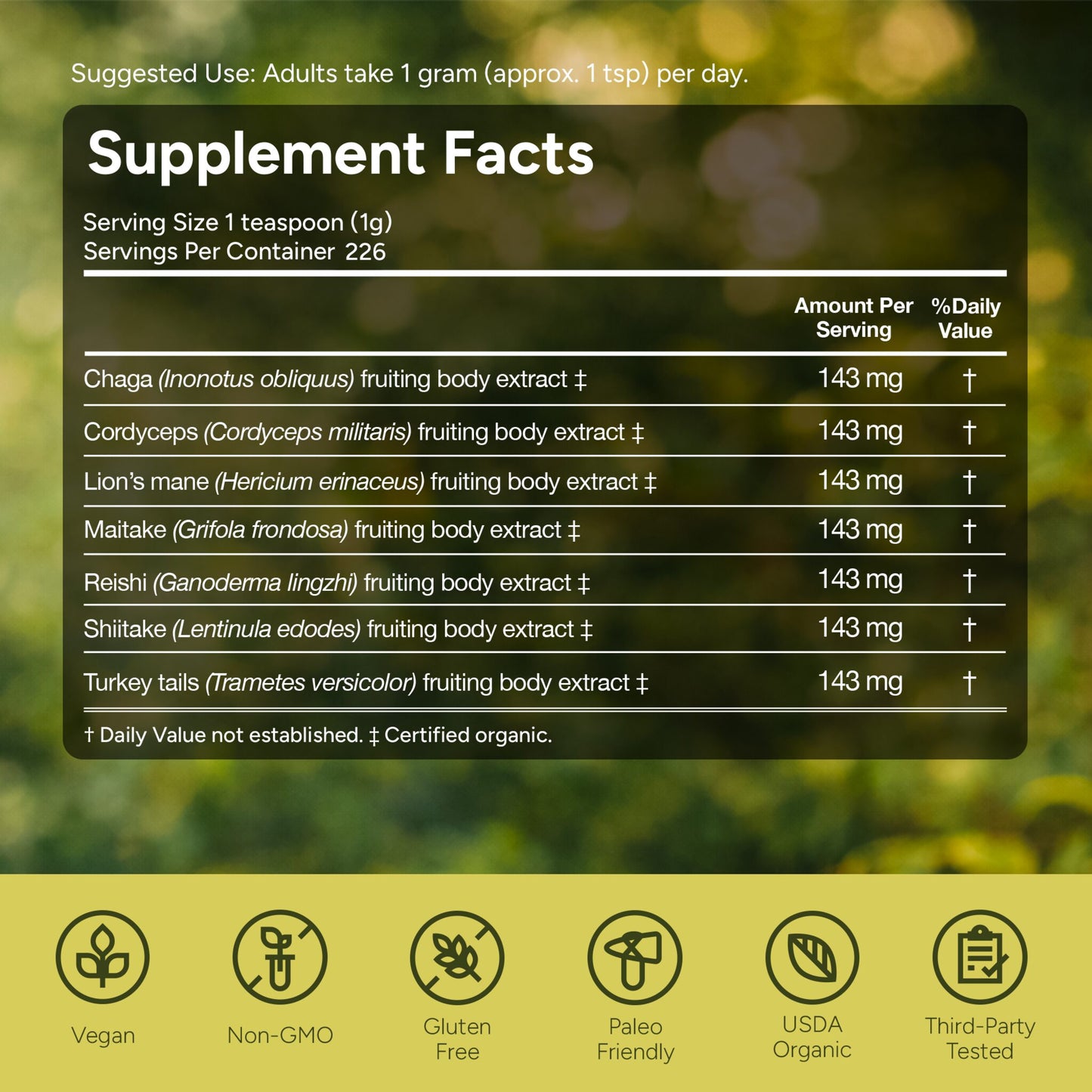
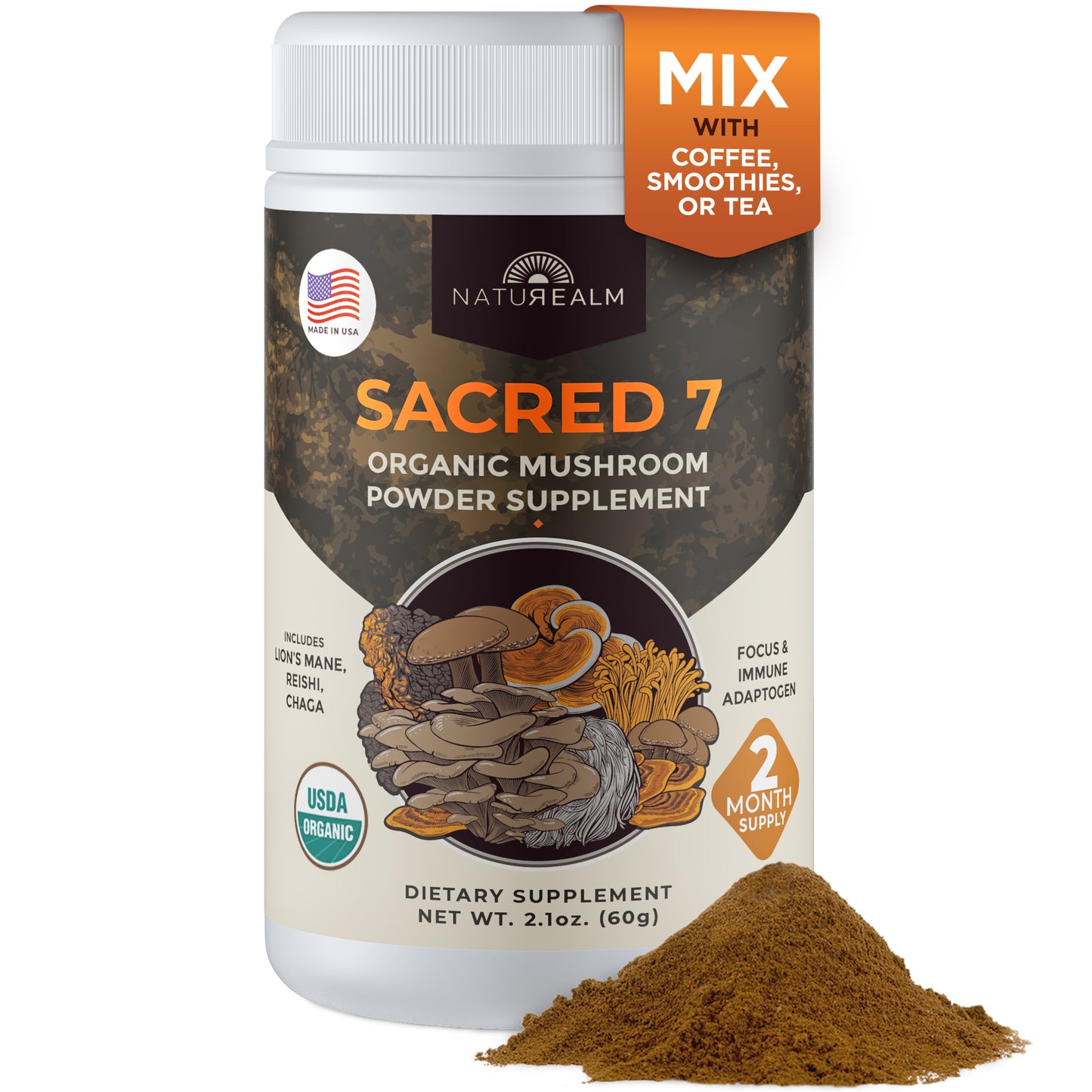
The powder and capsules contain no mycelium, grains, or fillers. Sacred 7 also includes 143mg of Lion's Mane per serving, alongside six other mushrooms.
Is Mycelium Lion's Mane Bad?
No, mycelium isn't bad on its own. Mycelium grown on grain, with the grain left in, is the problem.
Some mycelium is grown in liquid culture and separated from its growing medium, which avoids grain entirely. Most budget mycelium products, though, are "myceliated grain": rice or oats colonized by mycelium, dried, and ground whole. A large share of that powder can be the grain itself.
If a label says mycelium, look for how it was grown. If the ingredients list rice, oats, or "myceliated" anything, some of what you're buying is grain.
What Does the Human Research on Lion's Mane Show?
The human research is early and small. Most Lion's Mane studies are in cells or animals.
One of the clearer human trials is Docherty, Doughty, and Smith (2023, Nutrients). They gave 41 healthy young adults 1.8g of Lion's Mane a day for 28 days. After a single dose, participants completed a Stroop test faster an hour later. After 28 days, there was a trend toward lower self-reported stress that didn't reach statistical significance, and other measures didn't change. The authors said the study was too small to reliably detect modest effects.
That's the honest state of things: promising early signals, not settled answers. It's also why dose and product quality matter, since studies use gram amounts of a known product. For how this applies to mushroom coffee, see Is Mushroom Coffee Worth It? What the Research Actually Shows.
How Much Lion's Mane Do Studies Use?
Human studies typically use about 1 to 3 grams of Lion's Mane a day. Follow the serving size on your product's label.
The Docherty trial used 1.8g daily, and the NIH's LiverTox summary of Lion's Mane lists other human studies using roughly 1 to 3 grams a day. Blends, including Sacred 7, contain far less Lion's Mane per serving because the serving is shared across several mushrooms. If Lion's Mane is your main focus, a single-mushroom product gets you closer to studied amounts. For another single-mushroom guide, see Best Reishi Supplement: What to Look For.
Should You Take Lion's Mane as Powder, Capsules, or a Tincture?
Take it in whatever form you'll use every day. Consistency matters more than format.
- Powder: best if you already have a morning coffee or tea routine. See how to add it to coffee.
- Capsules: best if you don't want to taste it.
- Tincture: best if you want a dual extract and a quick, portable dose.
For a side-by-side of formats, see Mushroom Coffee vs. Mushroom Powder vs. Capsules. If you're replacing a mushroom coffee, see What Is the Best Mushroom Coffee Alternative?
What Should You Look for on a Lion's Mane Label?
Look for the same five things as any mushroom supplement, with extra attention to how the mycelium was grown if it's used.
- Mushroom part: fruiting body, mycelium, or both, stated clearly.
- Extraction: "extract" plus the method, such as hot water or dual extraction.
- Dose: milligrams of Lion's Mane per serving.
- No grain: no rice, oats, or myceliated grain in the ingredients.
- Testing: third-party tested, with a COA available on request.
For the full label guide, see How to Choose a Mushroom Supplement Blend: 5 Things to Check on the Label.
These statements have not been evaluated by the Food and Drug Administration. This product is not intended to diagnose, treat, cure, or prevent any disease.