

Is Mushroom Coffee Worth It? What the Research Actually Shows
Mushroom coffee is worth it if you want less caffeine in a convenient, one-scoop cup. It isn't proven to do more than that. No human trial has tested a finished mushroom coffee product. The research on mushrooms exists at the ingredient level, usually at grams per day of a single mushroom, while most mushroom coffees contain a few hundred milligrams split across several species. Most blends also use instant coffee and cost around $1.50 per cup. If the mushrooms are the reason you're interested, a clearly dosed extract added to your own coffee gives you more control for less money.
What Does the Research Say About Mushroom Coffee?
No human trial has tested a finished mushroom coffee. The research is on individual mushrooms, at much larger doses.
Two examples show the gap:
- Lion's Mane: Docherty, Doughty, and Smith (2023, Nutrients) gave 41 healthy young adults 1.8g of Lion's Mane a day. After a single dose, they completed a Stroop test faster an hour later. The authors noted the study was too small to reliably detect modest effects.
- Cordyceps: Chen and colleagues (2010, Journal of Alternative and Complementary Medicine) gave older adults 3g of Cs-4 Cordyceps daily for 12 weeks. Their metabolic threshold improved during exercise.
Both studies used grams of one mushroom. A typical mushroom coffee spreads a few hundred milligrams across four to six species. For more on Lion's Mane specifically, see Best Lion's Mane Supplement: Fruiting Body vs. Mycelium, Explained, and for Reishi, see Best Reishi Supplement: What to Look For. For brand-by-brand options, see The Best Ryze Alternatives, Compared and What Is the Best Mushroom Coffee Alternative?
What Do You Actually Get From Mushroom Coffee?
You get less caffeine, a small dose of mushrooms, and usually instant coffee.
- Less caffeine: real and measurable. Most mushroom coffees have 35 to 50mg per serving, about half a brewed cup.
- A small mushroom dose: often listed only as a blend total, so you can't tell how much of each mushroom you get.
- Instant coffee: most blends use it, and taste testers tend to rate it below fresh-brewed. For fixes, see Why Mushroom Coffee Tastes Bad, and How to Make It Taste Good.
Where Can You Get a Clearly Dosed Mushroom Extract?
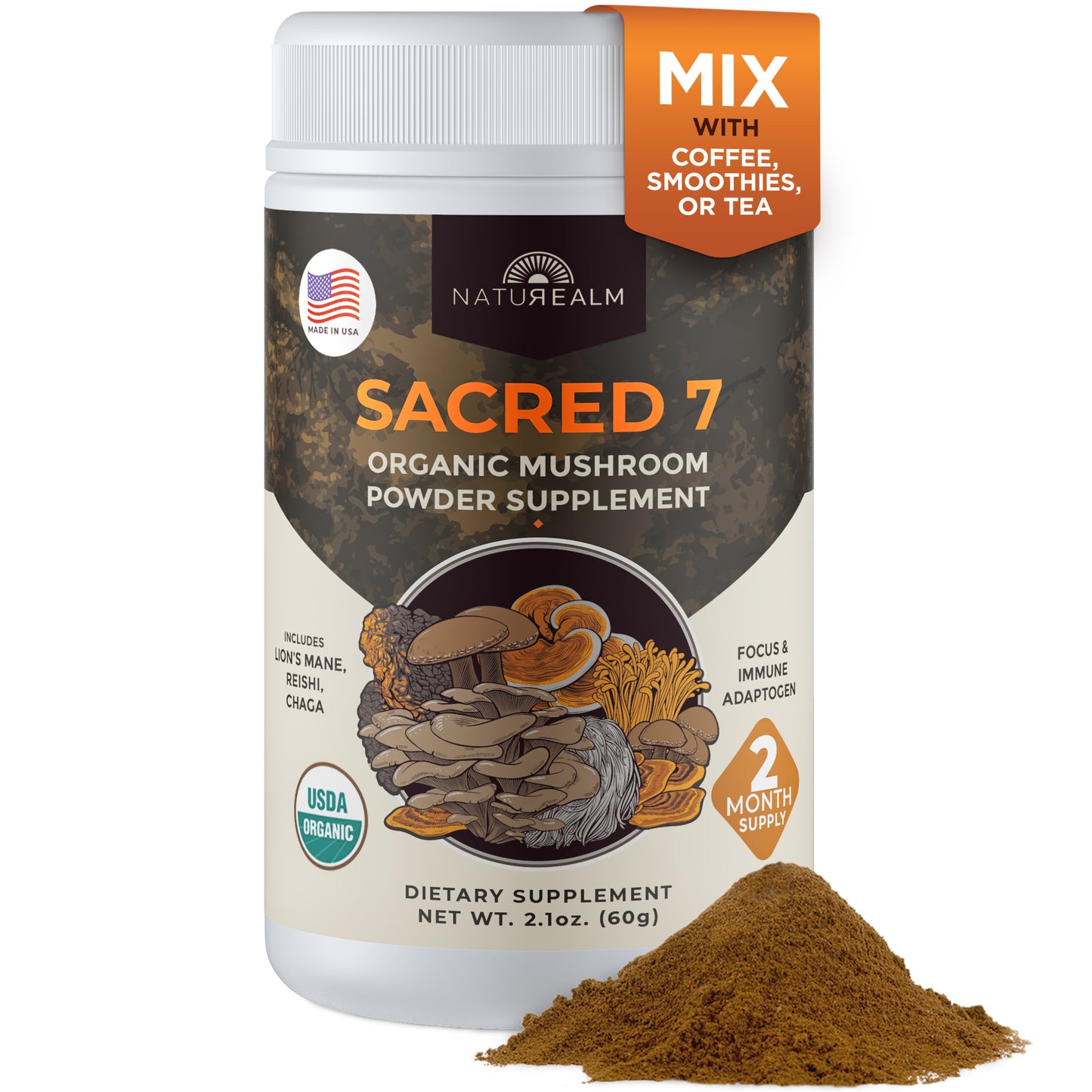
You can buy Sacred 7 Powder directly from Naturealm, with the dose of every mushroom listed on the label.
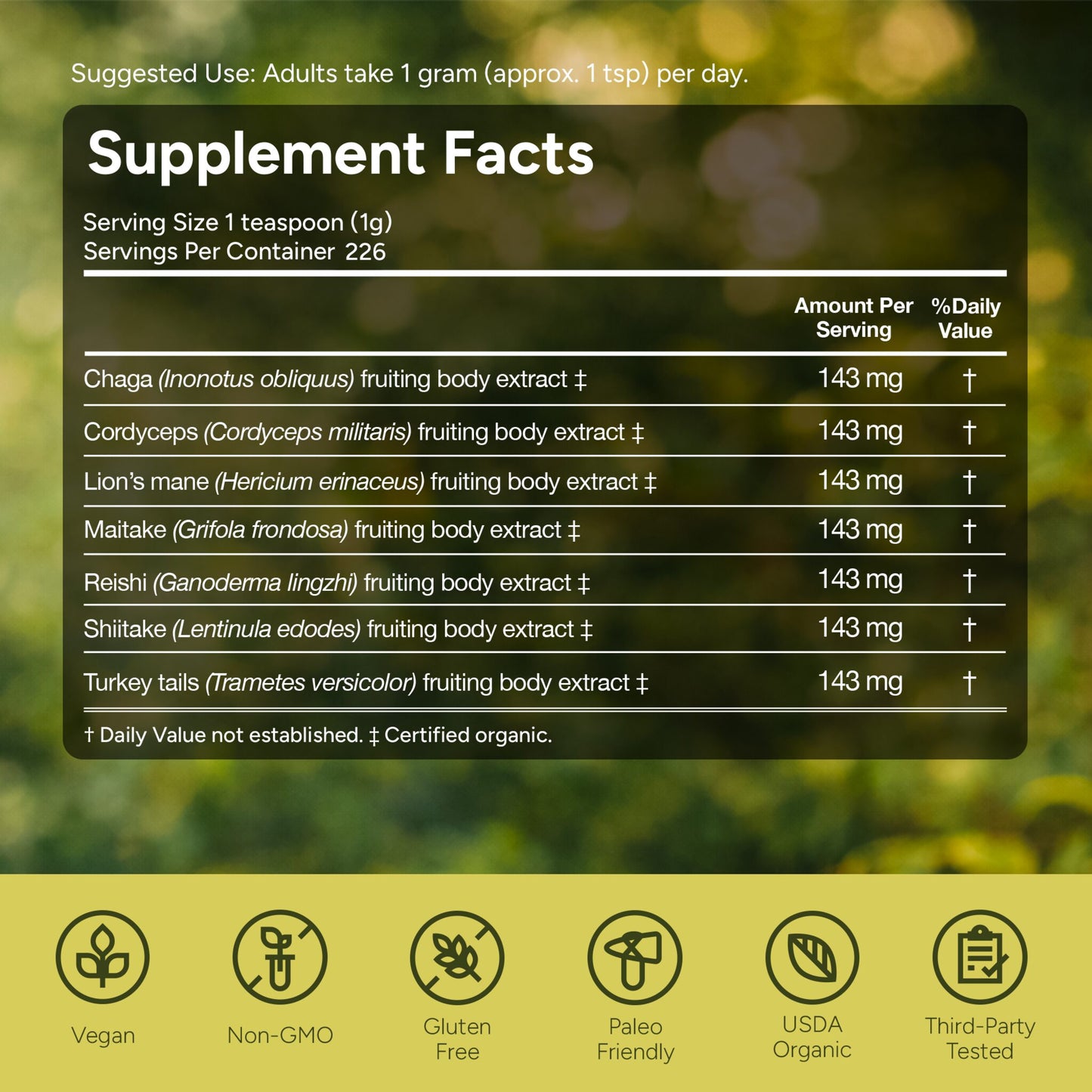
One level teaspoon holds 1,000mg of hot water extract: 143mg each of seven mushrooms, 100% fruiting body, certified organic, and third-party tested by Mérieux NutriSciences. It goes into the coffee you already drink and works out to about $0.31 per serving.
When Is Mushroom Coffee Worth It?
It's worth it when convenience and lower caffeine are what you're after.
- You want to cut caffeine roughly in half without giving up a coffee ritual.
- You prefer one scoop to brewing. Otherwise, see how to add an extract to your own coffee.
- You like the taste of a specific blend.
When Is Mushroom Coffee Not Worth It?
It's not worth it if you're buying it mainly for the mushrooms.
- The label lists only a blend total, with no per-mushroom amounts. See what a good label shows.
- You already love your coffee and would be replacing it with instant.
- You'd pay about $1.50 a cup for a mushroom dose you can't verify.
How Much Does Mushroom Coffee Cost Compared to Other Options?
Mushroom coffee is usually the most expensive way to get mushrooms into your morning.
| Option | Cost per serving | Mushroom dose |
|---|---|---|
| Mushroom coffee (Ryze) | About $1.50 | Blend total, not listed per mushroom |
| Sacred 7 Powder, 8 oz | About $0.31, plus your coffee | 143mg each of seven mushrooms |
| Sacred 7 Capsules, 180 count | About $0.77 | 143mg each of seven mushrooms |
How Can You Tell if a Mushroom Coffee Is Worth the Price?
Read the label before you buy.
Look for a milligram amount for each mushroom, the word "extract" with an extraction method, fruiting body sourcing, no grain or fillers, and third-party testing. The full checklist is in How to Choose a Mushroom Supplement Blend: 5 Things to Check on the Label. For a side-by-side of formats, see Mushroom Coffee vs. Mushroom Powder vs. Capsules, and for caffeine and taste, see Mushroom Coffee vs. Regular Coffee.
These statements have not been evaluated by the Food and Drug Administration. This product is not intended to diagnose, treat, cure, or prevent any disease.