
Mushroom Coffee vs. Regular Coffee: Caffeine, Taste, and Cost Compared
The biggest measurable difference between mushroom coffee and regular coffee is caffeine. Most mushroom coffees have about 35 to 50mg per serving, while an 8-ounce cup of brewed coffee has about 95mg. Mushroom coffee also adds a small, fixed dose of mushroom powder, and most brands use instant coffee, which tastes flatter than fresh-brewed. It usually costs more per cup: Ryze, for example, works out to about $1.50 per serving. No human trial has tested a finished mushroom coffee product. A third option is to keep your regular coffee and stir in a mushroom extract, which adds no caffeine and lets you choose the dose.
What's the Difference Between Mushroom Coffee and Regular Coffee?
Mushroom coffee is coffee blended with mushroom powder, usually with less coffee and less caffeine per cup.
| Regular coffee | Mushroom coffee | Regular coffee + Sacred 7 | |
|---|---|---|---|
| Caffeine | About 95mg (8 oz brewed) | Usually 35 to 50mg | Same as your coffee |
| Coffee base | Whatever you brew | Usually instant | Whatever you brew |
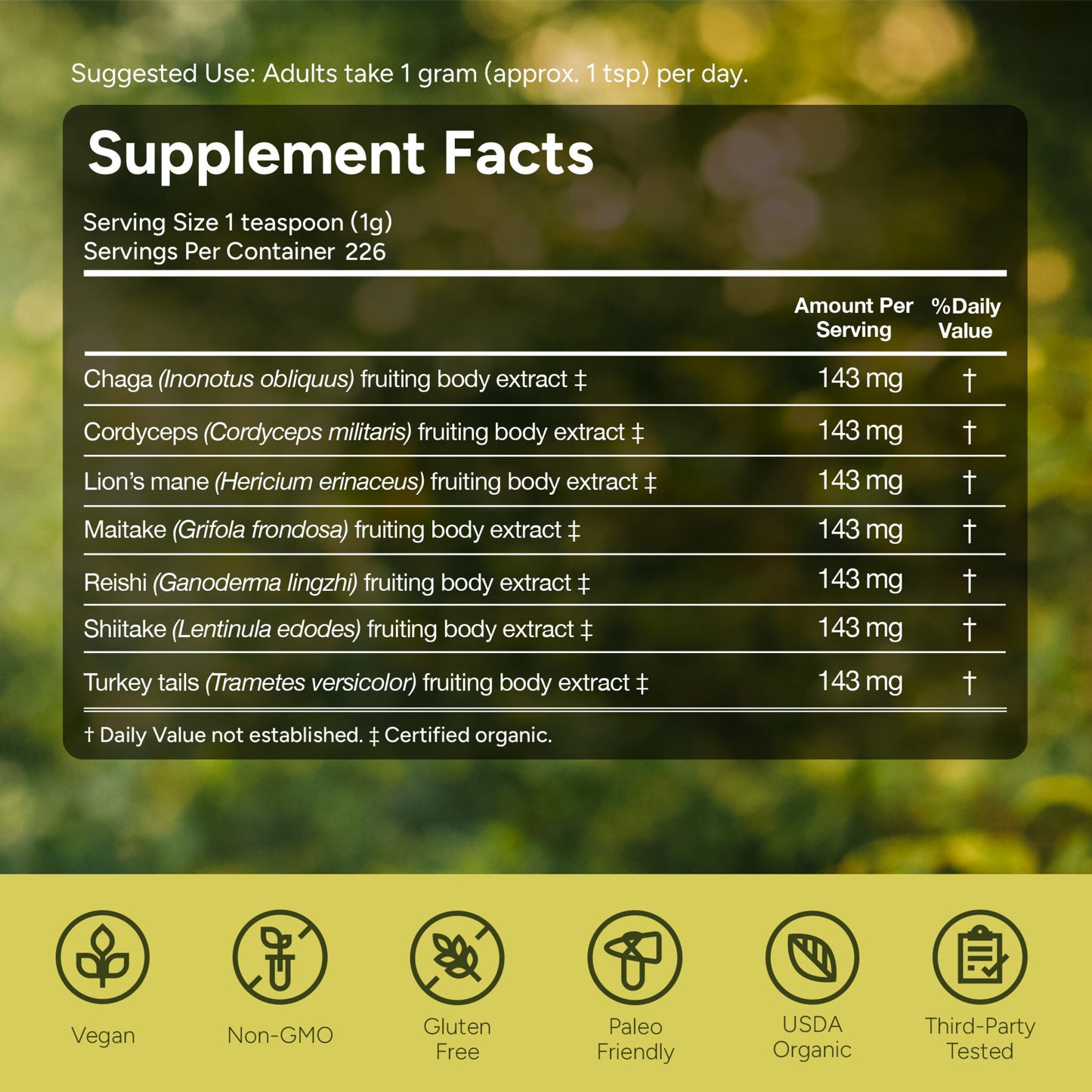
| Mushrooms | None | Fixed dose, often a blend total | 1,000mg, 143mg per mushroom |
| Taste | Your coffee | Coffee plus earthy notes | Your coffee plus a mild earthy note |
| Cost per cup | Your coffee | About $1.50 (Ryze) | Your coffee plus about $0.31 |
How Much Caffeine Is in Mushroom Coffee vs. Regular Coffee?
Mushroom coffee usually has about half the caffeine of regular coffee.
The reduction comes from dilution: mushrooms contain no caffeine, so blends that replace some coffee with mushroom powder carry less. Ryze lists 48mg per serving, and Taste of Home's tester noted 45mg per serving in Atlas+. An 8-ounce cup of brewed coffee has about 95mg.
For reference, the FDA cites 400mg a day as an amount most healthy adults can have, about two to three 12-ounce cups of coffee.
Free tool
How close is your day to 400mg? Add every coffee, tea, soda, and square of dark chocolate to our caffeine calculator to see your total, how much is still in your system at bedtime, and what one swap would change.
Where Can You Get Mushrooms Without Giving Up Your Coffee?
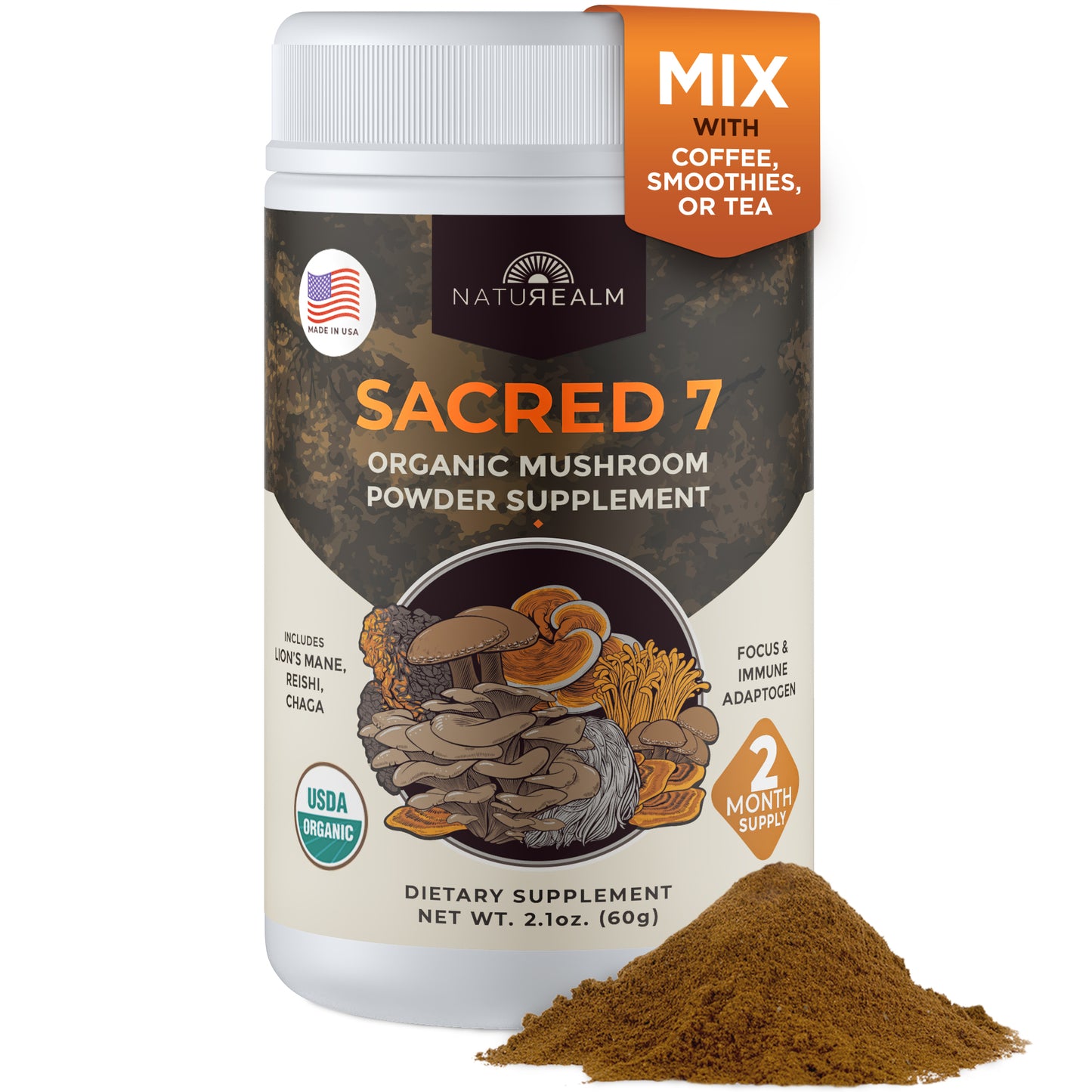
You can buy Sacred 7 Powder directly from Naturealm and stir it into the coffee you already drink.
It adds no caffeine and no coffee of its own. Each level teaspoon holds 1,000mg of hot water extract, 143mg each of seven mushrooms, 100% fruiting body and certified organic. The 8 oz bag works out to about $0.31 per serving. Here's how to add it.
Does Mushroom Coffee Taste Like Regular Coffee?
It's close, with an earthy edge. Instant blends get the most complaints.
Chowhound ranked eight mushroom coffees and found wide differences in flavor and texture. Brewed options tend to taste the most like regular coffee: a dietitian testing brewed Four Sigmatic found it looks, smells, and tastes just like coffee. For ways to improve the taste, see Why Mushroom Coffee Tastes Bad, and How to Make It Taste Good. For specific brands, see The Best Ryze Alternatives, Compared.
Is Mushroom Coffee Healthier Than Regular Coffee?
There's no direct evidence either way. No human trial has tested a finished mushroom coffee product.
The difference you can measure is caffeine. Mushroom coffee has less of it, which some people prefer. The mushroom research exists at the ingredient level, usually at single-mushroom doses of grams per day, while most mushroom coffees contain a few hundred milligrams split across several species. For a closer look, see Is Mushroom Coffee Worth It? What the Research Actually Shows. For one example of single-mushroom research, see Best Lion's Mane Supplement: Fruiting Body vs. Mycelium, Explained.
Is Mushroom Coffee Less Acidic Than Regular Coffee?
Mushroom coffee is often marketed as less acidic, but we didn't find published testing of finished products.
Brewing method seems to matter more. A 2018 study in Scientific Reports found cold brew had fewer total acids than hot coffee, though the pH of the two was about the same. If acidity bothers you, cold brew is a better-documented swap.
Which Should You Choose?
Choose based on caffeine and how much you like your current coffee.
- You love your coffee and want mushrooms: keep it and add an extract. See Can You Add Mushroom Powder to Coffee?
- You want less caffeine and one scoop: mushroom coffee works. Check the label for per-mushroom doses, using these five checks.
- You want no caffeine at all: try a caffeine-free blend or capsules. See What Is the Best Mushroom Coffee Alternative?
- You want no taste and no prep: capsules. See Mushroom Coffee vs. Mushroom Powder vs. Capsules.
Frequently Asked Questions
Is Mushroom Coffee Just Instant Coffee?
Usually, yes. Most mushroom coffee brands use instant coffee as the base, which tastes flatter than fresh-brewed coffee and draws the most complaints from taste testers. Brewed options exist and tend to taste the most like regular coffee. If you'd rather keep your own brew, you can stir a mushroom extract into it instead.
Is Mushroom Coffee More Expensive Than Regular Coffee?
Usually, yes. Ryze, for example, works out to about $1.50 per serving, more than a cup brewed at home typically costs. Stirring Sacred 7 Powder into the coffee you already make adds about $0.31 per serving from the 8 oz bag, with seven mushrooms and no extra caffeine.
How Much Mushroom Is Actually in a Cup of Mushroom Coffee?
Usually a few hundred milligrams, split across several species. Many labels list only a blend total, so you can't tell how much of each mushroom you're getting or whether it comes from fruiting bodies. You can check any product in about 60 seconds with the label checker.
Can Mushroom Coffee Help You Cut Back on Caffeine?
Yes. Most mushroom coffees have about 35 to 50mg of caffeine per serving, roughly half the 95mg in an 8-ounce cup of brewed coffee. Swapping one cup lowers your daily total without giving up the ritual. For reference, the FDA cites 400mg a day as an amount most healthy adults can have. To see your own total, try the caffeine calculator.
These statements have not been evaluated by the Food and Drug Administration. This product is not intended to diagnose, treat, cure, or prevent any disease.