


How Lion's Mane Can Help Treat Tinnitus Naturally
Tinnitus is a condition that can cause ringing, buzzing, roaring, hissing, or whistling in the ears. The volume of these sounds can range from barely noticeable to unbearably loud. Over 50 million Americans experience tinnitus, most of them sporadically. However, about twenty-five percent of people live with their symptoms daily. A complex condition that can stem from various causes, finding the best path to managing symptoms can be challenging.
The most common causes of long-term tinnitus are hearing loss and chronic health conditions or injuries that affect nerves in the inner ear or the temporal lobe (the hearing center of the brain). Even though tinnitus manifests as noise in the ears, some experts believe that these phantom sounds are the brain compensating for hearing loss by becoming overly sensitive to all sounds. Most treatments now focus on dialing down symptoms to more tolerable levels.
Lion's Mane as a Treatment for Tinnitus
Lion's Mane (Hericium erinaceus) has been used for thousands of years in Traditional Chinese Medicine (TCM), mainly for their affinity to heal and prevent a spectrum of gastrointestinal conditions, from ulcers to cancers.
Like most medicinal mushrooms, Lion's Mane is quite the overachiever because there is much more to it than meets the eye. The mushroom is not only anti-bacterial and anti-inflammatory but can also lower blood pressure, regulate blood sugar, and balance the immune system (1). Like a gift that keeps on giving, Lion's Mane is packed with antioxidants that are protective against cancer and nerve damage.
As if all of those health benefits weren't enough, what has tinnitus sufferers feeling the most hopeful is the erinacines found in Lion's Mane. A 2012 animal study showed that erinacines help the body make nerve growth factor (NGF), boosting our ability to repair and regenerate neurons (nerve cells in the brain and spinal cord). The possibility that Lion's Mane might regrow neurons is welcome news to anyone living with a neurological condition like Alzheimer's, Parkinson's, or chronic tinnitus because, until the 1960s, scientists didn't even think damaged neurons could make a comeback in adults (2).
Note: Erinacines are found in the mycelium of Lion's Mane, while hericenones are found in the fruiting body. Both compounds are studied for their ability to stimulate NGF production.
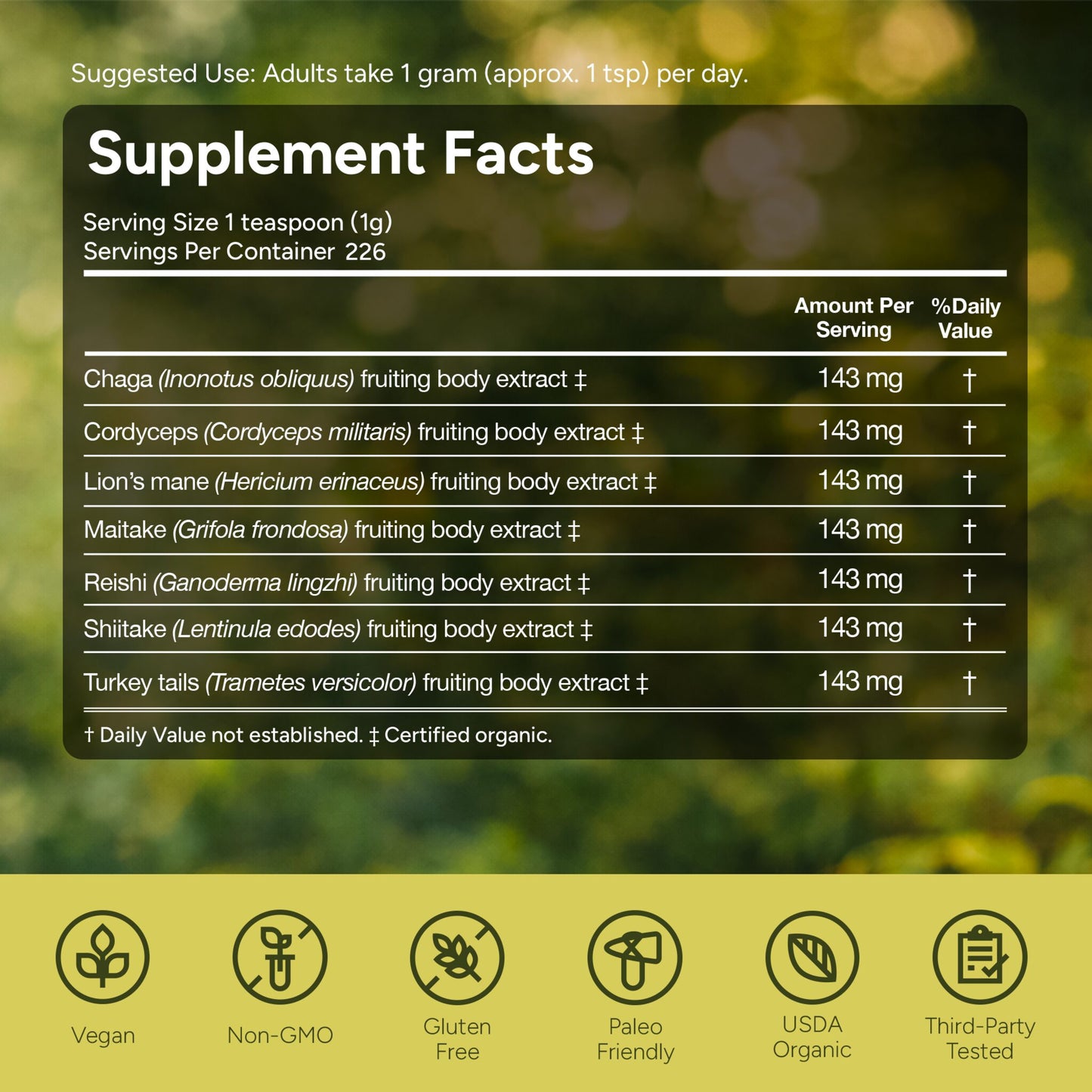
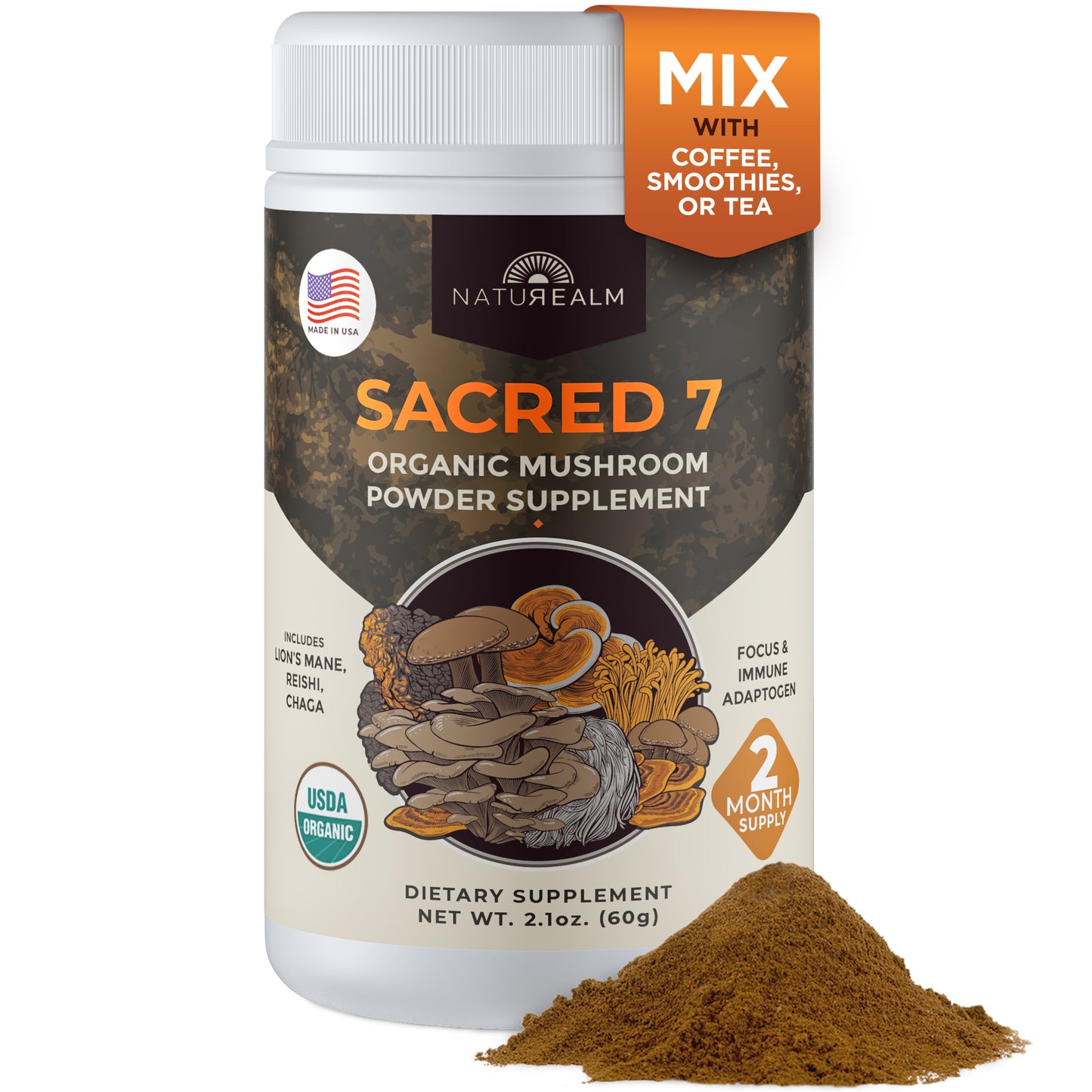
Lion's Mane is one of seven mushrooms in Sacred 7. 100% fruiting body, hot water extracted, USDA Organic.
Shop Sacred 7 Powder Shop CapsulesAnecdotal Reports
In the last several years, anecdotal reports about the benefits of Lion's Mane mushrooms for tinnitus treatment have surfaced in forums like Reddit and Tinnitus Talk. While the statements are mixed, Lion's Mane is nontoxic and without adverse side effects, so there is no harm in trying it. In fact, adding it to your daily routine may come with some astonishing health benefits, including an improved mood, enhanced ability to focus, and faster healing of wounds. Since tinnitus can sometimes be made worse by the pressures of life, the mushroom's ability to increase our resilience to stress can indirectly make tinnitus more manageable.
Mushrooms as Medicine
For now, human studies on the medicinal mushroom are limited but promising.
Lion's Mane mushrooms grow in long flowing strands, giving it the appearance of the glorious tufted crown of a lion. When cooked, the fruiting body of this divinely edible member of the Toothed Fungi group tastes mildly sweet and has a texture similar to scallops or lobster. Though the bioactive compounds discovered in Lion's Mane are in the roots portion, the above-ground parts have their own unique health benefits.
Some people do not enjoy the taste of mushrooms and prefer to appreciate their benefits in supplement form. This can be a great way to get a consistent amount of product and experiment with different dosages before finding that sweet spot. There is currently no recommended dosage for treating tinnitus. However, most studies focusing on potential benefits for the nervous system have used somewhere between 750 mg to 3 g of Lion's Mane per day. Medicinal mushrooms can be taken with or without food and should be taken in divided doses whenever possible.
Medicinal mushrooms are long-term supplements that work best when taken consistently over time. In addition to its possible perks for tinnitus, Lion's Mane can make a great addition to a daily health regimen. Remember, each person is unique, and it will take some time and experimentation to find the best mushroom routine that works best for you.
Naturealm's Lion's Mane Tincture is dual extracted from 100% fruiting body, sourced from a California small family farm. Also available in capsule and powder form, or as part of the Sacred 7 blend.
References
(1) Khan, Md. Asaduzzaman, et al. "Hericium Erinaceus: An Edible Mushroom with Medicinal Values." Journal of Complementary and Integrative Medicine 10(1), 2013.
(2) Li, I-Chen, et al. "Neurohealth Properties of Hericium Erinaceus Mycelia Enriched with Erinacines." Behavioural Neurology, 2018.