

Why We Use Alcohol in Our Tinctures
Mushroom tinctures use alcohol because it dissolves compounds that water can't, and it keeps the liquid extract shelf-stable for years. In Reishi and Chaga, the alcohol pulls out triterpenes and other resin-like compounds, while hot water pulls out polysaccharides such as beta-glucans. That's why Naturealm tinctures are dual extracted: the fruiting bodies soak in organic cane alcohol for 30 days, then simmer in hot water, and the two extracts are combined. A serving is two droppers, about 2 mL. Even at 40% alcohol, that's roughly one-twentieth of a standard drink. If you avoid alcohol entirely, an alcohol-free powder or capsule is the better fit.
Why Do Mushroom Tinctures Contain Alcohol?
Alcohol is both the solvent that pulls compounds out of the mushroom and the preservative that keeps the tincture stable.
Alcohol-based tinctures are one of the oldest herbal preparations in herbal medicine. Herbalists use the same approach across plant medicine, from echinacea and valerian to cannabis tinctures, because many of the active ingredients behind a plant's medicinal properties dissolve in ethanol better than in water. In herbs, that includes alkaloids, resins, and essential oils.
Medicinal mushrooms add one more wrinkle. Their cell walls are built from chitin, the same tough material in insect shells, so very little comes out unless you extract it. Soaking dried mushrooms in alcohol, a process called maceration, slowly draws compounds out of that tough structure. The liquid used for extraction has its own name: the menstruum.
The alcohol also does a second job. Water-based extracts spoil quickly. Alcohol keeps bacteria and mold from growing, which is why a well-made tincture is shelf-stable for years without added preservatives.
What Does Alcohol Extract From Mushrooms?
Alcohol extracts triterpenes and other fat-loving compounds. Hot water extracts the water-soluble polysaccharides, including beta-glucans.
Reishi (Ganoderma lucidum) is the clearest example. Its two most studied groups of compounds dissolve in different liquids:
- Triterpenes: the bitter, resin-like compounds Reishi is known for, including ganoderic acids. They dissolve well in ethyl alcohol and poorly in water. In a 2018 study in Food & Function, Oludemi and colleagues tested extraction conditions for Reishi triterpenes and found the best yields with high-alcohol mixtures, about 62% to 90% ethanol depending on the method.
- Polysaccharides: large, water-soluble carbohydrate molecules, including beta-glucans. These come out best in hot water, the method used for powdered mushroom extracts.
Chaga (Inonotus obliquus) follows the same pattern, with betulinic acid and other triterpenes on the alcohol side and polysaccharides on the water side. An alcohol-only tincture misses most of the polysaccharides. A water-only extract misses most of the triterpenes. Getting compounds out of the mushroom is also the first step toward bioavailability, since your body can't absorb what stays locked in the cell wall.
Which Naturealm Tinctures Use Alcohol and Hot Water?
Every Naturealm liquid extract is dual extracted, including Reishi Mushroom Liquid Dual-Extract and Chaga Mushroom Liquid Dual-Extract.
The fruiting bodies soak in organic cane alcohol for 30 days, then simmer in hot water, and the two extracts are combined into one tincture. Reishi comes from organic fruiting bodies grown on a small family farm in California. Chaga is wild-harvested in Alaska. A serving is two droppers, taken under the tongue or stirred into tea, coffee, or golden milk. The alcohol percentage is printed on each label.
What Is Dual Extraction?
Dual extraction combines an alcohol extract and a hot water extract of the same mushroom, so one tincture holds both groups of compounds.

- Alcohol stage: dried, broken-up fruiting bodies macerate in organic cane alcohol for 30 days. This pulls out the triterpenes and other alcohol-soluble compounds.
- Water stage: the same mushroom material simmers in hot water, which pulls out the water-soluble polysaccharides.
- Combine: the two liquids are blended. The finished alcohol percentage depends on how much of each goes in, and it's listed on the label.
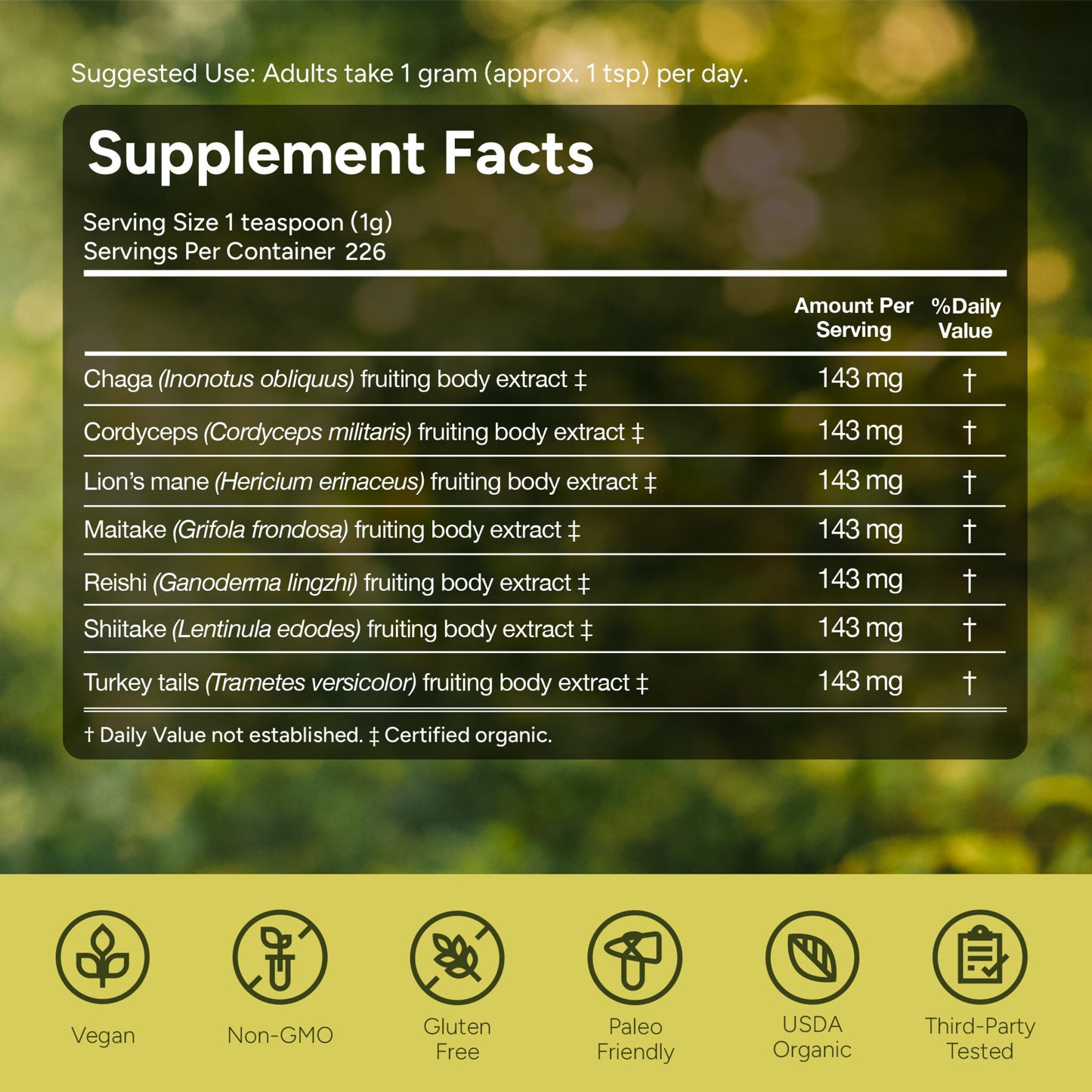
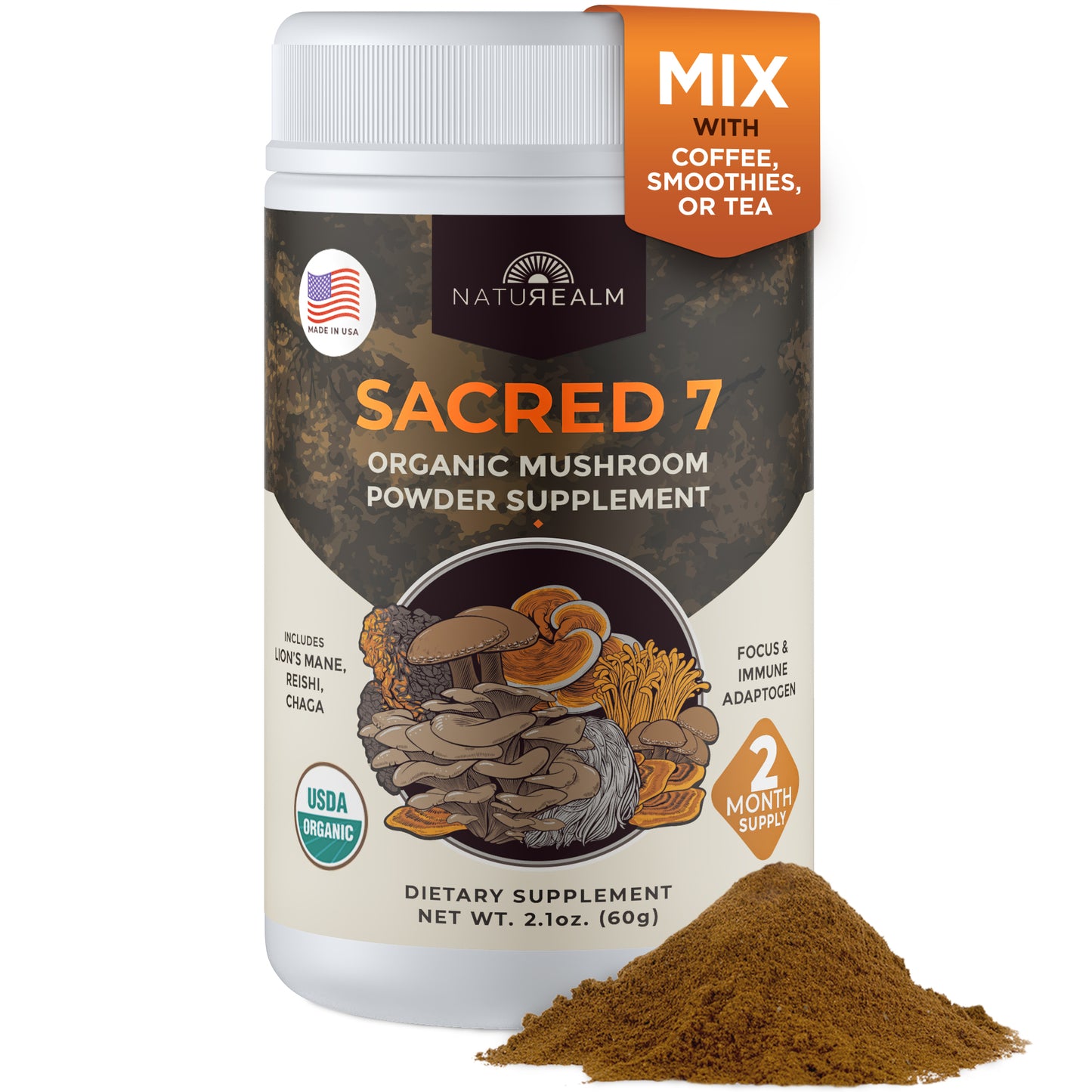
Dual extraction applies to our tinctures. Sacred 7 Powder, Sacred 7 Capsules, and Lion's Mane Powder and Capsules are hot water extracts, made without alcohol. For more on the difference, see What Is a Mushroom Tincture? and Mushroom Extracts and Supplements: Types and Benefits.
Alcohol vs. Glycerin: Which Solvent Is Better for Tinctures?
Alcohol extracts more and lasts longer. Glycerin is alcohol-free and gentler, with a shorter shelf life.

| Solvent | What it extracts well | Shelf life | Best for |
|---|---|---|---|
| Alcohol (ethanol) | Triterpenes, resins, alkaloids, essential oils | About 4 to 6 years | Full-strength herbal tinctures |
| Vegetable glycerin (glycerite) | Some water-soluble compounds; gentler overall | About 1 to 2 years | Alcohol-free tinctures, sweeter taste |
| Hot water | Polysaccharides, including beta-glucans | Days, unless dried or preserved | Teas, decoctions, powdered extracts |
A glycerite uses vegetable glycerin as the menstruum. It's sweet, alcohol-free, and popular for children's herbal preparations, but glycerin is a weaker solvent than alcohol. Mountain Rose Herbs describes glycerites as gentler and less potent than alcohol tinctures, lasting about 1 to 2 years compared with about 4 to 6 years for alcohol-based tinctures.
What type of alcohol? Tincture-making uses ethyl alcohol, also called ethanol, the same alcohol in drinks. Home herbalists often use vodka or brandy; commercial makers usually use grain alcohol or cane alcohol. The alcohol percentage, or ABV, is chosen to match the plant: resinous herbs need more alcohol, watery fresh herbs need less. Naturealm uses organic cane alcohol.
How Much Alcohol Is in a Tincture Serving?
Very little. Two droppers is about 2 mL, and even at 40% alcohol that's roughly one-twentieth of a standard drink.

Most questions about alcohol in tinctures come down to this number. A full dropper from a 1 oz or 100 mL tincture bottle holds about 1 mL. The National Institute on Alcohol Abuse and Alcoholism defines a US standard drink as 14 grams of pure alcohol. Here's the math for two droppers at 40% ABV:
- 2 mL × 40% = 0.8 mL of alcohol
- 0.8 mL × 0.79 g/mL = about 0.6 grams
- 14 grams ÷ 0.6 grams = about 22, so roughly one-twentieth of a standard drink
At a lower alcohol percentage the number is smaller still. Check the ABV on your label to run the same math for your bottle.
What If You Avoid Alcohol?
If you avoid alcohol for sobriety, medication, pregnancy, faith, or any other reason, choose an alcohol-free hot water extract instead.
A common tip is to stir the tincture into a hot drink so the alcohol evaporates. It removes less than people expect. According to USDA retention data summarized by Idaho State University, liquids brought to a boil and then taken off the heat still hold about 85% of their alcohol, and it takes hours of simmering to remove most of it. A splash of tincture in hot tea lowers the alcohol a little; it doesn't make it alcohol-free.
The simpler route is an alcohol-free product. Sacred 7 Powder and Sacred 7 Capsules are hot water extracts of seven mushrooms, including Reishi and Chaga, with no alcohol. You get the water-soluble polysaccharides, though not the alcohol-soluble triterpenes a tincture provides.
One caution: if you're in recovery, take medications that interact with alcohol (such as metronidazole or disulfiram), are pregnant, or are giving an herbal product to a child, talk with your provider before using any alcohol-based tincture. Our guide on how to talk to your doctor about mushroom supplements covers what to bring.
Alcohol-free: Shop Sacred 7 Powder →Shop Sacred 7 Capsules →
How Long Do Alcohol-Based Tinctures Last?
Stored well, an alcohol-based tincture stays shelf-stable for years. Follow the date on your bottle.
- Store it cool and dark. Heat and sunlight break down compounds over time, which is why tinctures come in amber glass.
- Keep the dropper clean. Don't let the glass dropper touch your mouth, then go back in the bottle.
- Cloudiness is common. Dual extracts can look a little hazy or settle, since the water and alcohol extracts hold different compounds. Shake before each use.
Want to use your tincture in something warm? Try Vegan Reishi Golden Milk or How to Pair Your Reishi Mushroom Tincture with Tea.
Shop Reishi Tincture →Shop Chaga Tincture →
These statements have not been evaluated by the Food and Drug Administration. This product is not intended to diagnose, treat, cure, or prevent any disease.