

Mushroom Tinctures: How to Choose & Use the Best for You
Mushroom tinctures are one of the most portable ways to maintain your mushroom regimen. It's easy to take a few drops under your tongue or add directly to your drinks on the go. Each functional mushroom offers unique beneficial compounds, and the wide varieties available today combine mushrooms for a full-spectrum effect.
Whether you're a longtime adaptogenic supplement fan or new to mushroom supplements, here's a quick overview of mushroom tinctures to know if they're right for you.
What Is a Mushroom Tincture?
A medicinal mushroom tincture is a concentrated liquid extract that contains the active compounds in mushrooms. The challenge is that humans can't process chitin — the cell wall material where most of the beneficial compounds in medicinal mushrooms are stored. Using a specific extraction method, we break down those cell walls and produce a concentrated liquid extract our bodies can actually absorb, dramatically improving bioavailability compared to eating whole mushrooms or taking unextracted powders.
In most extraction methods, fresh or dried mushrooms soak in an alcohol like ethanol or water. After decoction, the dried mushrooms are removed, and the liquid extract is ready to be blended or bottled.
Dual Extraction vs. Single Extraction
The most potent mushroom extracts use double extraction: alcohol extraction and hot water extraction combined. Double extraction ensures the final product contains as many of the mushroom's active compounds — like beta-glucans and polysaccharides — as possible.
The alcohol extraction (typically using vodka or food-grade ethanol) pulls out the fat-soluble compounds, like triterpenes — the compounds in Reishi associated with stress modulation and liver function. This step also gives the tincture stability and a long shelf life. The hot water extraction then activates the water-soluble compounds, primarily beta-glucans and polysaccharides, which drive most of the immunity and anti-inflammatory benefits. Together, dual extraction captures the full range of what a medicinal mushroom has to offer.
Single extraction processes can still produce pure and potent tinctures — but double extraction is the more complete method for species like Reishi and Chaga where both fat-soluble and water-soluble fractions matter. Here's a deeper breakdown of extraction methods and formats if you want to go further on this.
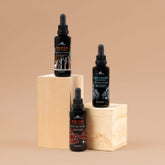
All Naturealm tinctures use dual extraction — hot water and alcohol — from 100% fruiting bodies.
Shop All TincturesFruiting Body vs. Mycelium
The fruiting body of a mushroom is what you see above ground: the cap, stem, and related parts. It's the reproductive structure and produces spores. It's also where the highest concentration of active compounds — beta-glucans, polysaccharides, triterpenes — are found.
The mycelium is the root network underground that produces the fruiting body. While mycelium does contain some medicinal compounds, concentrations are significantly lower than in the fruiting body.
It's becoming increasingly common for mushroom supplement companies to use mycelium-on-grain — where mycelium is grown on a grain substrate, then dried and ground whole. In this process, you're often paying for more grain than mushrooms. In 2016, Paul Stamets filed a patent noting that myceliated grain is roughly 60–70% grain. That's not much mushroom. Read more on what to look for in a mushroom supplement — it's the most important label check you can do.
What Are the Benefits of Mushroom Tinctures?
Mushroom tinctures are quickly absorbed into the body thanks to their high bioavailability — the extraction process has already done the work of breaking down cell walls, so the beneficial compounds are ready for absorption without the digestive processing required by whole foods or unextracted mushroom powder. They're easy to mix into drinks using a simple dropper, and most bottles are carry-on friendly when you need that immunity boost on the road.
Tinctures are especially effective for people who want to stay consistent — a dropper or two in your morning coffee or afternoon tea is about as low-friction as a supplement routine gets. If you're weighing tinctures against other formats, here's how powders, capsules, and tinctures compare.
Common Mushrooms in Tinctures
Each functional mushroom brings something different. Here's what the research points to for the species most commonly found in medicinal mushroom tinctures:
- Chaga — rich in antioxidants, one of the highest measured ORAC values of any natural substance; supports immunity
- Cordyceps — associated with energy, oxygen utilization, and endurance
- Lion's Mane (Hericium erinaceus) — studied extensively for cognitive function, memory, and neurological support
- Maitake — studied for blood pressure and immune modulation
- Reishi — triterpenes and beta-glucans; associated with stress, sleep, and immune support
- Shiitake — excellent source of B vitamins and well-studied polysaccharides including lentinan
- Turkey Tail — one of the most researched medicinal mushrooms for immune modulation and gut health; studied in clinical contexts including cancer treatment support
Mushroom Tinctures and Herbal Medicine
Mushroom tinctures are far from new. For centuries, medicinal mushrooms have played an integral part in Eastern medicine — particularly Traditional Chinese Medicine, where they represent one of the oldest continuous traditions in herbal medicine. In 2022, the World Health Organization reported that 88% of all countries use some form of traditional medicine, including herbal medicine, acupuncture, and indigenous therapies.
Medicinal mushrooms appear in ancient Chinese texts, Egyptian hieroglyphics, Viking writings, and Greek writings — a cross-cultural record of use spanning millennia. In North American and Mesoamerican cultures, mushrooms were used as natural medicine in texts dating to the 16th century, with oral traditions going back much further. It wasn't until penicillin became the first mass-produced antibiotic in the 1940s that Western medicine began paying serious attention to fungi at all.
The modern category of functional mushrooms is, in many ways, just a re-formalization of something that has existed in herbal medicine for thousands of years.
I make afternoon tea with this Lion's Mane tincture and hot water — that's how good the taste is. Clean, potent, no bitterness. About 20 minutes after taking it, I'm more focused and less prone to tab-hopping.
It contains only Hericium erinaceus — Lion's Mane fruiting body, dual extracted. One ingredient, nothing else. For anyone specifically targeting cognitive function or brain fog, this is the most direct route.
The Naturealm Lion's Mane Tincture — dual extracted, 100% fruiting body, one ingredient.
Shop Lion's Mane TinctureIn Summary
No matter where you are in your mushroom supplement journey, there's a mushroom tincture out there for you. Whether you're adding to a current supplement stack or introducing functional mushrooms for the first time, tinctures are one of the most low-maintenance, high-bioavailability formats available.
The key things to look for: dual extraction, 100% fruiting body, and a brand that publishes its extraction method without you having to ask. If you want to go deeper on formats before deciding, here's how powders, capsules, and tinctures stack up — and here's when to take them for the best results.