

How to Grow Shiitake Mushrooms on Logs: A Backyard Project
To grow shiitake mushrooms on logs, cut 4- to 6-inch-thick hardwood logs (oak is best) during the dormant season, rest them about 2 weeks, then drill holes 6 inches apart in a diamond pattern. Fill the holes with shiitake plug spawn or sawdust spawn, seal them with hot wax, and stack the logs in shade. The mycelium needs 6 to 18 months to colonize the wood. After that, you can "shock" a log by soaking it in cold water for 24 hours, and mushrooms appear about 5 to 10 days later. A log fruits for 3 to 4 years. It's a slow, rewarding backyard project, and a good one to start this winter.
Can You Really Grow Shiitake Mushrooms at Home?
Yes. Growing shiitake mushrooms on logs is one of the easiest and most reliable ways to start mushroom cultivation, and it needs no special equipment beyond a drill.
Shiitake (Lentinula edodes) has been grown on logs in Japan and China for centuries. In the wild it breaks down dead hardwood, so a freshly cut log is exactly what it wants. Shiitake cultivation on logs is also forgiving: once the mycelium takes hold, the log does most of the work, and you'll get flushes of mushrooms for several years.
It's a great project for staying active outdoors. It mixes a little sawing, drilling, and lifting with a lot of patient waiting, and it gets you outside in every season.

What Do You Need to Grow Shiitake on Logs?
You need fresh hardwood logs, shiitake spawn, a drill with the right drill bit, wax, and a shady spot.
| Supply | What to get | Notes |
|---|---|---|
| Hardwood logs | 4 to 6 inches across, about 3 feet long | Freshly cut from live, healthy trees with intact bark |
| Mushroom spawn | Shiitake plug spawn or shiitake sawdust spawn | About 40 to 50 plugs per log |
| Drill bit | 5/16 inch for plugs; about 12 mm (7/16 inch) for sawdust | A high-speed angle grinder adapter speeds things up |
| Inoculation tool | Spring-loaded palm or thumb tool | Only needed for sawdust spawn |
| Wax | Cheese wax, beeswax, or food-grade paraffin | Plus a small pot and a dauber or brush |
| Location | Full or heavy shade, near a hose | Off the bare ground, on pallets or pavers |
Plug spawn vs. sawdust spawn: Plug spawn is wooden dowels already colonized by shiitake mycelium. You tap them into holes with a hammer, so it's the easiest choice for a handful of logs. Sawdust spawn is cheaper and colonizes faster, but you'll need an inoculation tool to pack it into larger holes.
Shiitake strains: Spawn suppliers sell warm-weather, cold-weather, and wide-range strains. Wide-range strains fruit across the most temperatures and respond well to shocking, so they're the best fit for a first project.
What Are the Best Logs for Growing Shiitake?
Oak logs are the gold standard. Sugar maple, sweet gum, beech, and ironwood also work well.

- Best: white oak, red oak, and sugar maple. Dense wood holds moisture and feeds the mycelium for years.
- Very good: sweet gum, beech, and ironwood (hophornbeam).
- Works, but shorter-lived: birch, alder, and poplar. These softer hardwoods colonize fast but break down in a couple of years. Poplar is better suited to oyster mushrooms.
- Avoid: pine and other softwoods, and any log from a dead or diseased tree, since other fungi may already live there.
Cut logs in the dormant season, from late fall to late winter, before the buds break. That's when the wood holds the most stored sugar and the bark is tight. Loose or damaged bark lets the log dry out and lets competing fungi in.
Where Can You Get Shiitake Without the Wait?
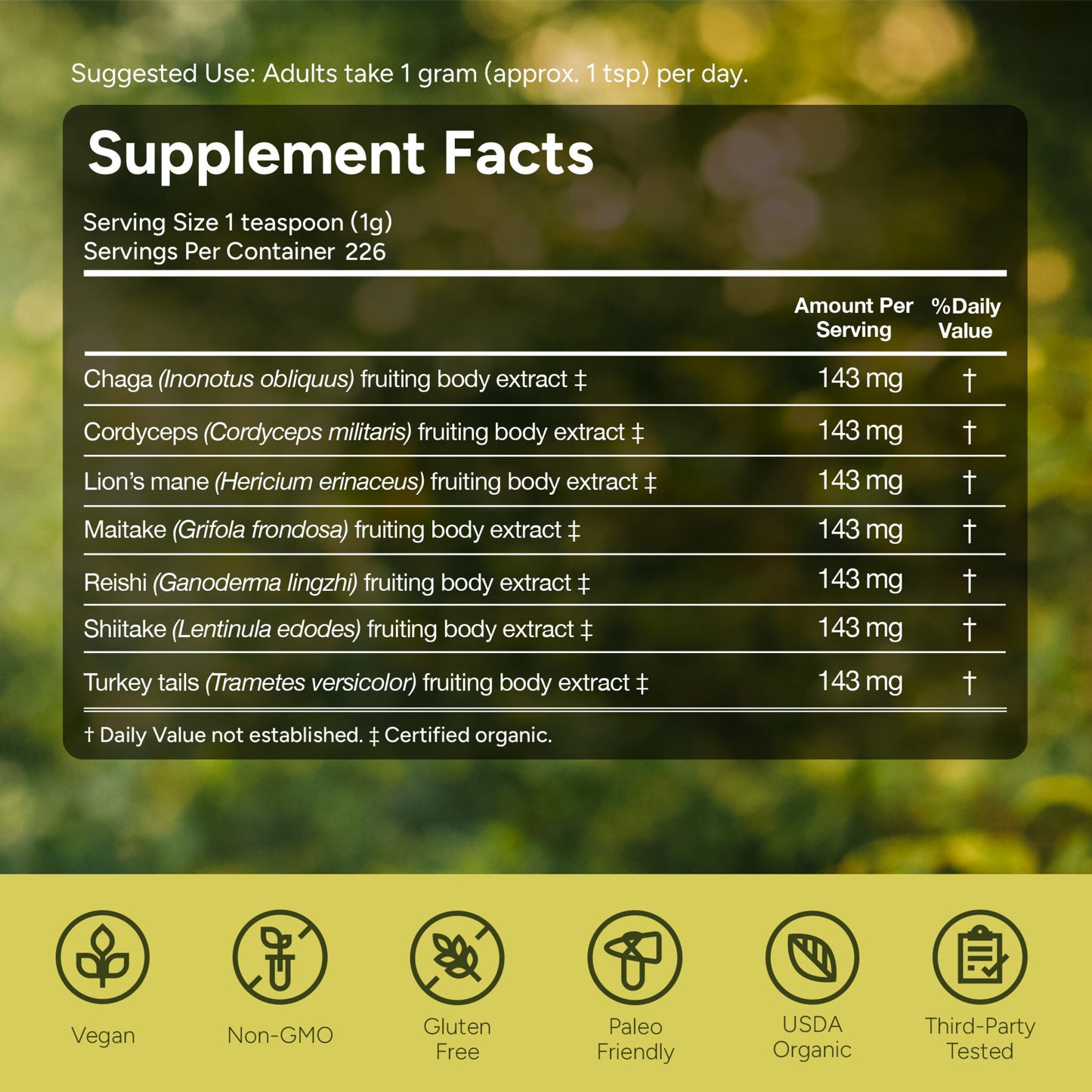
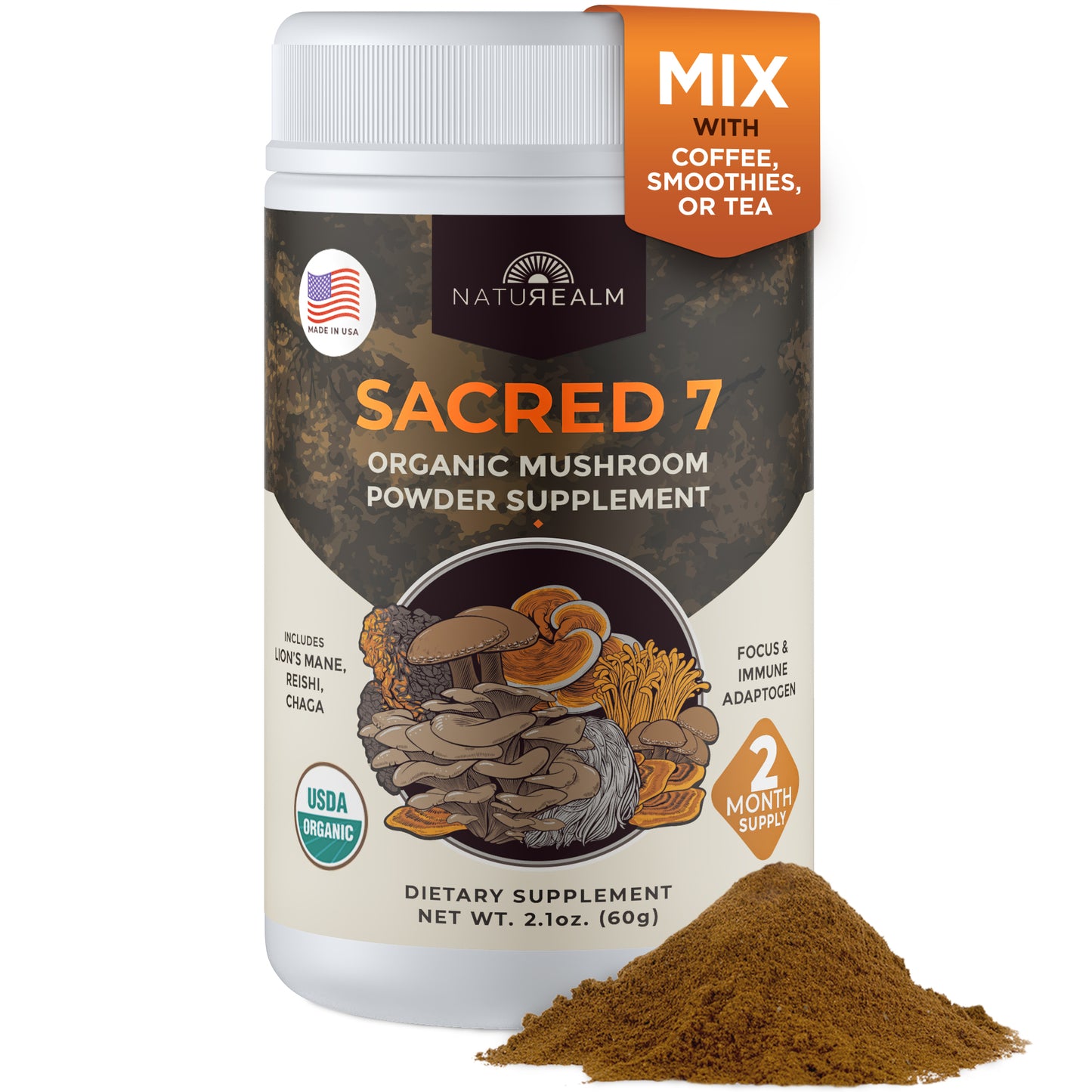
While your logs colonize, you can get Shiitake every day in Sacred 7 Mushroom Extract Powder, directly from Naturealm.
Each level teaspoon has 143mg of Shiitake alongside Reishi, Lion's Mane, Cordyceps, Chaga, Turkey Tail, and Maitake: 1,000mg total, 100% fruiting body, hot water extracted at 215°F, and USDA Certified Organic. Prefer capsules? Three Sacred 7 Capsules equal one teaspoon.
How Do You Inoculate Shiitake Logs?
Drill holes in a diamond pattern, fill each one with spawn, and seal it with hot wax, all within a couple of months of cutting.

- Rest the logs. Let freshly cut logs sit about 2 weeks so the tree's natural defenses fade, then inoculate the logs within 2 months, before they dry out. Cornell Cooperative Extension puts the ideal moisture content around 35%.
- Drill in a diamond pattern. Drill a row of holes 6 inches apart down the length of the log. Start the next row 2 inches over, offset by 3 inches, so the holes form a diamond pattern all the way around. Go about 1 inch deep, or 1¼ inches for plugs. Expect about 40 to 50 holes per log.
- Fill the holes. Tap plug spawn in flush with the bark using a rubber mallet, or pack sawdust spawn in with the inoculation tool.
- Seal with hot wax. Melt cheese wax, beeswax, or paraffin and dab it over every hole and any nicks in the bark. Hot wax seals better than warm wax. You don't need to wax the cut ends.
- Label the logs. Note the strain and date with an aluminum tag so you know when to expect mushrooms.
Safety note: Melted wax is hot enough to burn, and paraffin can catch fire if it overheats. Use a double boiler or a thermometer-controlled pot, never an open flame unattended. Logs this size can weigh 30 pounds or more, so lift with your legs or work with a partner.
Add Shiitake to your routine now →
How Long Does the Spawn Run Take?
The spawn run, when the mycelium colonizes the log, takes about 6 to 18 months, depending on the wood, the spawn, and the weather.
Stack the logs in a shady, sheltered spot with good airflow. A crisscross "log cabin" stack or a low lean-to against a fence both work. Keep them off the ground on pallets or pavers. Shade matters most: aim for about 60% shade or more, per Mississippi State Extension, under evergreens or on the north side of a building.
Humidity and moisture keep the mycelium alive. If you go 2 weeks without rain in summer, water the logs for a few hours with a sprinkler. You'll know the spawn run is finishing when white mycelium shows on the cut ends, or when the first mushrooms pop up on their own.
How Do You Get Shiitake Logs to Fruit?
Shocking a colonized log, by soaking it in cold water for 12 to 24 hours, triggers fruiting about 5 to 10 days later.
- Shock: Submerge the log in cold water in a stock tank, kiddie pool, or trash can. If you use tap water, let it sit overnight first so the chlorine dissipates.
- Stand it up: Lean the log upright in shade. Small bumps appear on the bark in a few days.
- Protect the pins: Cover the logs loosely with row cover or a sheet to keep humidity up and slugs off.
- Harvest: Pick the mushrooms when the caps are mostly open but the edges still curl under, by twisting or cutting at the base.
- Rest: Give each log a resting period of 7 to 10 weeks before shocking it again. By staggering your logs, you can harvest every few weeks from spring through fall.
Cornell Cooperative Extension estimates an average of ¼ to ½ pound of fresh shiitake per log with practice, and each log produces for 3 to 4 years until it breaks down.
One caution: Always cook shiitake thoroughly. Eating raw or undercooked shiitake can cause shiitake dermatitis, an itchy, streaky rash that usually clears on its own in a week or two. Sacred 7 also includes Reishi, which may interact with blood thinners and blood pressure medications, so check with your provider first if you take either.
What Can You Do With Homegrown Shiitake?
Cook them fresh, dry them for later, or grind dried caps into your own mushroom powder.
Fresh shiitake keeps about a week in a paper bag in the fridge. Sauté them in butter or olive oil, add them to soup, or dry extra caps on a rack or in a dehydrator. Our guide on how to make and use mushroom powder at home shows how to turn a big harvest into seasoning, and The Complete Guide to Shiitake Mushrooms covers the research behind them.
Homegrown shiitake is food, and a delicious one. For a measured daily amount of Shiitake extract alongside six other mushrooms, a teaspoon of Sacred 7 does the job year-round, including the months your logs are resting.
Shop Sacred 7 Powder →Find your mushroom match →
These statements have not been evaluated by the Food and Drug Administration. This product is not intended to diagnose, treat, cure, or prevent any disease.