


How to Talk to Your Doctor About Mushroom Supplements
To talk to your doctor about mushroom supplements, bring the bottle or a photo of the label, name each mushroom and its dose, and list every medication you take. The drug interactions published sources flag most often involve blood thinners, blood sugar medications, blood pressure medications, and immunosuppressants, mostly based on lab and animal research. Reishi, Chaga, Cordyceps, and Maitake come up most. Ask whether your supplement could affect a medication, whether to pause it before surgery, and which side effects to watch for. In my experience, most doctors are curious and open, especially when you can show exactly what's in the bottle.
Should You Tell Your Doctor You Take Mushroom Supplements?
Yes. Tell every healthcare provider you see about every dietary supplement you take, including mushrooms.
The NIH's National Center for Complementary and Integrative Health recommends sharing every supplement and medication you take, how often you take each one, and the dose. It suggests bringing a written list, or the bottles themselves, and updating it at every visit.
That goes for herbal supplements too. St. John's wort, for example, is well known for interacting with prescription drugs, including antidepressants. Medicinal mushrooms are less studied, which is exactly why your provider should see the whole list.
I take Sacred 7 every day, and my doctors know it. Those conversations have been easy, and the community tells us the same thing: most doctors are curious, and some ask good follow-up questions. The conversation goes best when you arrive with specifics.
What Should You Bring to Your Appointment?
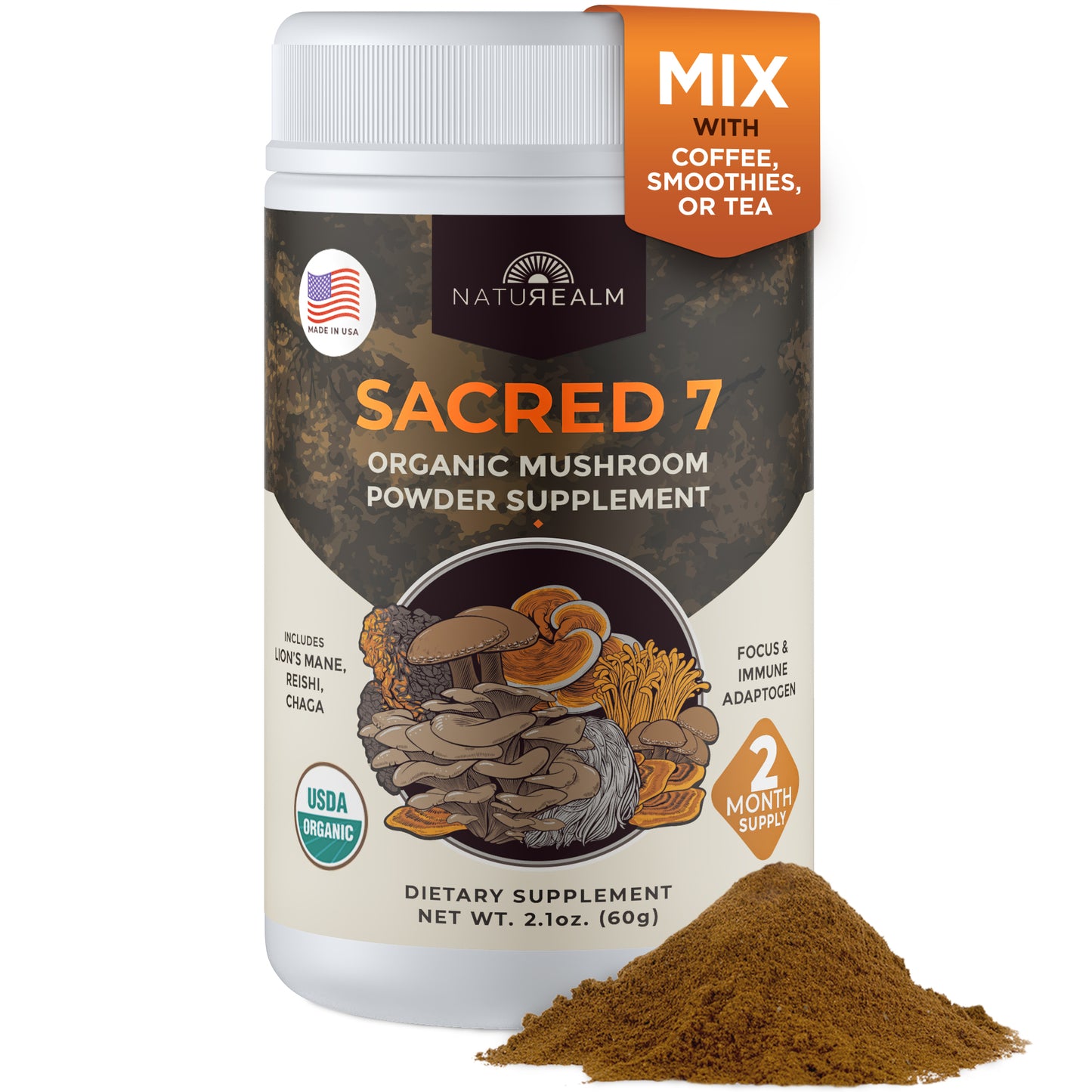
Bring the bottle or a clear photo of the label, plus a list of everything else you take.

- The label: the label shows your provider the ingredients, the amount per serving, and whether it's an extract. A photo on your phone works.
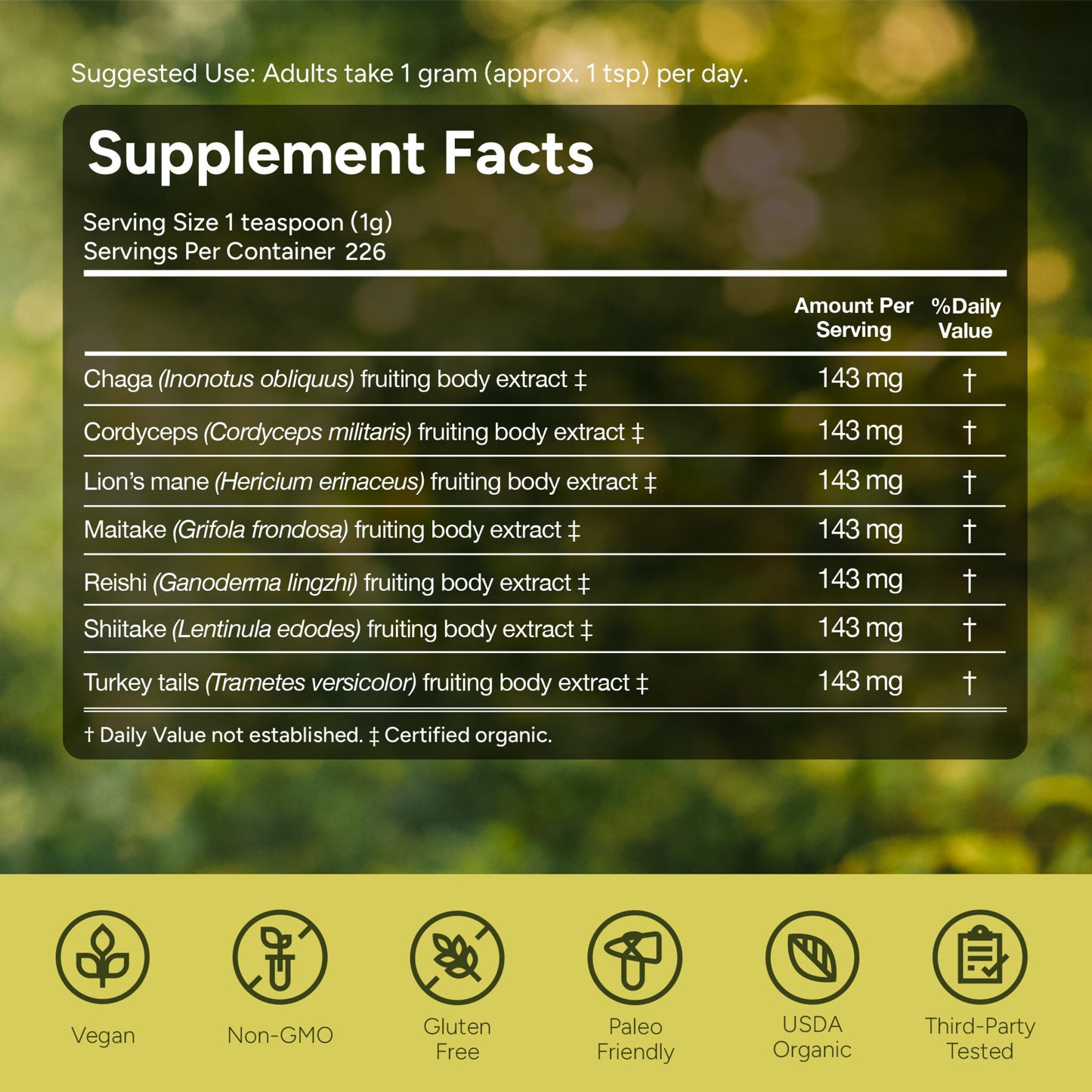
- Each mushroom and its dose: for a blend, name the blend and the per-mushroom amount, for example "Sacred 7, 143mg each of seven mushrooms."
- Timing: time of day, how many days a week, and how many months you've been taking it.
- Your prescription medications: plus over-the-counter drugs like aspirin, with doses. Include anything for blood pressure, blood sugar, cholesterol (such as a statin), mood, or sleep.
- Caffeine and stimulants: how much coffee you drink and any stimulant medication. Sacred 7 contains no caffeine on its own, and your provider will still want the full picture.
- Your questions: written down, so you don't run out of appointment before you ask them.
If your label lists a blend total without per-mushroom amounts, your provider can't tell how much of each mushroom you're taking. For what a complete label shows, see How to Choose a Mushroom Supplement Blend: 5 Things to Check on the Label.
Which Mushroom Supplement Is Easiest to Discuss With a Doctor?
Sacred 7 Capsules list the exact amount of every mushroom, so your provider can see what you take at a glance.
Three capsules hold 1,000mg of hot water extract: 143mg each of Lion's Mane, Reishi, Chaga, Cordyceps, Turkey Tail, Shiitake, and Maitake. They're made from 100% fruiting body, contain no mycelium, grain, or fillers, and are certified organic and third-party tested by an independent lab. If your doctor wants to see the testing, email info@naturealm.co and we'll send the certificate of analysis for you to bring along.
Shop Sacred 7 Capsules →Prefer powder? Shop Sacred 7 Powder →
What's Actually in a Mushroom Supplement?
A mushroom supplement delivers bioactive compounds from the mushroom, and the part of the mushroom and the extraction method decide which ones you get.
- Polysaccharides: large carbohydrate molecules, including beta-glucans, found across functional mushrooms. Hot water extraction pulls them out.
- Triterpenes: bitter compounds concentrated in Reishi (Ganoderma lucidum). They dissolve better in alcohol, which is why Reishi tinctures are often dual extracted.
- Hericenones: compounds from the fruiting body of Lion's Mane (Hericium erinaceus). Erinacines come mainly from the mycelium.
This matters for your appointment because "mushroom supplement" can mean very different products. A fruiting body extract, a mycelium powder grown on grain, and a dual-extract tincture are not the same thing. Tell your provider which one you take. For the full breakdown, see Best Lion's Mane Supplement: Fruiting Body vs. Mycelium, Explained.
Which Mushrooms and Medications Should You Mention?
Mention every mushroom, and especially Reishi, Chaga, Cordyceps, and Maitake if you take blood thinners, diabetes medications, blood pressure medication, or immunosuppressants. Most of these flags come from lab and animal studies, and their effect in people is often unknown.

- Reishi: the Merck Manual's Reishi entry (reviewed 2025) notes it may lower blood pressure, so combining it with antihypertensive drugs such as lisinopril or amlodipine might cause hypotension. It may also slow blood clotting and raise the risk of bleeding with warfarin, clopidogrel, or anti-inflammatories like ibuprofen. A blood sugar effect has been seen in animal studies only. Memorial Sloan Kettering's integrative medicine team (Bao and Gubili, 2018, The ASCO Post) adds that Reishi may counteract immunosuppressants, and lab studies show its polysaccharides affect liver enzymes that process many medications.
- Chaga: Bao and Gubili (2019, The ASCO Post) flag possible effects alongside anticoagulant drugs and medications that lower blood glucose, based on animal and lab research, and say the clinical relevance isn't known. They also cite one case of a kidney problem in a person taking 4 to 5 teaspoons of Chaga powder a day for six months.
- Cordyceps: Memorial Sloan Kettering's About Herbs entry (updated 2022) lists blood thinners and blood sugar medications, including insulin, and reports no major side effects. One case report describes excess bleeding after a tooth extraction.
- Maitake: Deng and Gubili (2019, The ASCO Post) note Maitake may raise INR with warfarin and may add to the effect of diabetes medications such as metformin or insulin.
- Turkey Tail: Bao and Gubili (2018, The ASCO Post) report no known interactions with prescription medications and describe it as generally well tolerated. Mention it if you're in cancer treatment.
- Lion's Mane and Shiitake: both have few medication interaction reports. Human Lion's Mane studies typically use about 1 to 3 grams a day.
If you take medication that affects your blood pressure or heart rate, such as beta-blockers, mention Reishi in particular. For context on dose, Sacred 7 contains 143mg of each mushroom per serving, well below the gram amounts used in most studies. That's worth telling your provider too.
What Side Effects Should You Tell Your Doctor About?
Tell your doctor about any new symptom after you start a mushroom supplement, even a mild one.
Mushroom extracts are generally well tolerated in published reviews. The side effects reported most often for Reishi, per the Merck Manual and Memorial Sloan Kettering, include:
- Upset stomach, nausea, or diarrhea
- Dry mouth
- Dizziness or headache
- Rash or nosebleed
- Trouble sleeping
Dizziness can also be a sign your blood pressure is running low, so mention it right away if you take blood pressure medication.
What Questions Should You Ask Your Doctor?
Ask how your supplement fits with your medications, your upcoming procedures, and your health history.
- Could this supplement affect any medication I take?
- Should I pause it before surgery or dental work, and for how long?
- Is there anything you'd like me to watch for, or any lab work you'd want to check, like blood sugar or blood pressure?
- Does the time of day I take it matter with my other medications?
- Should I check with my specialist, such as my oncologist or cardiologist, too?
Your pharmacist is a good second stop. They see your full medication list and can check it quickly. For help with timing, see When to Add Mushrooms to Your Daily Supplement Routine.
How Do Doctors Usually React to Mushroom Supplements?
Most doctors are curious and positive, especially when you show them a clearly labeled extract.
Functional mushrooms have a long record as food and traditional preparations, and the reviews above describe them as generally well tolerated. What doctors want to know is what's in the bottle and what else you take. A label with per-mushroom amounts, and a certificate of analysis if they ask, answers both.
If a provider is skeptical, that's fair. Most mushroom research is still in cells and animals, and human trials are small. It helps to say what you're hoping for and ask whether they see any reason to hold off.
When Should You Check Before Taking Mushroom Supplements?
Check with your provider before starting if you have a medical condition or take medication in any of these groups.

- You take a blood thinner or antiplatelet medication, including daily aspirin.
- You have a bleeding disorder or low blood pressure.
- You take insulin, metformin, or other diabetes medications.
- You take immunosuppressants, including after a transplant, or you have an autoimmune condition.
- You're in cancer treatment.
- You have surgery or dental work scheduled.
- You're pregnant or breastfeeding. There isn't enough research on safety during pregnancy or breastfeeding.
One caution: this guide helps you have a better conversation. It doesn't replace one. Your provider knows your full health history and can tell you what makes sense for you.
New to mushroom supplements? Start with The 7 Mushrooms in Our Sacred 7 Mushroom Extract Powder, or compare formats in Mushroom Coffee vs. Mushroom Powder vs. Capsules.
Shop Sacred 7 Capsules →Shop Sacred 7 Powder →
These statements have not been evaluated by the Food and Drug Administration. This product is not intended to diagnose, treat, cure, or prevent any disease.