

Mushrooms for Immune Support: A Cold-Season Guide for Teachers
Mushrooms support immune function mainly through polysaccharides called beta-glucans, which interact with immune cells such as macrophages, natural killer cells, and T cells. Shiitake, Turkey Tail, Reishi, Maitake, and Cordyceps have the most research. Small human studies found changes in immune cell activity after 4 to 8 weeks of daily intake, and a 2026 maitake trial found fewer days of some cold symptoms without fewer colds overall. For teachers heading into cold season, the most useful approach is a daily mushroom habit layered on top of the basics that matter most: sleep, handwashing, and staying home when sick.
Do Mushrooms Support the Immune System?
Yes, mushrooms contain compounds that interact with the immune system, and the human evidence is real but small.
Medicinal mushrooms have been used for centuries in Traditional Chinese Medicine, where Reishi (Ganoderma lucidum) earned the name "mushroom of immortality." Modern research on these functional mushrooms focuses on their bioactive compounds, especially polysaccharides like beta-glucans, plus triterpenes in Reishi and antioxidant compounds in Chaga (Inonotus obliquus).
Most studies are in cells and animals. The human trials that exist are small, short, and often funded by mushroom growers or supplement makers. They point in a consistent direction: daily intake seems to change how some immune cells behave. They haven't shown that mushrooms prevent colds or flu.

How Do Mushrooms Interact With Immune Cells?
Mushroom beta-glucans are recognized by immune cells in the gut, which then signal other parts of the immune system.
Your body doesn't digest beta-glucans the way it digests starch. Immune cells in the gut lining, including macrophages, recognize them through receptors such as Dectin-1, described in a review by Camilli, Tabouret, and Quintin (2018, Frontiers in Immunology). Those cells then send signals that can affect natural killer cells, which respond quickly to infected cells, and T cells, which coordinate longer-term immune response.
Researchers call this immunomodulation, or immune modulation: the immunomodulatory effects can nudge activity up or calm an inflammatory response, depending on context. That's why careful sources say mushrooms "support" or "modulate" immune health rather than "strengthen" it. Some mushroom fibers also act as a prebiotic, feeding gut bacteria, which ties immune health to gut health.
Which Mushroom Supplement Covers the Most Immune Research?
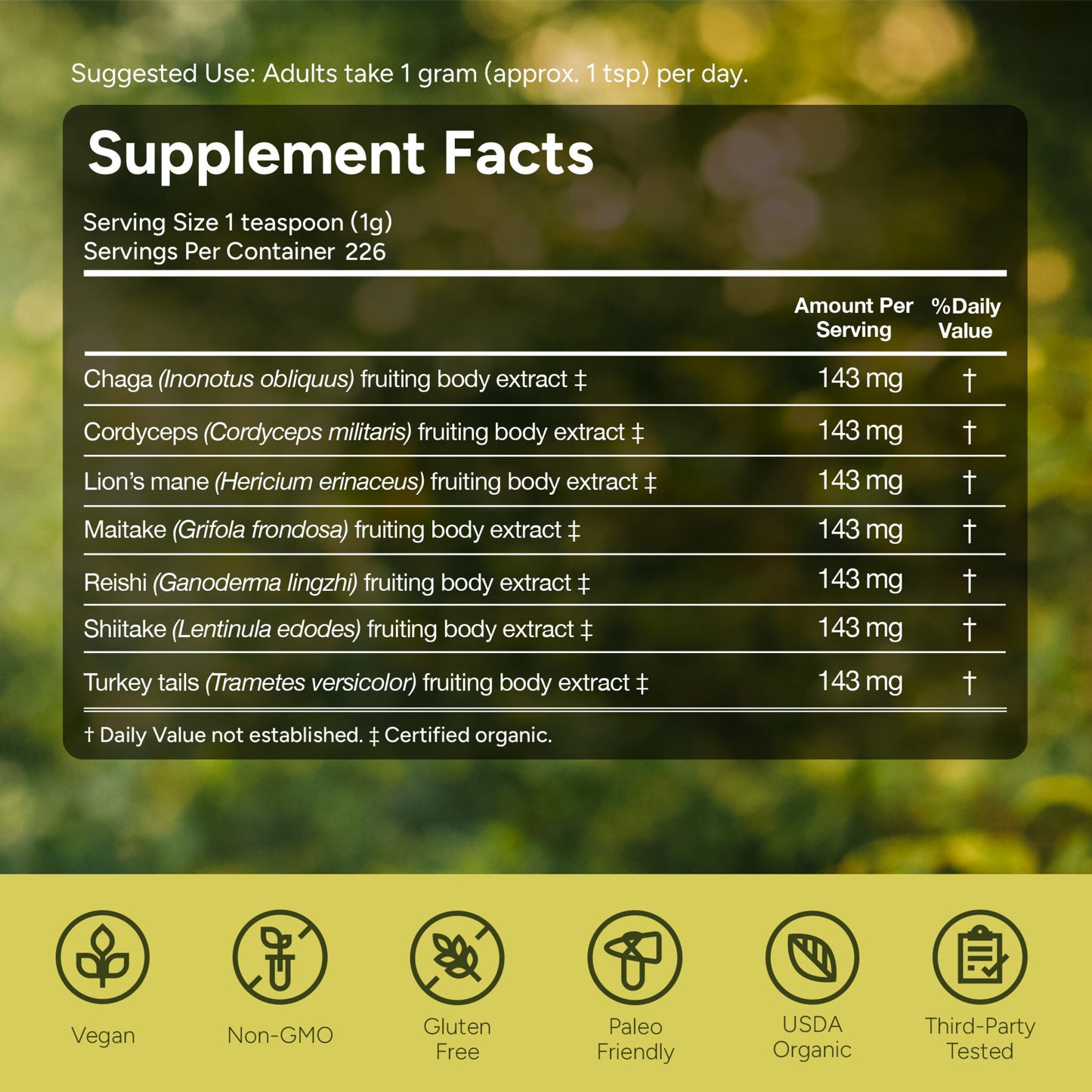
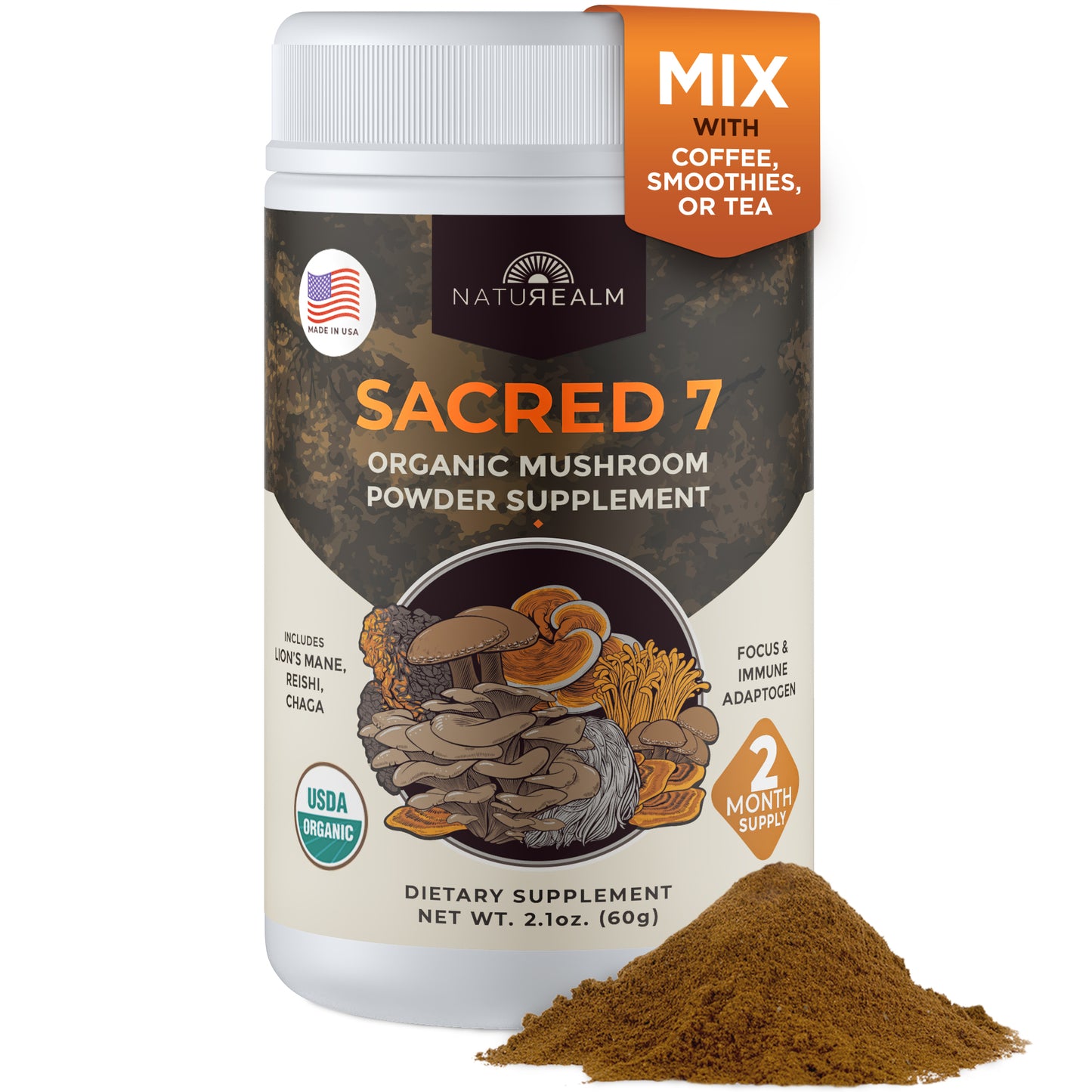
Sacred 7 Powder combines all seven mushrooms with immune research in one daily teaspoon: Turkey Tail, Reishi, Shiitake, Maitake, Chaga, Cordyceps, and Lion's Mane.
One level teaspoon holds 1,000mg of hot water extract, 143mg of each mushroom, made from 100% fruiting bodies. Hot water extraction is the method that pulls out beta-glucans and other polysaccharides. It's certified organic, third-party tested by an independent lab, and stirs into the coffee or tea you already drink before first period. Prefer to skip the stirring? Sacred 7 Capsules hold the same blend.
Which Mushrooms Have the Most Immune Research?
Shiitake, Turkey Tail, Maitake, and Cordyceps have human immune studies. Reishi, Chaga, and Lion's Mane are studied mostly in the lab.

- Shiitake mushrooms (Lentinula edodes): Dai and colleagues (2015, Journal of the American College of Nutrition) had 52 healthy adults aged 21 to 41 eat 5 or 10 grams of dried whole shiitake daily for 4 weeks. Two types of T cells multiplied more readily in lab tests, salivary IgA rose, and C-reactive protein, a marker of inflammation, fell. The U.S. Mushroom Council funded the study, and critics have noted it compared people to their own baseline rather than to a control group.
- Turkey Tail mushroom (Trametes versicolor, also called Coriolus versicolor): its two best-known extracts are polysaccharide-K (PSK) and polysaccharopeptide (PSP). In Pallav and colleagues (2014, Gut Microbes), 24 healthy volunteers took PSP or an antibiotic for 8 weeks, and PSP shifted the gut microbiome in a way consistent with a prebiotic effect. In Japan, PSK is approved as a supplementary treatment alongside cancer care; in the US it isn't approved for any condition.
- Maitake (Grifola frondosa): Masuda and colleagues (2026, Food & Function) gave 166 healthy adults bread with one of two maitake strains or placebo for 11 to 18 weeks. Neither strain reduced how many people caught a cold. One strain was linked to fewer days of fever and runny nose. Infections were self-reported.
- Cordyceps: Jung and colleagues (2019, BMC Complementary and Alternative Medicine) gave 79 healthy adults 1.68g a day of a cordyceps-family mycelium extract (Paecilomyces hepiali) for 8 weeks. Natural killer cell activity rose about 39% compared with placebo. Other immune markers didn't change.
- Reishi mushrooms, Chaga, and Lion's Mane (Hericium erinaceus): studied for immune function, oxidative stress, and the inflammatory response mostly in cells and animals. Lion's Mane is better known for cognitive function research; see Lion's Mane for Focus: How to Build a Workday Stack.
Notice the pattern: changes in immune cells, a few shorter symptoms, no proven drop in colds. That's an honest reason to take mushrooms as part of a routine, not a reason to skip the basics.
All seven in one teaspoon: Sacred 7 →
What Should Teachers Do During Cold Season?
Build a daily routine where the basics do the heavy lifting and mushrooms are one steady habit inside it.
Classrooms are close quarters with shared surfaces and a lot of hands. The habits with the strongest evidence aren't glamorous, and they work.

- Morning: one teaspoon of Sacred 7 in your coffee or tea, same time every day. Consistency matters more than timing.
- Between classes: wash your hands with soap for 20 seconds and refill your water bottle.
- Lunch: eat a real meal. Cooking with shiitake and maitake mushrooms is an easy way to get more of their fiber. Try the Sacred 7 Golden Mushroom Soup as a make-ahead lunch.
- After school: get outside and move, even for 15 minutes.
- Evening: aim for 7 or more hours of sleep. In Prather and colleagues (2015, Sleep), adults sleeping under 6 hours were more likely to catch a cold after exposure to a cold virus.
And when you're sick, stay home. It protects your students and your coworkers, and it's the single habit no supplement replaces. Staying up to date on recommended vaccines is part of the same picture; ask your provider what's right for you.
Are Mushroom Gummies, Powders, or Tinctures Better for Immune Support?
A hot water mushroom extract from fruiting bodies is the most direct way to get beta-glucans. Gummies often contain little mushroom per serving.

| Format | What to check | Watch out for |
|---|---|---|
| Mushroom extract powder | Milligrams per mushroom, hot water extract, fruiting bodies | Blend totals with no per-mushroom amounts |
| Capsules | Same as powder; count how many make a serving | Servings that take 4 to 6 capsules |
| Tinctures | Dual extraction for Reishi and Chaga triterpenes | No milligram equivalent listed |
| Gummies | Milligrams of mushroom extract per gummy | Added sugar, small doses, mycelium on grain |
| Plain mushroom powder | Whether it's an extract or ground whole mushroom | Unextracted powder, which your body breaks down less easily |
Also check whether the product uses fruiting bodies or mycelium. Mycelium is often grown on grain, and the grain can end up in the product, diluting the beta-glucans. For the full checklist, see How to Choose a Mushroom Supplement Blend: 5 Things to Check on the Label, and for more on beta-glucans, see Beta Glucans 101.
Prefer capsules? Shop Sacred 7 Capsules →
Are Mushroom Supplements Safe to Take Every Day?
Mushroom dietary supplements are generally well tolerated, with a few exceptions worth checking first.
- Reishi, Maitake, Cordyceps, and Chaga may interact with blood thinners and blood sugar medications.
- Because mushrooms affect immune activity, check with your provider if you take immune-suppressing medication or have an autoimmune condition.
- There isn't enough research on use during pregnancy or breastfeeding.
One caution: mushrooms support normal immune function. They aren't a treatment for colds, flu, or any illness. If you're sick, see a provider. Our guide on how to talk to your doctor about mushroom supplements covers which medications to mention. For more on mushrooms and digestion, see how medicinal mushrooms support gut health, and for the adaptogenic side of Reishi, see Benefits of Reishi Mushroom.
These statements have not been evaluated by the Food and Drug Administration. This product is not intended to diagnose, treat, cure, or prevent any disease.