


Lion's Mane for Focus: How to Build a Workday Stack
Lion's Mane may support focus and memory, though the human research is small and mixed. The clearest results come from older adults taking Lion's Mane daily for 12 to 16 weeks, up to about 3 grams a day, and in one study the benefits faded after people stopped. Single-dose studies in healthy young adults found small or inconsistent changes. The most useful way to take Lion's Mane for focus is as a daily habit inside a workday that already protects your attention: the same time each morning, alongside the coffee you already drink, with deep work blocks and real breaks. Choose a fruiting body extract with a clear dose, and give it at least 8 to 12 weeks.
Does Lion's Mane Help With Focus?
Lion's Mane may help, especially with steady daily use, and it isn't a fast-acting focus fix.
The Lion's Mane mushroom (Hericium erinaceus) is a medicinal mushroom long used in Traditional Chinese Medicine and studied today for brain health, cognitive function, and cognitive performance. It's often grouped with nootropics, the broad category of things people take for mental performance. It works differently from caffeine. Caffeine acts within minutes and wears off in hours. In the human trials, Lion's Mane changes in memory and cognition showed up over weeks of daily intake, if they showed up at all.
That shapes how to use it. Think of it as one steady part of a routine built for concentration, not a pill you take before a big meeting.

What's in Lion's Mane That Affects the Brain?
Lion's Mane contains two groups of bioactive compounds studied for brain health: hericenones from the fruiting body and erinacines from the mycelium.

- Hericenones: aromatic compounds isolated from the fruiting body, the shaggy white mushroom you can see. In cell studies, hericenones increased secretion of nerve growth factor (NGF), a protein that helps maintain nerve cells throughout the nervous system.
- Erinacines: compounds found mainly in the mycelia, the root-like network the mushroom grows from. In a rat study, Tsai and colleagues (2021, Molecules) found erinacine A from a mycelium extract reached the brain, suggesting it can cross the blood-brain barrier.
- Polysaccharides: including beta-glucans, studied mostly for the immune system and for antioxidants and anti-inflammatory effects on markers of inflammation.
NGF matters because it supports the growth and upkeep of brain cells, and neuroplasticity, the brain's ability to form new connections during learning. Almost all of the NGF research is in cells and animals. Whether a Lion's Mane supplement raises NGF or changes brain function in people hasn't been shown. For a closer look at fruiting body and mycelium, see Best Lion's Mane Supplement: Fruiting Body vs. Mycelium, Explained.
Where Can You Buy a Lion's Mane Supplement for Daily Use?
You can buy Lion's Mane Capsules directly from Naturealm, the easiest form to take at the same time every day.
They're a hot water Lion's Mane extract made from 100% organic fruiting bodies, with no mycelium, grain, or fillers, and no taste. Prefer to stir it into your coffee? Lion's Mane Powder is the same extract in powder form.
What Do Human Studies on Lion's Mane Show?
Longer studies in older adults show the clearest benefits to memory and cognition. Short studies in healthy young adults are mixed.
- Mild cognitive impairment, 16 weeks: Mori and colleagues (2009, Phytotherapy Research) gave 30 adults aged 50 to 80 with mild cognitive impairment four 250mg tablets of 96% Lion's Mane fruiting body powder three times a day, 3 grams in total. Cognitive scores improved compared with placebo, then declined again within 4 weeks of stopping. No adverse effects were reported.
- Healthy adults over 50, 12 weeks: Saitsu and colleagues (2019, Biomedical Research) gave fruiting body supplements or placebo. Scores on one cognitive screening test improved. Two other memory and learning tests didn't show the same effect.
- Mild Alzheimer's disease, 49 weeks: Li and colleagues (2020, Frontiers in Aging Neuroscience) tested an erinacine A-enriched mycelium extract in 49 people. Daily living scores differed from placebo at the end, while most memory measures didn't. Several authors worked for the company that supplied the extract, and products vary in their active compounds, so results may not carry over to other supplements.
- Healthy young adults, 28 days: Docherty, Doughty, and Smith (2023, Nutrients) gave 41 adults 1.8g a day. A single dose sped up a Stroop task an hour later. After 28 days, a trend toward lower stress didn't reach significance.
- Healthy young adults, one dose: Surendran and colleagues (2025, Frontiers in Nutrition) gave 18 adults 3g of a 10:1 fruiting body extract. Overall cognition and mood didn't change. One manual dexterity test improved. A drinks company that sells Lion's Mane funded the study.
- Mood, 4 weeks: Nagano and colleagues (2010, Biomedical Research) gave 30 women Lion's Mane cookies or placebo cookies. Depression and anxiety scores dropped within the Lion's Mane group.
Lion's Mane hasn't been tested in people with ADHD, and the mood research is too small to say much about anxiety, depression, or mental health more broadly. If you're managing any of these, talk to your provider before adding a supplement.
How Do You Build a Lion's Mane Workday Stack?
Pair one daily dose of Lion's Mane with the habits that already protect focus and mental clarity: a steady morning, deep work blocks, real breaks, and enough sleep.

- Morning, with breakfast: take your Lion's Mane capsules, or stir the powder into your coffee. Same time every day matters more than the exact hour. Follow the serving on your label.
- First deep work block: 60 to 90 minutes on your hardest task, notifications off. Protect it like a meeting.
- Midday break: step outside, eat a real lunch, and move. A short walk is an easy reset before the afternoon.
- Afternoon: a second, shorter focus block. If you reach for more caffeine, keep it small and early so it doesn't cut into sleep.
- Evening: screens off an hour before bed and a consistent bedtime. Poor sleep is one of the most common causes of brain fog, and no supplement makes up for it.
Give it at least 8 to 12 weeks. That's the window where the human studies saw changes, and it's long enough to notice a difference in your own focus. Keep a simple note each Friday: how was your concentration this week?
Start your stack: Lion's Mane Capsules →
Can You Take Lion's Mane With Coffee?
Yes. Many people take Lion's Mane with their morning coffee, and no known interaction exists between the two.
Lion's Mane contains no caffeine, whether you take capsules, powder, or a tincture, so it adds no extra stimulation. No study has tested Lion's Mane and caffeine together, so any claim that the pair works better than either alone is a guess. Stirring Lion's Mane Powder into coffee is simple; see Can You Add Mushroom Powder to Coffee? How Much and How to Mix It. If you'd rather cut back on caffeine, read How Mushrooms Help You Break Free from Caffeine Dependency.
For your coffee: Lion's Mane Powder →
Lion's Mane vs. Other Nootropics: How Does It Compare?
Lion's Mane is a slow, daily nootropic. Caffeine works fast, and adaptogens like ashwagandha are studied more for stress than for focus.

| Option | How fast | Studied mainly for | Best fit |
|---|---|---|---|
| Lion's Mane | Weeks of daily use | Memory, cognition, brain health | Long-term cognitive health habit |
| Caffeine | Minutes | Alertness, reaction time | Short-term alertness |
| Ashwagandha | Weeks | Stress and sleep | Stress-heavy seasons |
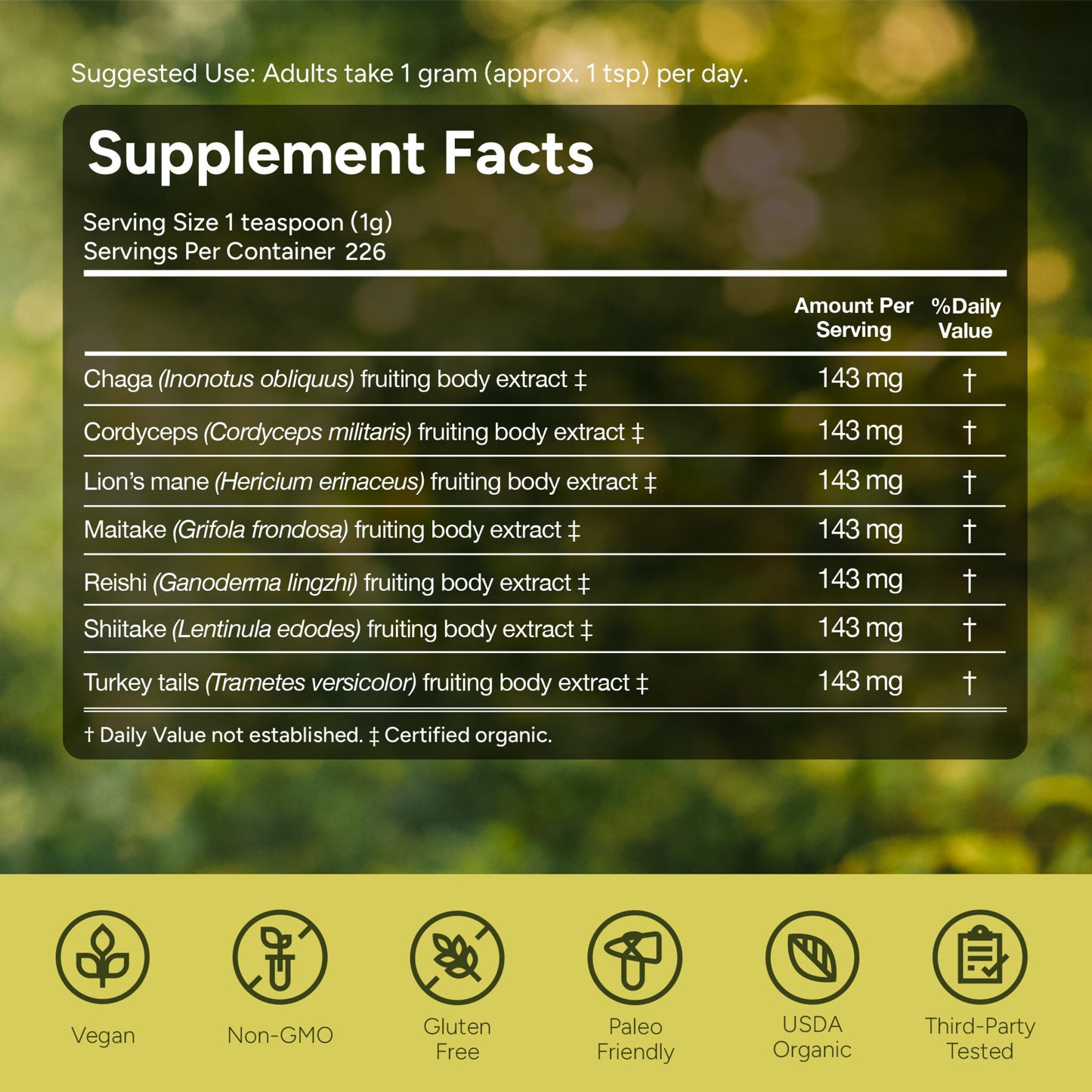
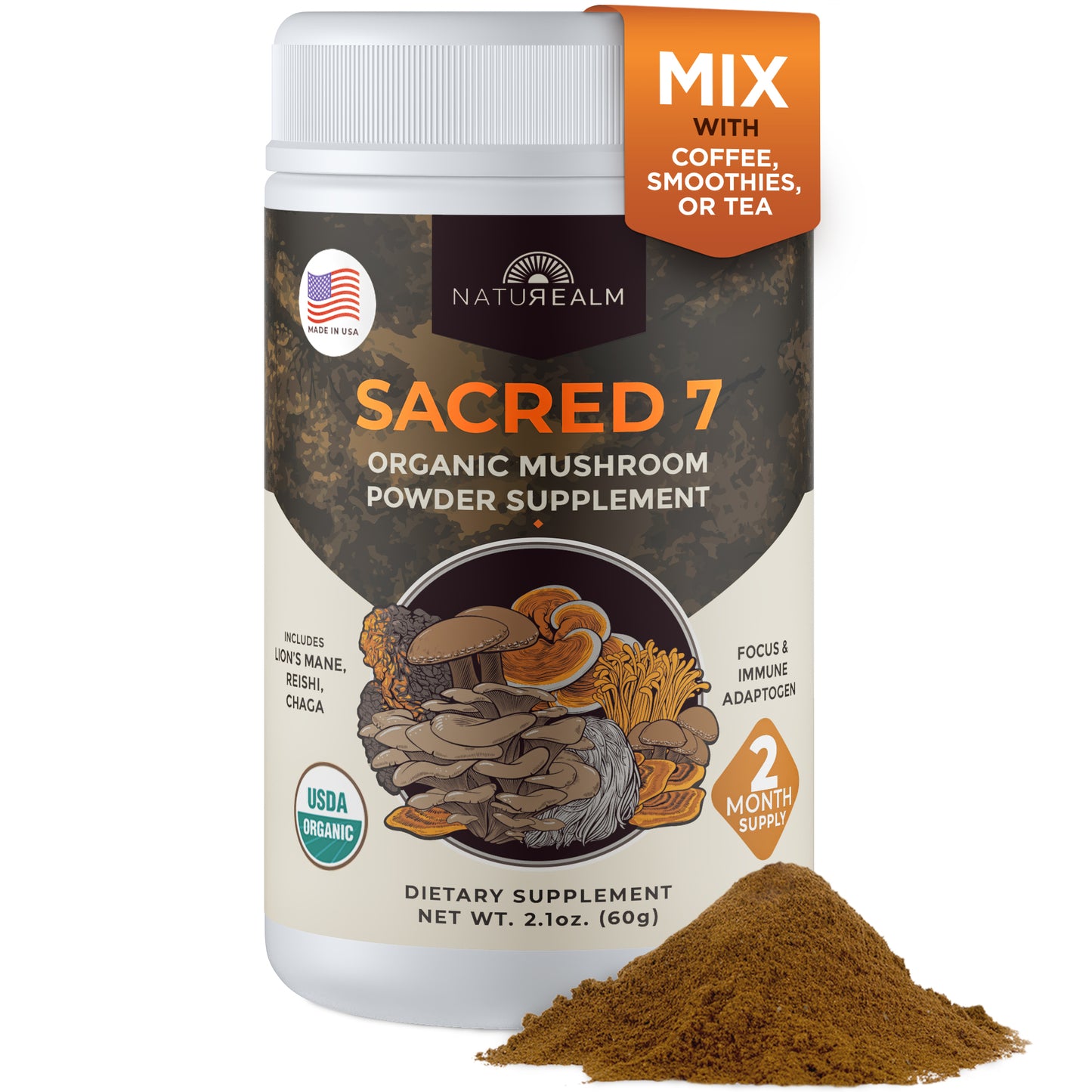
| Sacred 7 (blend) | Weeks of daily use | Seven functional mushrooms, 143mg each | Broad daily support |
If Lion's Mane is your main focus, a single-mushroom product gets you closer to the doses studied. Blends like Sacred 7 include Lion's Mane alongside six other mushrooms, at a smaller amount of each. For pairing mushrooms, see Can You Combine Different Types of Mushrooms?
Does Lion's Mane Have Side Effects?
Lion's Mane is generally well tolerated in studies, and the most common side effects are mild stomach upset and skin rash.
- Stomach upset or nausea: reported by a few participants in longer trials.
- Allergic reactions: mushroom allergies aren't unusual. Stop and talk to a provider if you notice a rash, itching, or trouble breathing.
- Pregnancy and breastfeeding: there isn't enough research on safety.
One caution: Lion's Mane is a dietary supplement, not a treatment for mild cognitive impairment, Alzheimer's disease, ADHD, or any other condition. If you take medication or are worried about memory changes, see a doctor first. Our guide on how to talk to your doctor about mushroom supplements covers what to bring and ask.
For the full research history, see Lion's Mane Benefits: The Latest Studies & Scientific Research.
Shop Lion's Mane Capsules →Want all seven? Shop Sacred 7 →
These statements have not been evaluated by the Food and Drug Administration. This product is not intended to diagnose, treat, cure, or prevent any disease.