

The Best Medicinal Mushrooms for Your Dog's Cancer Care Plan
If your dog has been diagnosed with cancer, you're likely searching for every tool available to give them a fighting chance and the best possible quality of life. The statistics are sobering: around 50% of dogs over the age of ten will develop cancer. But caught early and treated properly, dog cancer can be cured — and the tools available for canine health support are more substantial than most pet owners realize.
Veterinary medicine offers radiation, surgery, and chemotherapy for cancer treatment — but these carry real side effects. Chemotherapy kills beneficial cells alongside cancer cells, reducing immunity, causing inflammation, and suppressing appetite. This is the opposite of what a dog fighting a serious disease needs.
Medicinal mushrooms for dogs offer something different: documented anti-inflammatory, immune modulation, and anticancer properties with minimal adverse effects, suitable for use alongside conventional cancer treatment or as part of a holistic veterinarian-guided cancer care plan. Here's what the research shows.
Why Medicinal Mushrooms Work for Canine Cancer Support
The therapeutic value of medicinal mushrooms in cancer care comes down to their bioactive compounds — primarily beta-glucans, polysaccharides, and polysaccharopeptides — which interact directly with the immune system. Rather than suppressing or blindly stimulating immune response, these compounds modulate it: activating white blood cells, natural killer cells, and macrophages to target abnormal cells more effectively while also reducing chronic oxidative stress and inflammation.
The same immune modulation mechanism that makes medicinal mushrooms valuable in human oncology applies in canine health. Dogs share enough immunological overlap with humans that several of the clinical findings in human studies have been replicated in canine-specific research — particularly for Turkey Tail, Maitake, and Shiitake.
Beyond cancer support, these same mushrooms address secondary conditions that often accompany canine cancer: arthritis and joint inflammation, cognitive decline, gut health deterioration from chemotherapy, liver function stress, and fatigue. A holistic veterinarian familiar with functional medicine will often recommend mushroom supplements as part of an integrative protocol for exactly this reason.
Best Medicinal Mushrooms for Dogs With Cancer
Maitake (Grifola frondosa)
Maitake (Grifola frondosa), also known as hen of the woods, is one of the most directly studied medicinal mushrooms for canine cancer support. Its bioactive compounds include exceptionally high concentrations of beta-glucans — a soluble fiber with potent anti-inflammatory and immune-activating properties (1).
The key compound is D-Fraction, a beta-glucan specific to Maitake that has been extracted and studied for its anticancer and antitumor effects. In a study on human cancer cells, D-Fraction activated natural killer cells that destroy infected and cancerous cells, reducing tumor growth and inhibiting metastatic cell advancement (2). D-Fraction has also shown promise reducing cancer progression when combined with chemotherapy.
Critically for dog owners: a study specifically on dogs with lymphoma administered two daily doses of D-Fraction for twelve weeks with no negative side effects, confirming it is safe and well-tolerated in dogs (3). The anti-inflammatory activity of Maitake's beta-glucans is also directly relevant to managing the inflammation that accelerates tumor progression during cancer treatment.
Chaga (Inonotus obliquus)
Chaga (Inonotus obliquus) carries one of the highest antioxidant profiles of any natural substance — critical for a dog undergoing cancer treatment, where oxidative stress and free radicals compound the burden on already-taxed systems. Antioxidants neutralize free radicals before they trigger further cellular damage; one study found that combining antioxidant treatment with chemotherapy increased cancer patient survival times and improved therapeutic efficiency (4).
Chaga also contains a triterpenoid compound called lanostane that produces immune-boosting T cells — white blood cells that protect against infections and malignant cells. Its immune modulation effect supports immune function without overstimulating it, which matters when a dog's system is already under stress from cancer treatment.
In an animal study, Chaga demonstrated a 60% reduction in mouse tumor size after three weeks of treatment with Chaga mushroom extract (5). A separate study on human cancer cells confirmed Chaga's cancer-inhibiting properties, demonstrating its ability to destroy cancer cells directly (6).
Chaga's antiviral properties add another layer of support — dogs undergoing chemotherapy are immunocompromised and more vulnerable to viral infection. The antiviral and antioxidant activity of Chaga together make it one of the more comprehensive cancer support species.
Shiitake (Lentinula edodes)
Shiitake (Lentinula edodes) is high in beta-glucans, particularly lentinan — a polysaccharide found in its mycelium and fruiting body that has been tested across multiple studies for its ability to reduce tumor growth and destroy cancer cells.
Used as an adjunct therapy, lentinan has been shown to improve chemotherapy response rates and survival time, with even advanced-stage tumor patients gaining an additional year of survival and improved overall health (7). A separate study on mice with sarcoma found that lentinan extracts led to near-complete tumor regression (8).
Shiitake also contains amino acids — tryptophan and arginine — that regulate the production of natural killer cells and contribute to broader immune modulation (9). Its mycelium is also a rich source of anticancer antioxidants, making Shiitake useful for managing oxidative stress and supporting gut health — both of which take a hit during cancer treatment.
The prebiotics in Shiitake's polysaccharides support gut microbiome recovery after chemotherapy, which is relevant for maintaining a dog's appetite and nutritional absorption during cancer care.
Reishi (Ganoderma lucidum)
Reishi (Ganoderma lucidum) is one of the most broadly used medicinal mushrooms in integrative oncology — used in Japan and China alongside conventional radiation and chemotherapy as adjunct therapy. Its primary bioactive compounds include polysaccharides, PSK, and PSP, which are isolated and used as anticancer medicines in several Asian countries.
Multiple preclinical trials have demonstrated Reishi's ability to significantly increase immune function in cancer patients, with subjects showing improved cancer-related symptoms and longer survival times from Reishi's antitumor activity (10). Reishi also directly supports liver function — relevant for dogs on chemotherapy, where hepatic stress from drug metabolism is a common side effect.
Beyond its cancer support properties, Reishi is a true adaptogen — helping the body regulate stress responses. Dogs with cancer often experience anxiety, pain, and fatigue; Reishi's adaptogenic triterpenes help normalize stress within the body, improving mood and energy levels. This makes Reishi one of the more holistically useful species in a canine cancer care plan.
Reishi's anti-inflammatory properties also have applications beyond cancer: for dogs managing concurrent conditions like arthritis or Cushing's disease, Reishi's cortisol-modulating and anti-inflammatory effects provide additional support without drug interactions in most cases — though confirming with a holistic veterinarian is always the right call.
Lion's Mane (Hericium erinaceus)
Lion's Mane (Hericium erinaceus) is known as a nootropic, but its anticancer properties are well-documented in the research. A study on mice found that Lion's Mane extract reduced the formation of tumor nodules by approximately 50%, caused direct cancer cell death, and reduced cancer cell growth by 66% — researchers concluded it is an effective antimetastatic treatment (11). A human study found Lion's Mane extract to be safer and more effective than 5-FU, a common chemotherapy drug, against several cancer types (12).
For dogs specifically, Lion's Mane's adaptogenic and anti-depressant properties are particularly valuable. Depression and cognitive decline are common in dogs with cancer — pain, sensory changes, and the stress of treatment all take a toll. Studies confirm Lion's Mane is highly effective for mild to moderate anxiety and depression (13), making it one of the few medicinal mushrooms that addresses canine health on both a physical and neurological level.
Lion's Mane also supports gut health — relevant because the gut-brain axis means gut microbiome disruption (from chemotherapy) often worsens mood and cognitive decline in dogs.
Turkey Tail (Trametes versicolor)
Turkey Tail (Trametes versicolor, also Coriolus versicolor) has one of the strongest clinical records of any medicinal mushroom in cancer support — including FDA approval for use in several clinical trials for human cancer patients undergoing chemotherapy. In Japan and China, it is standard adjunct therapy.
Its key compounds — PSP (polysaccharide peptide) and PSK (polysaccharide-K) — are polysaccharopeptides with documented antitumor and immune modulation properties. PSP has been specifically tested on dogs with hemangiosarcoma, a highly metastatic and aggressive canine cancer. High doses of PSP increased survival time and delayed malignant tumor growth significantly (14) — before this study, the longest median survival for dogs with hemangiosarcoma was 86 days; dogs treated with Turkey Tail alone lived beyond a year.
Turkey Tail is also rich in antioxidants and beta-glucans, contributing to oxidative stress reduction and gut health support via prebiotics. Its antiviral and immune function benefits make it broadly useful for immunocompromised dogs in any stage of cancer treatment.
Cordyceps (Cordyceps sinensis / Cordyceps militaris)
Cordyceps (Cordyceps sinensis in traditional use, Cordyceps militaris in modern supplements) rounds out the key species for canine cancer support. Its adenosine and cordycepin content support energy production and oxygen utilization — directly addressing the fatigue and reduced vitality that dogs experience during cancer treatment.
Cordyceps also contributes to immune modulation, macrophage activation, and anti-inflammatory activity, and its polysaccharides have shown anticancer properties in preliminary research. For dogs dealing with fatigue, reduced appetite, and depleted vitality from chemotherapy, Cordyceps is one of the more supportive species for maintaining energy and quality of life through treatment.
Additional Conditions Medicinal Mushrooms Can Support in Dogs
Beyond direct cancer support, medicinal mushrooms for dogs have documented applications for several concurrent conditions common in older dogs:
- Arthritis — Reishi and Chaga's anti-inflammatory triterpenes and beta-glucans help manage joint inflammation without the side effects of NSAIDs
- Cognitive decline — Lion's Mane (Hericium erinaceus) is the most studied species for neurological and cognitive support; its hericenones support nerve growth factor production
- Liver function — Reishi (Ganoderma lucidum) has documented hepatoprotective properties; valuable for dogs on long-term pharmaceutical regimens
- Gut health — Turkey Tail and Shiitake prebiotics support gut microbiome recovery from chemotherapy and antibiotics
- Cushing's disease — Reishi's adaptogenic and cortisol-modulating effects may provide complementary support; always confirm with a holistic veterinarian given Cushing's complexity
- Oxidative stress from aging — Chaga and Maitake's antioxidant profiles address the free radical accumulation that accelerates aging and disease progression
Choosing a Mushroom Supplement for Your Dog
The same quality markers that apply to human mushroom supplements apply for dogs — if anything, the stakes are higher given your dog's smaller body mass and the seriousness of what you're addressing.
- Fruiting body sourcing — not mycelium-on-grain. The beta-glucans, polysaccharopeptides, and bioactive compounds the research is built on are concentrated in the fruiting body. Grain-grown mycelium products are 60–70% grain filler. Here's a full breakdown of why this matters.
- Dual extraction for full compound capture — hot water for water-soluble polysaccharides and beta-glucans, alcohol for fat-soluble triterpenes. Here's what each extraction method captures.
- Disclosed beta-glucan content — a meaningful number on the label indicates a real extract. High starch = grain filler.
- Third-party testing — Certificates of Analysis confirm potency and absence of heavy metals or pathogens, which matters more for dogs than for adult humans given lower body weight and different metabolic tolerances.
- Format: Mushroom powder is the easiest to dose precisely for dogs and can be added to food. Capsules work for larger dogs or those who accept supplements in food. Tinctures allow flexible dosing but check the alcohol content — some dogs are sensitive to alcohol-based tinctures.
Always introduce new supplements gradually and monitor for any changes in appetite, digestion, or energy. Work with a holistic veterinarian familiar with integrative cancer care to determine dosage appropriate for your dog's size, breed, and treatment protocol.
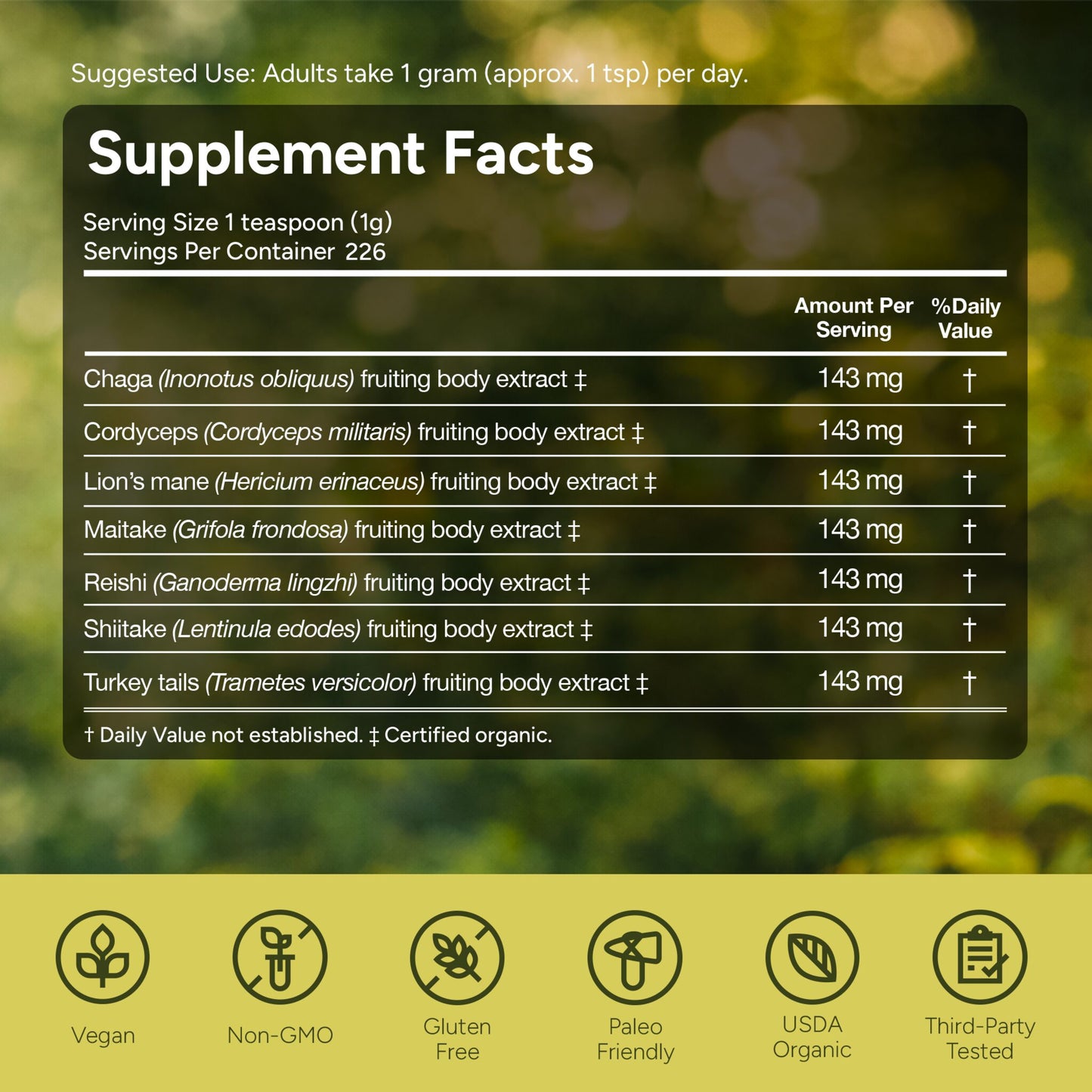
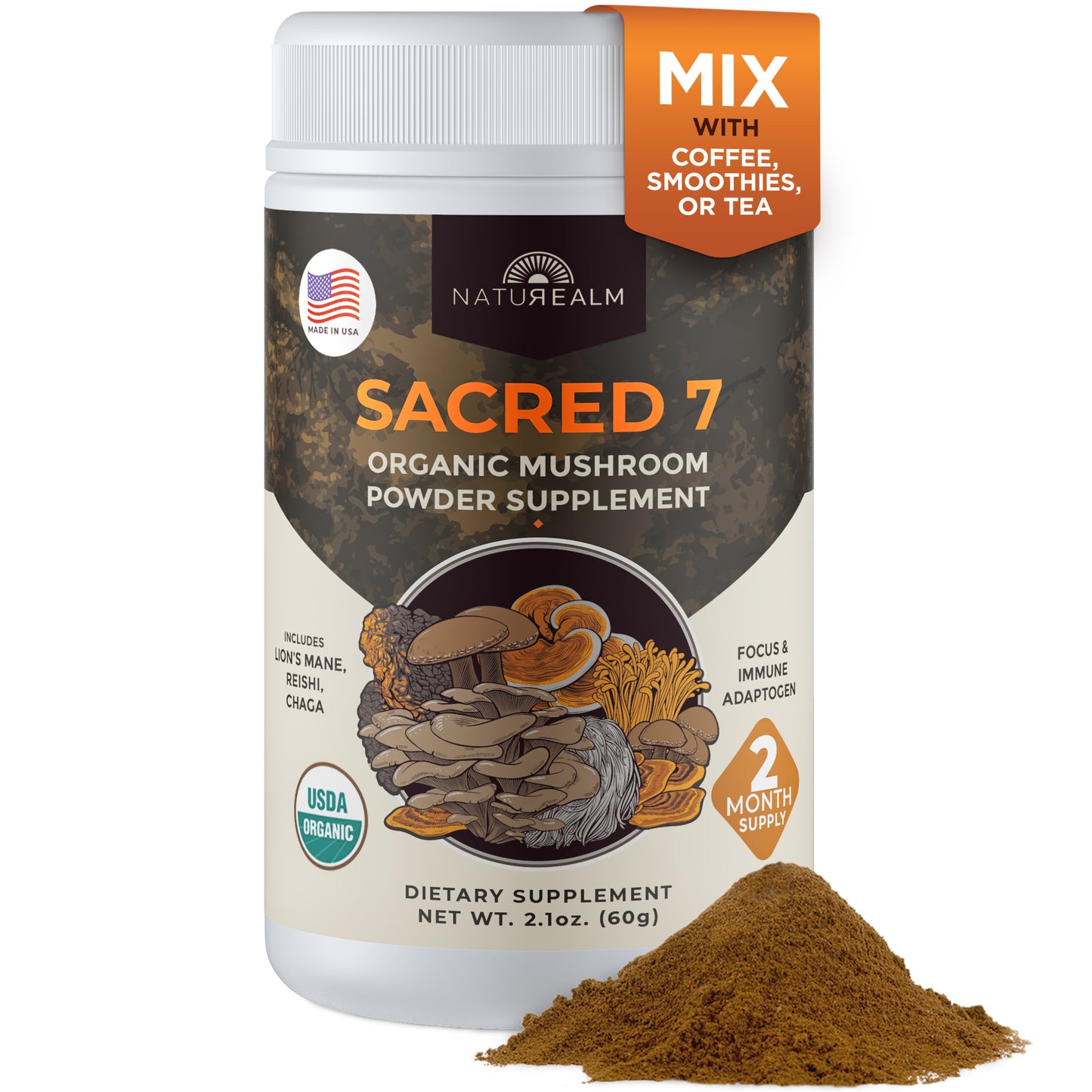
Sacred 7 includes all seven key species — Turkey Tail, Reishi, Chaga, Lion's Mane, Shiitake, Maitake, and Cordyceps — 100% fruiting body, hot water extracted, USDA Organic.
Shop Sacred 7 Powder Shop Sacred 7 CapsulesA Helpful Addition to Your Dog's Cancer Treatment
Dog cancer is a stressful and often frightening experience — for the dog and for you. Medicinal mushrooms for dogs won't replace veterinary medicine, but the research is clear that several species have documented, meaningful effects on immune function, tumor progression, and quality of life — both independently and alongside conventional cancer treatment.
Turkey Tail's PSK and PSP. Maitake's D-Fraction. Chaga's antioxidant and antiviral potency. Reishi's adaptogenic and liver function support. Lion's Mane's cognitive and anti-metastatic activity. Shiitake's lentinan. Cordyceps's vitality support. Together, these species address cancer support from multiple angles — which is why a well-formulated blend is often the most practical approach. Here's why mushroom blends outperform single-species supplements for comprehensive support.
References
(1) Su, Chun-Han, et al. "A (1→6)-Branched (1→4)-β-D-Glucan from Grifola Frondosa Inhibits Lipopolysaccharide-Induced Cytokine Production." Journal of Natural Products, 2020. https://doi.org/10.1021/acs.jnatprod.9b00584
(2) Kodama, Noriko, et al. "Effect of Maitake (Grifola Frondosa) D-Fraction on the Activation of NK Cells in Cancer Patients." Journal of Medicinal Food, 2003. https://doi.org/10.1089/109662003772519949
(3) Konno, Sensuke. "Potential Growth Inhibitory Effect of Maitake D-Fraction on Canine Cancer Cells." Veterinary Therapeutics, 2004. https://pubmed.ncbi.nlm.nih.gov/15719326/
(4) Singh, Kanchanlata, et al. "Antioxidants as Precision Weapons in War against Cancer Chemotherapy Induced Toxicity." Saudi Pharmaceutical Journal, 2018. https://doi.org/10.1016/j.jsps.2017.12.013
(5) Arata, Satoru, et al. "Continuous Intake of the Chaga Mushroom (Inonotus Obliquus) Aqueous Extract Suppresses Cancer Progression and Maintains Body Temperature in Mice." Heliyon, 2016. https://doi.org/10.1016/j.heliyon.2016.e00111
(6) Youn, Myung-Ja, et al. "Chaga Mushroom (Inonotus Obliquus) Induces G0/G1 Arrest and Apoptosis in Human Hepatoma HepG2 Cells." World Journal of Gastroenterology, 2008. https://doi.org/10.3748/wjg.14.511
(7) Antonelli, Michele, et al. "Lentinan for Integrative Cancer Treatment: An Umbrella Review." Proceedings, 2020. https://doi.org/10.3390/IECBM2020-08733
(8) Chihara, Goro, et al. "Fractionation and Purification of the Polysaccharides with Marked Antitumor Activity, Especially Lentinan, from Lentinus Edodes." Cancer Research, 1970.
(9) Tantawy, Ahmed A., and Deyala M. Naguib. "Arginine, Histidine and Tryptophan: A New Hope for Cancer Immunotherapy." PharmaNutrition, 2019. https://doi.org/10.1016/j.phanu.2019.100149
(10) Jeitler, Michael, et al. "Significance of Medicinal Mushrooms in Integrative Oncology: A Narrative Review." Frontiers in Pharmacology, 2020. https://doi.org/10.3389/fphar.2020.580656
(11) Kim, Sung Phil, et al. "Hericium Erinaceus (Lion's Mane) Mushroom Extracts Inhibit Metastasis of Cancer Cells to the Lung." Journal of Agricultural and Food Chemistry, 2013. https://doi.org/10.1021/jf400916c
(12) Li, Guang, et al. "Anticancer Potential of Hericium Erinaceus Extracts against Human Gastrointestinal Cancers." Journal of Ethnopharmacology, 2014. https://doi.org/10.1016/j.jep.2014.03.003
(13) Chong, Pit Shan, et al. "Therapeutic Potential of Hericium Erinaceus for Depressive Disorder." International Journal of Molecular Sciences, 2019. https://doi.org/10.3390/ijms21010163
(14) Brown, Dorothy Cimino, and Jennifer Reetz. "Single Agent Polysaccharopeptide Delays Metastases and Improves Survival in Naturally Occurring Hemangiosarcoma." Evidence-Based Complementary and Alternative Medicine, 2012. https://doi.org/10.1155/2012/384301