


Daylight Saving Time Ends Sunday: An Easy Evening Routine for Better Sleep
Daylight saving time ends at 2 a.m. this Sunday, November 1, when clocks fall back one hour to standard time. The fall time change is gentler than the spring one, but it can still nudge your circadian rhythm out of step for several days, especially if you're an early riser. The easiest fix is to shift your bedtime 15 to 30 minutes later on each of the nights before, keep your wake times steady, get natural light early in the morning, and dim the lights in the evening. A calm bedtime routine helps, too. Ours includes a warm mug of tea with 2 droppers of Reishi tincture. Reishi isn't a sleep aid or a treatment for insomnia, but it fits easily into an evening wind-down.
When Does Daylight Saving Time End in 2026?
Daylight saving time (DST) ends Sunday, November 1, 2026, at 2 a.m. local time. Clocks fall back to 1 a.m., and the US returns to standard time until March.
Most phones and computers change on their own. Ovens, car dashboards, and wall clocks don't, so it's worth resetting those Saturday night. Hawaii and most of Arizona don't observe DST, so their clocks stay put.
You may have heard the clock change could end for good. On July 14, 2026, the US House passed the Sunshine Protection Act, 308 to 117, which would make daylight saving time permanent. The Senate hasn't passed it as of this writing, so we're still changing clocks twice a year.
How Does the Time Change Affect Your Sleep?
The time change moves the clock on the wall, but not the internal clock in your brain, so your body runs an hour off schedule until it catches up.
Your circadian rhythm is the roughly 24-hour body clock that sets when you feel sleepy, alert, and hungry. This biological clock is set mainly by light exposure, especially natural light in the morning. When the clock change happens overnight, your sleep-wake cycle takes several days to realign. Sleep researchers call the gap between your circadian clock and your daily schedule "social jet lag," because it feels a lot like flying across one time zone.

- Fall back: you get an extra hour of sleep on paper. In practice, many people, especially early risers, just wake up an hour earlier by the new clock, and the sun now sets around 5 p.m.
- Spring forward: losing an hour of sleep is the harder shift. Sleep deprivation shows up for days, and the research on health risks centers on this spring time change.
What Does the Research Say About Daylight Saving Time and Health?
Studies link the spring time change to a short-term rise in heart attacks and traffic accidents. The fall change shows smaller effects.
| Outcome | What the study found | Source |
|---|---|---|
| Heart attacks | 25% more on the Monday after spring forward than on other Mondays; 21% fewer on the Tuesday after fall back | Sandhu et al., American College of Cardiology, 2014 (Michigan hospital data) |
| Heart attacks | About 5% higher risk in the week after the spring shift; no clear change after the fall shift | Manfredini et al., Journal of Clinical Medicine, 2019 (7 studies, about 117,000 people) |
| Car accidents | About 6% more fatal crashes in the week after spring forward, roughly 28 extra deaths a year in the US | Fritz et al., Current Biology, 2020 (22 years of US crash data) |
These are associations from large records studies, not proof that the clock change causes heart disease or crashes. One likely link is sleep loss: short, poor sleep raises blood pressure and slows reaction time. Sleep disruption also tracks with mood disturbances, and shorter evening daylight in the fall can weigh on mental health for some people.
That's why the American Academy of Sleep Medicine (AASM) recommends ending seasonal time changes in favor of permanent standard time, which it says "aligns best with human circadian biology." Note that this is the opposite of the Sunshine Protection Act, which would lock in permanent daylight saving time.
How Do You Adjust Your Sleep Schedule Before the Clocks Fall Back?
Push your bedtime 15 minutes later each night for the 4 nights before the change, so your body is already on the new time by Sunday.

- Shift bedtime gradually. If you usually go to bed at 10 p.m., go at 10:15 Wednesday, 10:30 Thursday, 10:45 Friday, and 11:00 Saturday. On Sunday, 10 p.m. on the new clock feels normal. Reading this on Friday? Go 30 minutes later tonight and a full hour later Saturday.
- Move meals and wake times with it. Your body clock also takes cues from when you eat. Shift dinner and your alarm later in the same small steps.
- Get evening light before the change. A walk in the late-afternoon sun helps push your internal clock later, which is the direction you want for fall back.
- Then switch to morning light. From Sunday on, get outside within an hour of waking. Natural light is the strongest signal for resetting your circadian rhythm.
Add Reishi to your evening routine →
What's a Good Evening Routine for Better Sleep?
A good bedtime routine starts about an hour before bed: dim the lights, put screens away, have something warm, and go to bed at the same time each night.
Sleep hygiene sounds clinical, but it mostly means making the same calm choices every night so your brain learns the cue. Here's the routine we suggest for the week of the time change:

- Dim the evening light. After the fall back, it's dark by dinner. Use lamps instead of overhead lights, and lower screen brightness. Bright evening light delays melatonin, the hormone that tells your body it's night.
- Have something warm. A caffeine-free herbal tea with 2 droppers of Reishi tincture is our nightly ritual. See how to pair Reishi tincture with tea.
- Keep naps short and early. Naps of 20 to 30 minutes before mid-afternoon are fine. Long or late naps make it harder to fall asleep at your new bedtime.
- Stop caffeine by early afternoon. Caffeine can stay in your system for many hours.
- Keep wake times steady, even on weekends. A consistent wake time anchors your sleep patterns more than a consistent bedtime does.
Can Reishi Help You Sleep?
The research is early. Animal studies suggest Reishi may support sleep, and one new human trial looks promising, but it hasn't been published in a journal yet.
Reishi (Ganoderma lucidum) has been used in Traditional Chinese Medicine for about 2,000 years and is traditionally taken in the evening. In rats and mice, Reishi extracts increased total sleep time in lab studies. In June 2026, a randomized trial presented at the SLEEP 2026 conference compared 980mg of a Reishi extract standardized to 6% triterpenes with 5mg of melatonin in 218 adults with chronic insomnia. After 8 weeks, the Reishi group's insomnia scores improved more. It's a single study, reported only as a conference abstract, and blinding wasn't described, so treat it as a reason for more research, not a conclusion. It also used a different Reishi product and dose than our tincture.
What we can say: Reishi is a calm, earthy addition to a nightly routine, and routine itself is one of the best-supported tools for sleep health. Our deeper look at the evidence is in 4 Medicinal Mushrooms for Deep, Restorative Sleep.
You can buy Reishi Mushroom Liquid Dual-Extract directly from Naturealm, made from organic Reishi fruiting bodies grown on a small family farm in California.
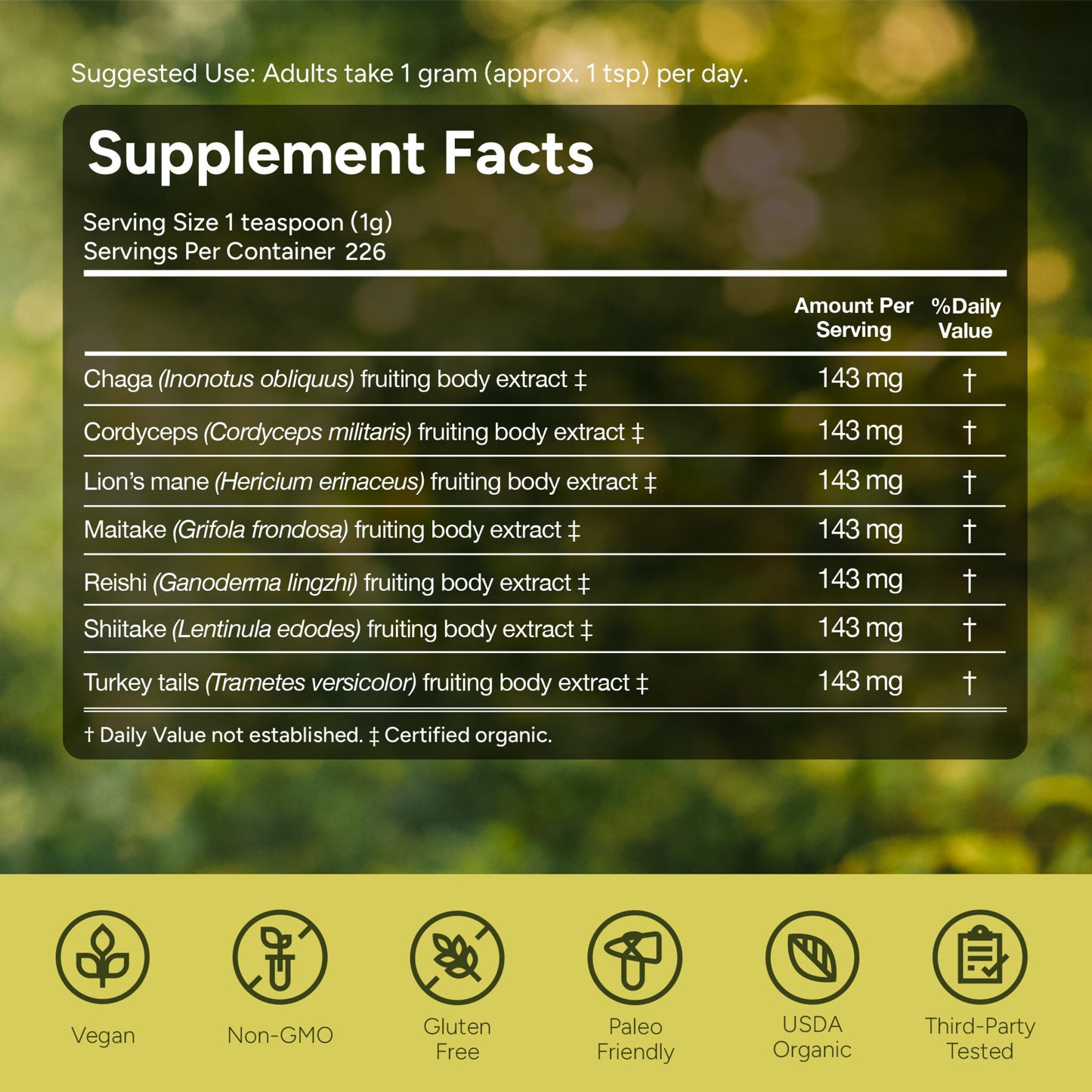
The fruiting bodies soak in organic cane alcohol for 30 days, then simmer in hot water, and the two extracts are combined. Two droppers stir into a warm mug of tea. Prefer a powder? One level teaspoon of Sacred 7 Powder includes 143mg of Reishi alongside six other mushrooms.
One caution: Reishi may interact with blood thinners and blood pressure medications. If you take either, check with your provider first. Our guide on how to talk to your doctor about mushroom supplements covers what to ask.
Should You Take Melatonin for the Time Change?
Talk to your provider first. Melatonin is mainly studied for shifting the body clock, not as a general sleeping pill.
Small, well-timed doses of melatonin can help move your internal clock, which is why it's used for jet lag. For ongoing insomnia, the American Academy of Sleep Medicine's 2017 guideline doesn't recommend it. For the fall time change, light exposure and a steady sleep schedule usually do the job, and most people adjust within a week.
When Should You See a Doctor About Poor Sleep?
If you're still sleeping poorly two weeks after the clock change, or you snore loudly or feel exhausted during the day, it's worth a conversation with your doctor.
Those can be signs of sleep disorders like insomnia or sleep apnea, which are common and treatable but don't fix themselves with a better bedtime. Lasting sleep deprivation is also tied to heart disease and mood changes, so it's worth taking seriously. Bring a week of notes on your bedtime, wake times, and naps to the appointment.
Shop Reishi Tincture →Shop Sacred 7 Powder →
These statements have not been evaluated by the Food and Drug Administration. This product is not intended to diagnose, treat, cure, or prevent any disease.