
Mushroom Coffee Without Caffeine: Your Real Options
Most mushroom coffee isn't caffeine-free, because it's still made with coffee: a typical serving has about 35 to 50mg. For mushroom coffee without caffeine, you have two real options. Stir a mushroom extract into decaf, which still carries about 2 to 15mg per cup, or skip coffee entirely and use a roasted, coffee-like base such as chicory or dandelion root, which has none. Hot cacao is a third route at about 12mg. The mushrooms themselves contain no caffeine, so a teaspoon of Sacred 7 adds 0mg to whatever you mix it into. Check labels for a stated caffeine number, since "low caffeine" isn't the same as caffeine-free.

Is There Mushroom Coffee Without Caffeine?
Yes, though most products sold as "mushroom coffee" still contain caffeine because they're made with real coffee.
Mushroom coffee is usually instant coffee blended with mushroom powder, so the caffeine is lower than a regular cup, not gone. Most land around 35 to 50mg per serving, compared with about 95mg in an 8-ounce cup of brewed coffee (see Mushroom Coffee vs. Regular Coffee). Products that are truly caffeine-free swap the coffee for a roasted base like chicory, dandelion root, or roasted grains, and they'll usually say "caffeine-free" or "0mg caffeine" on the label.
The mushrooms aren't the source of the caffeine. Lion's Mane, Reishi, Chaga, and the rest contain none, which means you can build your own caffeine-free version around them.
What Are the Caffeine-Free Options?
Pair a mushroom extract with a base that has little or no caffeine. Here's how the options compare.
| Option | Caffeine per mug (approx.) | Tastes like |
|---|---|---|
| Chicory or dandelion root + Sacred 7 | 0mg | Roasty and bitter, the closest to coffee |
| Herbal tea or golden milk + Sacred 7 | 0mg | Earthy and warm, not coffee-like |
| Hot cacao + Sacred 7 | About 12mg | Rich and chocolatey |
| Decaf coffee + Sacred 7 | 2 to 15mg | Your coffee, with an earthy note |
| Typical mushroom coffee | 35 to 50mg | Instant coffee with earthy notes |
Decaf isn't zero: the FDA notes decaf coffee typically has 2 to 15mg in an 8-ounce cup. That's a small amount, and for many people it's the easiest swap because it keeps the taste of coffee. If you need a true zero, go with a chicory or dandelion base or a tea.
How Do You Make Mushroom Coffee Without Caffeine at Home?
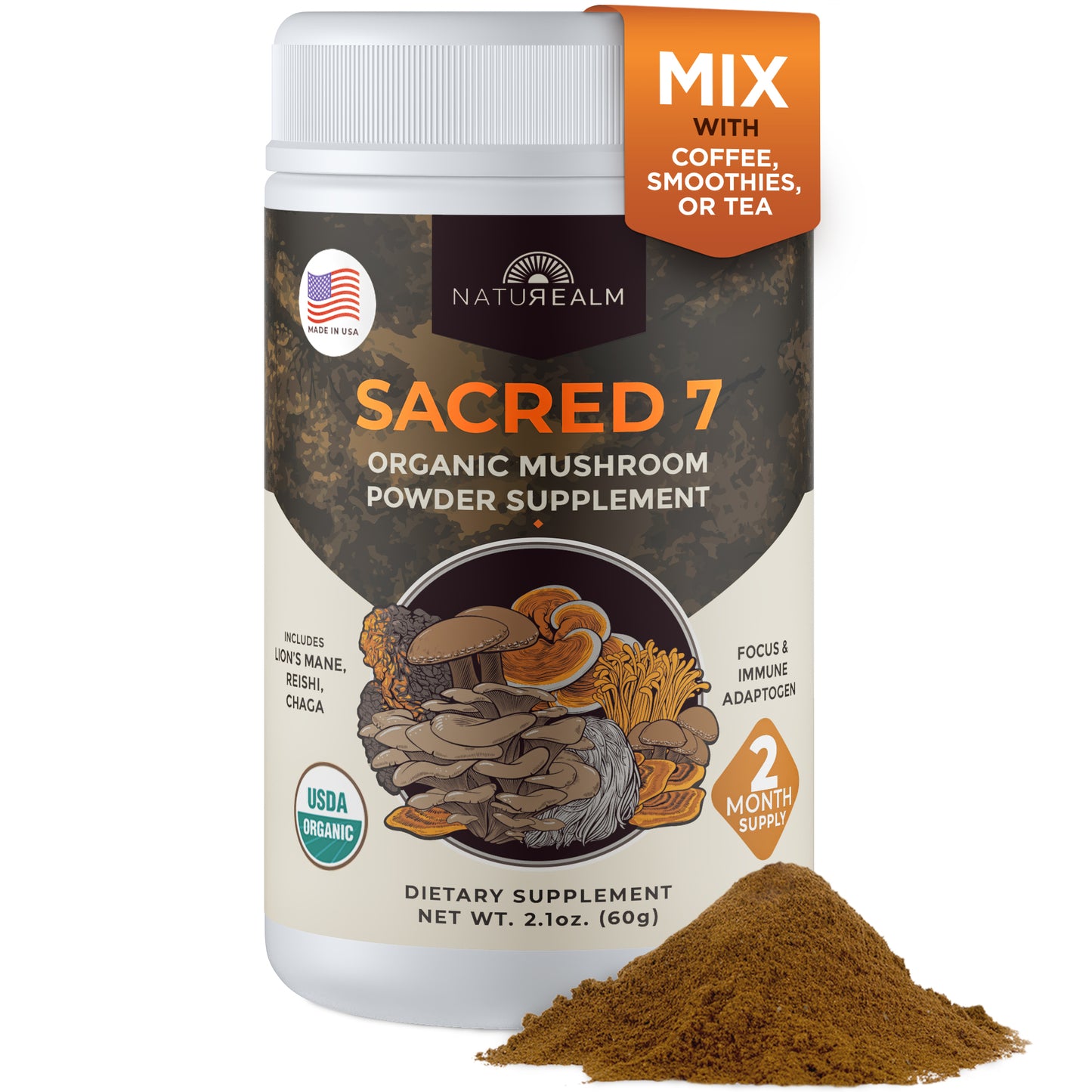
Start with Sacred 7 Powder, which has no coffee and no caffeine of its own. Stir one level teaspoon into whichever base you choose.
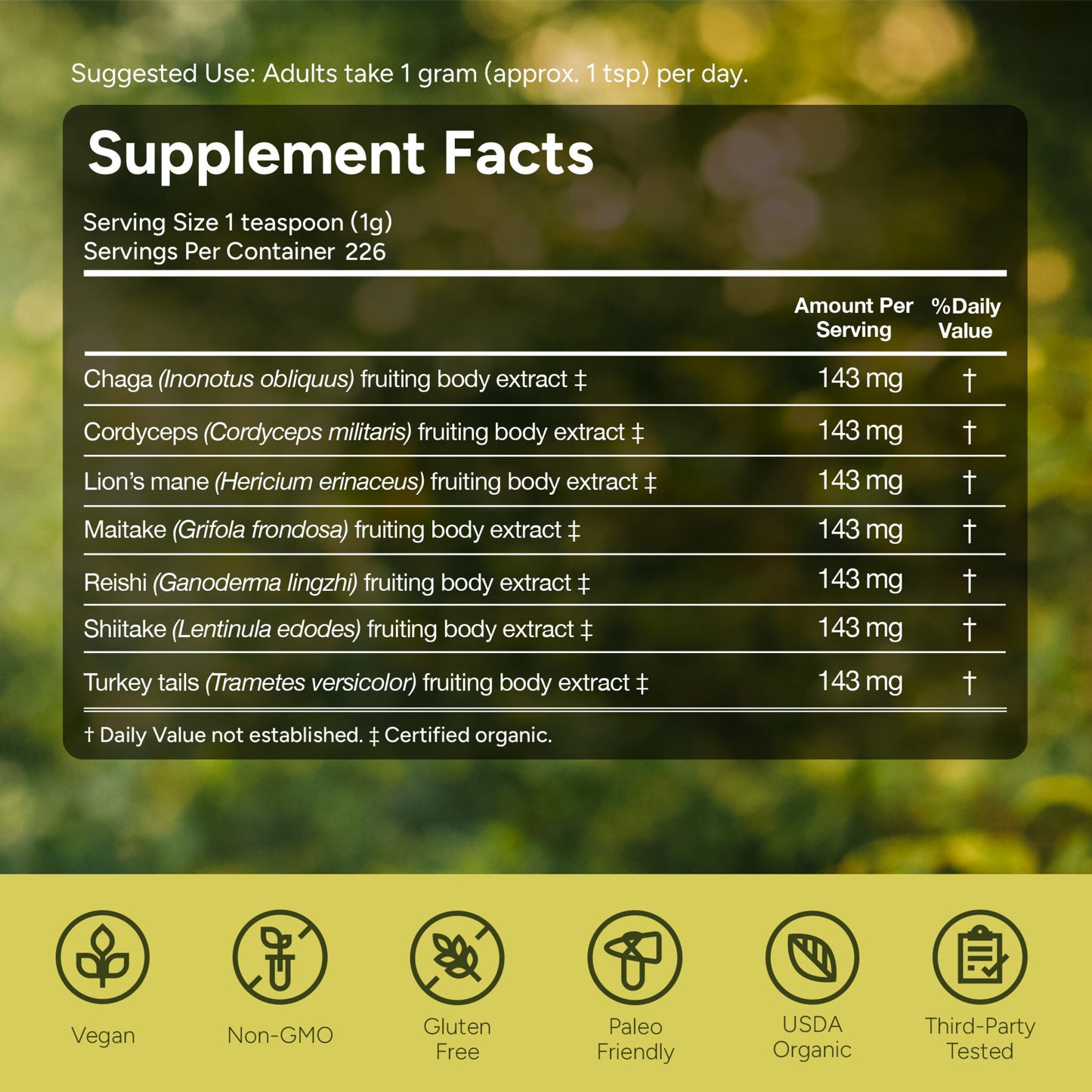
Each teaspoon holds 1,000mg of hot water extract from seven mushrooms: Lion's Mane, Reishi, Chaga, Cordyceps, Turkey Tail, Shiitake, and Maitake. It's 100% fruiting body, certified organic, and third-party tested by an independent lab. A handheld frother mixes it smooth in about 20 seconds.
- Brew your base. Make 8 ounces of roasted chicory or dandelion root, decaf, or tea as usual.
- Make a paste. Stir 1 level teaspoon of Sacred 7 into a splash of the hot drink until smooth.
- Combine and froth. Add the rest of the drink, plus milk and sweetener if you like, and froth for about 20 seconds.
For a richer version, try mushroom hot chocolate at about 12mg of caffeine, or the caffeine-free Vegan Reishi Golden Milk.
Which Base Tastes Most Like Coffee?
Roasted chicory root comes closest to coffee's bitter, roasty taste, and dandelion root is a close second.
Both are roasted, ground, and brewed like coffee, and they're the base most caffeine-free "coffee alternatives" use. Chicory is darker and more bitter. Dandelion is a little sweeter and earthier. Either one stands up well to the earthy notes of a mushroom extract, and a splash of whole milk or oat milk rounds them out. If you'd rather keep real coffee flavor, decaf plus an extract is the simplest move.
Why Go Caffeine-Free?
Most people do it for sleep, jitters, or a sensitive stomach, or simply to cut back.
The FDA cites 400mg a day as an amount not generally linked to negative effects for most adults, and notes that sensitivity varies from person to person. If you're cutting back, the FDA suggests going gradually, since stopping suddenly can bring on headaches. A practical way to do it: swap your afternoon cup first, then mix half regular and half decaf in the morning for a week or two before going fully decaf.
Keeping a warm drink in your routine makes the change easier to stick with, and a mushroom extract gives that mug a purpose. For more on what's behind jitters and stomach upset, see Mushroom Coffee Side Effects: Is It the Mushrooms or the Coffee?
Which Mushrooms Work Best in a Caffeine-Free Drink?
A blend covers the most ground in one teaspoon, and Reishi is the classic choice for an evening cup.
- Sacred 7: all seven mushrooms in one level teaspoon, any time of day.
- Reishi: traditionally taken in the evening. Stir 2 droppers of Reishi Liquid Dual-Extract into a decaf or herbal mug.
- Lion's Mane: a common morning pick for people who want a focus ritual without caffeine. See Lion's Mane for Focus.
One caution: Reishi may increase bleeding risk alongside blood thinners. Check with your doctor first if that applies to you.
Frequently Asked Questions
Do Mushrooms Have Caffeine?
No. Lion's Mane, Reishi, Chaga, Cordyceps, Turkey Tail, Shiitake, and Maitake contain no caffeine. Any caffeine in a mushroom drink comes from coffee, tea, or cacao.
Is Decaf Mushroom Coffee Caffeine-Free?
Not completely. Decaf coffee typically has 2 to 15mg in an 8-ounce cup, according to the FDA. For a true zero, use a chicory, dandelion, or herbal tea base.
Can You Drink Caffeine-Free Mushroom Coffee at Night?
Yes. With a zero-caffeine base, there's no caffeine to keep you up. Many people pick Reishi or a blend for an evening mug.
Will I Still Feel Awake Without Caffeine?
Mushrooms don't act like caffeine and won't give you a jolt. If you're cutting back, expect a week or two of adjustment, and lean on sleep, daylight, and a steady morning routine.
Looking for ready-made options? See What Is the Best Mushroom Coffee Alternative?
These statements have not been evaluated by the Food and Drug Administration. This product is not intended to diagnose, treat, cure, or prevent any disease.