


Mushroom Coffee Side Effects: Is It the Mushrooms or the Coffee?
Most mushroom coffee side effects come from the coffee, not the mushrooms. Jitters, a racing heart, poor sleep, and an upset stomach usually trace back to caffeine, which most blends still contain at about 35 to 50mg per serving. The mushrooms themselves are generally well tolerated at the small amounts in a typical cup, though some people notice mild digestive changes, dry mouth, or itching. The real cautions are specific: Reishi may raise bleeding risk alongside blood thinners, and very high daily Chaga intake has been linked to kidney problems in case reports. If you take medication, are pregnant, or have kidney or liver issues, talk to your doctor first.

What Are the Side Effects of Mushroom Coffee?
The most common side effects of mushroom coffee are caffeine effects (jitters, a racing heart, trouble sleeping) and mild stomach upset.
Less common reactions come from the mushrooms themselves. Memorial Sloan Kettering's patient guide on Reishi lists nausea among its side effects and flags interactions with blood thinners and immunosuppressants. Rarer, more serious problems show up in case reports, almost always at doses far larger than a cup of mushroom coffee holds.
| Side effect | Most likely cause | What to try |
|---|---|---|
| Jitters, racing heart, anxiety | Caffeine | Have it earlier in the day, cut to half a serving, or go caffeine-free |
| Trouble sleeping | Caffeine, especially after noon | Move your last caffeinated cup to the morning |
| Acid stomach, heartburn | The coffee base | Drink it with food, or try cold brew |
| Bloating, looser stools | A new mushroom or new routine | Start with half a serving for the first week |
| Dry mouth, itching, rash | Mushrooms, most often Reishi | Stop and check with your doctor if it doesn't pass |
| Unusual bruising or bleeding | Reishi with blood thinners | Stop and call your doctor |
Is It the Mushrooms or the Coffee?
For most people, it's the coffee. Mushrooms contain no caffeine, so any buzz, crash, or 2am wide-awake moment comes from the coffee in the blend.
Most mushroom coffees carry about 35 to 50mg of caffeine per serving, roughly half of the 95mg in an 8-ounce cup of brewed coffee (see Mushroom Coffee vs. Regular Coffee). The FDA cites 400mg a day as an amount not generally linked to negative effects in most adults, and notes that sensitivity varies from person to person.
Here's what most posts skip: when mushrooms and coffee come in one scoop, you can't tell which one your body is reacting to. Naturealm doesn't sell mushroom coffee, so the community keeps the two separate by default, and that turns out to be the easiest way to sort it out. Drop the mushrooms for a few days and keep the coffee, or the reverse, and you'll know.
How Can You Get Mushrooms Without the Coffee Side Effects?
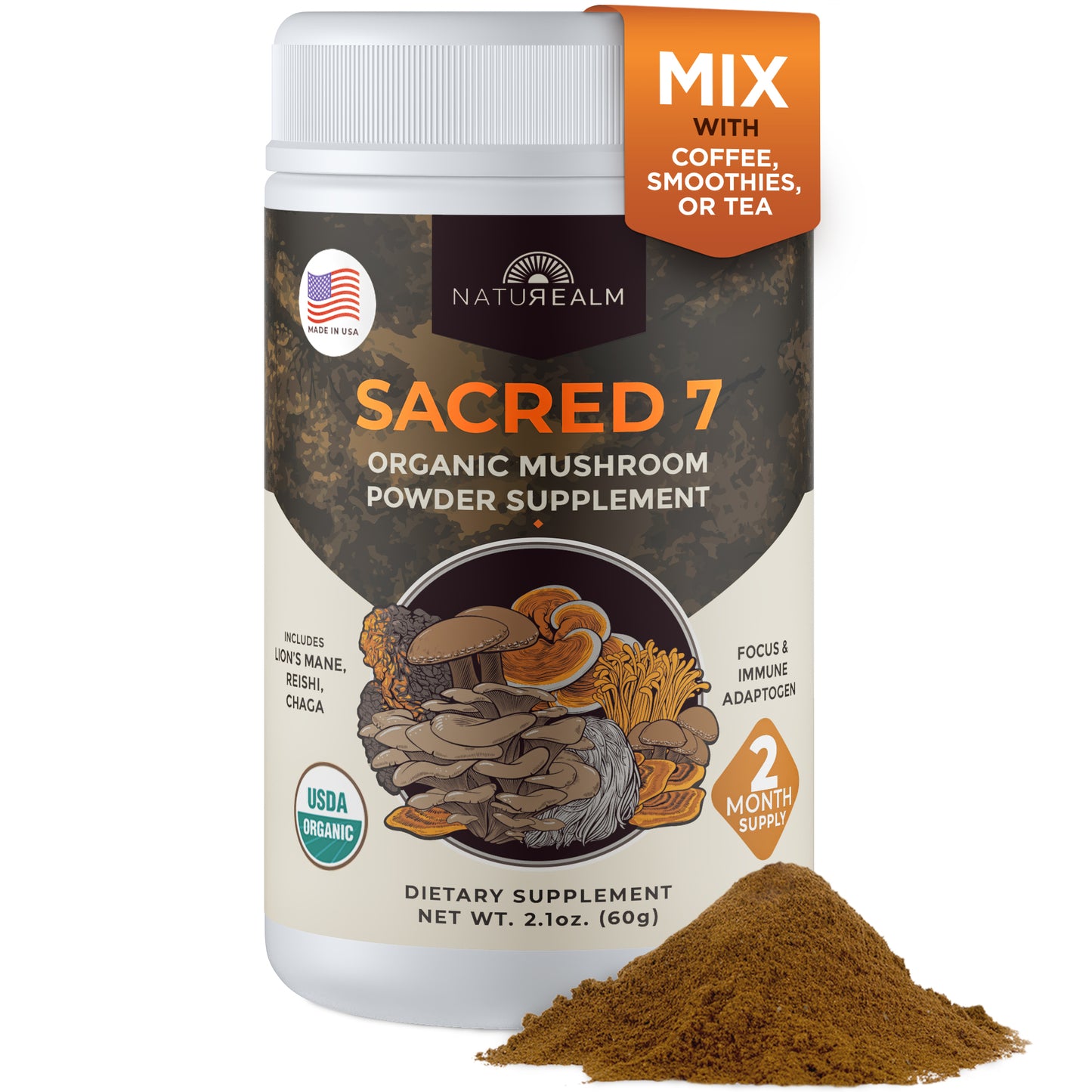
You can keep the mushrooms and control the caffeine yourself with Sacred 7 Powder. It has no coffee and no caffeine, so you add it to whatever you already drink: coffee, decaf, tea, cacao, or a smoothie.
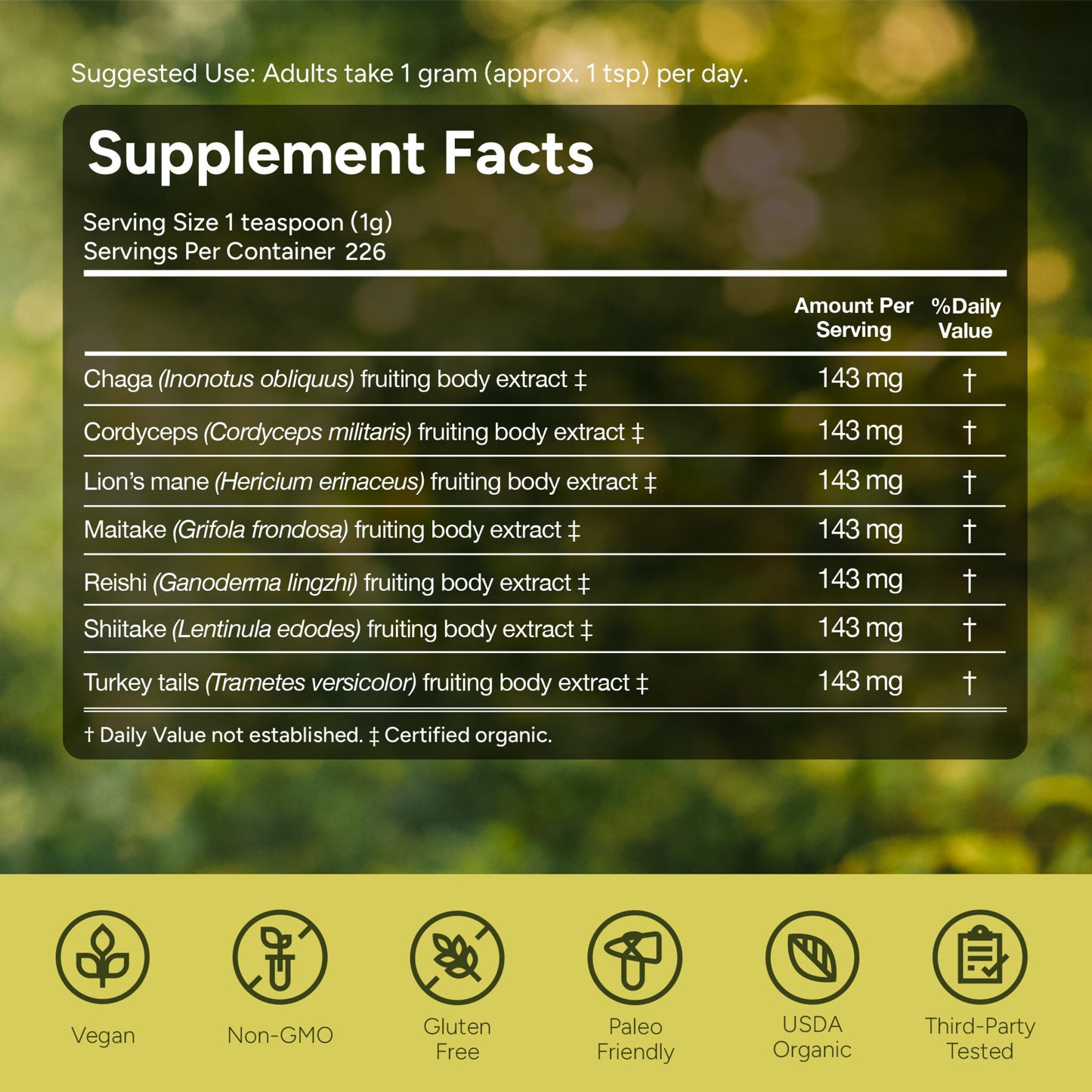
Each level teaspoon holds 1,000mg of hot water extract from seven mushrooms (Lion's Mane, Reishi, Chaga, Cordyceps, Turkey Tail, Shiitake, and Maitake), 100% fruiting body, certified organic, and third-party tested by an independent lab. If you'd rather skip the taste entirely, three Sacred 7 Capsules hold the same 1,000mg.
Is Mushroom Coffee Safe to Drink Every Day?
For most healthy adults, a daily cup of mushroom coffee is likely fine, as long as your total caffeine stays reasonable.
The honest gap: no human trial has tested the long-term safety of a finished mushroom coffee product. The safety picture comes from studies of individual mushrooms, case reports, and decades of use as food. Daily use is easiest to judge when you know exactly what's in the cup, so look for a label that lists how much of each mushroom you're getting and whether it comes from fruiting bodies. These five label checks take about a minute.
Who Should Avoid Mushroom Coffee?
Check with your doctor first if you take blood thinners, diabetes or blood pressure medication, or immunosuppressants, or if you're pregnant, breastfeeding, or managing kidney or liver issues.
- Blood thinners: Reishi may add to their effect. In a small 1990 study in the Journal of Tongji Medical University, Tao and Feng gave Reishi at 1g three times a day for two weeks and saw reduced platelet aggregation (Tao and Feng, 1990).
- Immunosuppressants: Memorial Sloan Kettering advises talking to your care team before using Reishi alongside these drugs.
- Kidney stones or kidney disease: Chaga is naturally high in oxalates (more on this below).
- Caffeine-sensitive conditions: heart rhythm issues, anxiety, acid reflux, or pregnancy all call for watching caffeine from any source.
One caution: Bring your full supplement list to your next appointment. Here's how to talk to your doctor about mushroom supplements.
What Do the Serious Case Reports Actually Show?
The serious cases involve large daily doses of single-mushroom powders, taken for months. They're worth knowing about, and worth reading in context.
- Chaga and the kidneys: Kikuchi and colleagues (2014, Clinical Nephrology) described a person who took 4 to 5 teaspoons of Chaga powder a day for six months and developed oxalate nephropathy. Kwon and colleagues (2022, Medicine) reported acute kidney injury after 10 to 15g of Chaga powder a day for three months, alongside daily vitamin C. Lee and colleagues (2020, Journal of Korean Medical Science) measured the leftover Chaga in another long-term case and found very high oxalate content. All three are single case reports.
- Reishi and the liver: Wanmuang and colleagues (2007, Journal of the Medical Association of Thailand) described liver injury in two people after switching to Reishi powder for one to two months; both were also taking other medications. Guedikian and colleagues (2023, Cureus) reported acute liver injury after Reishi powder combined with alcohol, which fully resolved within two weeks.
For scale: the Chaga cases involved several teaspoons to 15 grams a day of Chaga alone. A teaspoon of Sacred 7 holds 1,000mg in total, shared across seven mushrooms, so the Chaga in a serving is a small fraction of those amounts. That doesn't make anyone immune. If you have a history of kidney stones, ask your doctor before adding Chaga in any form.
How Do You Start Without Side Effects?
Start small, keep caffeine separate, and change one thing at a time.
- Half a serving for the first week: gives your stomach time to adjust to a new routine.
- Morning only: keeps any caffeine away from your sleep.
- With food: eases acid stomach from the coffee base.
- One new product at a time: so you know what you're reacting to.
- Keep your coffee and your mushrooms separate if you're sensitive: stir an extract into your own cup, or try a caffeine-free mushroom coffee alternative.
Frequently Asked Questions
Can Mushroom Coffee Make You Poop?
It can. Coffee itself gets the gut moving for many people, and a new mushroom routine can loosen stools for the first few days. Starting with half a serving usually helps.
Why Does Mushroom Coffee Make Me Feel Jittery?
Almost always because of caffeine. Mushrooms contain none, so the jitters come from the coffee in the blend. A caffeine-free option or a smaller serving is the simplest fix.
Does Mushroom Coffee Interact With Medications?
It can, depending on the mushrooms. Reishi may interact with blood thinners and immunosuppressants. Check with your doctor or pharmacist if you take any prescription medication.
Is Mushroom Coffee Bad for Your Kidneys or Liver?
Not at typical amounts, as far as current evidence shows. Kidney and liver problems in the case reports involved large daily doses of single-mushroom powders over months. If you already have kidney or liver issues, talk to your doctor first.
For a closer look at the benefits side, see Is Mushroom Coffee Worth It? What the Research Actually Shows.
These statements have not been evaluated by the Food and Drug Administration. This product is not intended to diagnose, treat, cure, or prevent any disease.