

Mushroom Powder vs. Mushroom Coffee: What You're Actually Getting
If you've been curious about mushroom coffee, you're not alone. It's been showing up everywhere: at the grocery store, in your Instagram feed, in the wellness aisle next to the protein powders. And if you've already tried it, or you're wondering whether it's worth it, this is for you.
Let's just talk through what's actually in each one, how they work, and what makes sense depending on what you're trying to get out of your daily routine.
First, What Even Is Mushroom Coffee?
Mushroom coffee is exactly what it sounds like: ground coffee mixed with mushroom extract. Usually it's sold as instant packets or coffee blends, and the mushrooms involved are typically functional mushrooms like Lion's Mane, Chaga, Reishi, or Cordyceps — the same types used in dedicated mushroom dietary supplements.
The appeal makes sense, especially for those looking to avoid the common side effects of high-caffeine drinks. You're already making coffee in the morning, so why not make it do a little more? And mushroom coffee does usually have a lower caffeine content than a straight cup of regular coffee, which means fewer jitters for people who are sensitive to caffeine.
Where it gets interesting is when you start asking how much of the mushroom you're actually getting — and whether it's been processed in a way that makes the good stuff available to your body.
Why Extraction Is Everything
Here's something most mushroom coffee brands don't really talk about: the health benefits of medicinal mushrooms — the immune support, the antioxidants, the adaptogenic effects — come from specific bioactive compounds inside the mushroom. Things like beta-glucans, polysaccharides, triterpenoids.
And here's the thing about those compounds. They're locked behind really tough cell walls made of a material called chitin. Your body isn't great at breaking chitin down, which means if you eat a raw mushroom or take a mushroom powder that hasn't been properly extracted, you're missing a lot of what you came for.
This is why the specific extraction process matters so much. Two main methods are used for quality functional mushrooms:
- Hot water extraction uses heat to break down those tough cell walls and release the water-soluble compounds — especially beta-glucans and polysaccharides, which are central to immune system support. Every product in our line starts here.
- Dual extraction goes further, combining hot water extraction with an alcohol extraction to also capture fat-soluble compounds like triterpenes and sterols. For Reishi mushroom in particular, those triterpenes are a big part of what makes it so valued for stress relief and sleep support. That's why Naturealm's reishi, chaga, and lion's mane tinctures are dual-extracted.
Why does this matter for mushroom coffee? Because instant mushroom coffee products have to fit the mushroom extract alongside coffee beans, flavoring, and sometimes fillers — which leaves less room for the actual functional mushroom content. And that content isn't always extracted to the same standard, or disclosed in full on the label.
What the Research Is Actually Looking At
One of the things I spend a lot of time reading is the mushroom research that comes through Shroomer's Shroom Scan newsletter. Week after week, the studies that show real results are using specific types of mushroom extracts at specific doses. Here's a snapshot of what's been coming through recently.
Reishi and Inflammation
Recent research found that Reishi (Ganoderma lucidum) polysaccharides significantly reduced gut inflammation markers — including TNF-alpha and IL-6 — while also improving antioxidant defenses and shifting the gut microbiome toward healthier bacterial populations. Separately, an extraction study found that Reishi cut IL-6 levels by 80 to 90%, but only when the extraction preserved the relevant fatty compounds and triterpenoids. The extraction method directly changed the outcome.
Cordyceps and Endurance
A 2025 meta-analysis across multiple controlled trials found that Cordyceps supplementation improved oxygen efficiency, raised the ventilatory threshold (meaning fatigue kicked in later), and supported better endurance performance. The effective daily dose was 2 to 3 grams. That's a meaningful amount — something worth knowing when you're reading a supplement label.
Lion's Mane and Brain Support
Lion's Mane mushroom (Hericium erinaceus) is one of the most researched functional mushrooms for cognitive support. Its neuroprotective effects are tied to nerve growth factor (NGF) stimulation, and recent research has confirmed significant reductions in inflammatory markers in neural tissue at consistent doses. A related mushroom in the same Hericium family showed 2 to 2.5 times increases in neurite growth in preclinical models, with doses around 50 to 500 mg per kilogram.
Beta-Glucans and Immune Response
A 2025 immunology review confirmed that beta-glucans from mushrooms are powerful immune modulators, but that their effects depend on molecular structure and concentration. Not all mushroom supplements deliver the same immune benefits, even if they contain the same mushroom names on the label. The quality of the beta-glucan determines the real-world impact.
Chaga and Antioxidants
Chaga (Inonotus obliquus) has one of the highest antioxidant scores of any food or supplement measured, with an ORAC score of 146,700 — nearly 50% higher than acai berry. Its antioxidant activity comes from polyphenols, polysaccharides, melanin, and triterpenes. Those compounds are available in a properly extracted chaga supplement. Getting meaningful amounts through a mushroom coffee blend is harder, because the Chaga content is smaller and the extraction standard isn't always the same.
The Fruiting Body Question
You'll see this phrase on Naturealm products: 100% fruiting bodies. Here's what that means and why it matters.
A mushroom plant has two main parts: the fruiting body (the actual mushroom you'd recognize) and the mycelium (the root-like system it grows from). Both contain beneficial compounds, but the fruiting body is where the highest concentrations of beta-glucans and other bioactive compounds are found.
Some mushroom supplement brands — including many beloved mushroom coffee brands — use mycelium instead of fruiting bodies because it's cheaper and faster to produce. Mycelium is often grown on grain, and the final product can end up containing more grain starch than actual fungal material. This dilutes the potency of the supplement significantly.
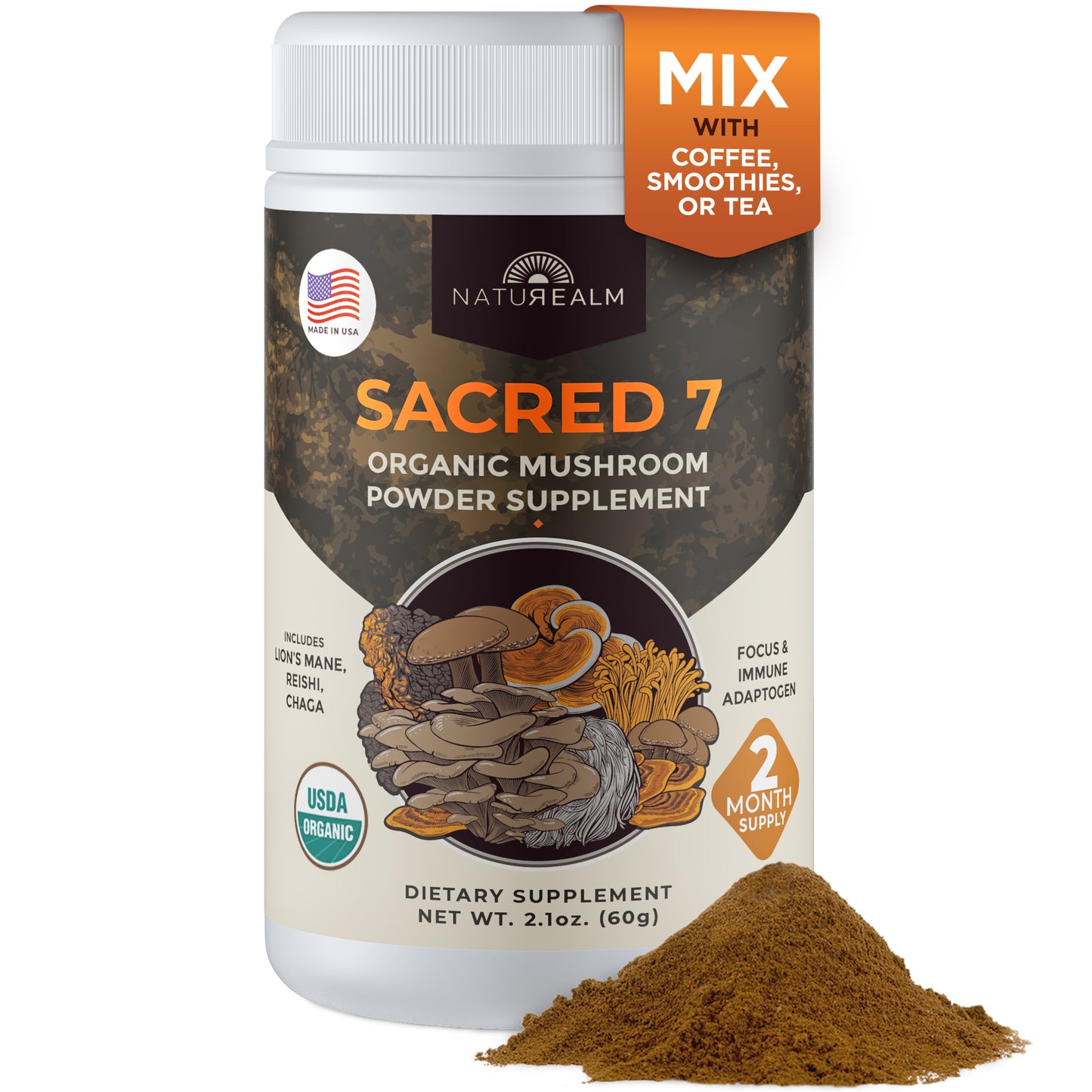
Naturealm uses only 100% fruiting bodies across the entire line. No mycelium on grain, no fillers. Every batch is tested by third-party independent labs, Sacred 7 Mushroom Extract Powder included.
So What Does Mushroom Powder Give You That Coffee Can't?
A few things worth thinking through:
- Flexibility: Mushroom extract powder mixes into almost anything — your morning coffee or tea, a smoothie, oatmeal, a broth. You're not locked into a caffeine format. If you want the well-being support of functional mushrooms at lunch or in the evening, powder makes that easy. Traditional coffee does not.
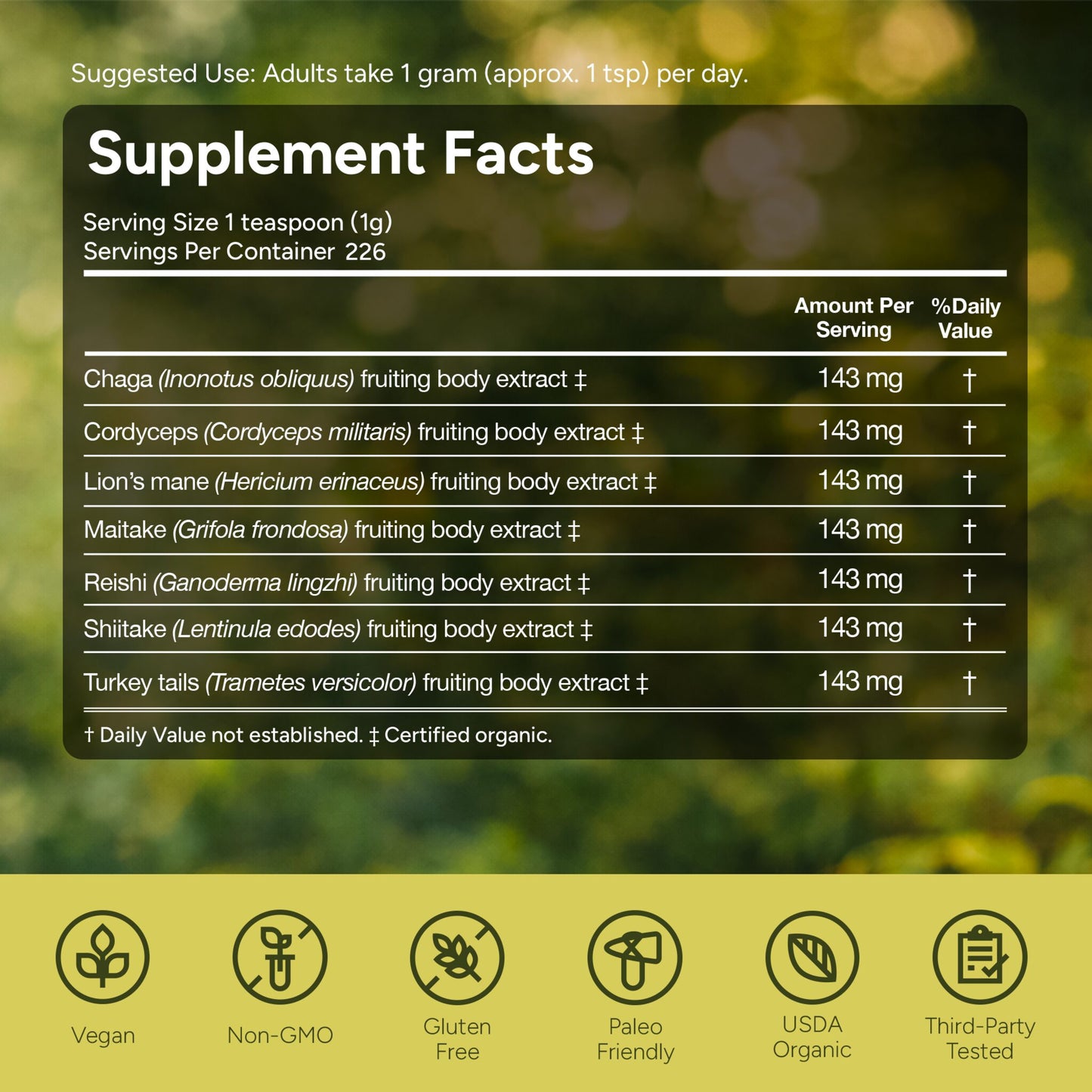
- Dose transparency: A dedicated mushroom supplement tells you exactly how much of each mushroom you're getting per serving. Sacred 7, for example, contains 1000mg of mushroom extract per serving — 143mg of each of the seven mushrooms (Lion's Mane, Reishi, Chaga, Cordyceps, Turkey Tail, Maitake, and Shiitake). That consistency matters when you're trying to understand what's actually working for you.
- The full blend: Turkey Tail is rich in prebiotics and beta-glucans that support gut health. Shiitake has shown meaningful cholesterol improvements in research, reducing total cholesterol from around 225 to 166 mg/dL and LDL from around 124 to 45 mg/dL over nine weeks. Maitake supports healthy blood sugar and immune function. Getting all seven of these medicinal mushrooms in a single serving, extracted properly from fruiting bodies, is a lot to pack into an instant mushroom coffee packet.
- Adaptogenic support without the caffeine: The adaptogenic mushrooms — Reishi, Chaga, and the blend as a whole — help the body regulate stress responses over time. That's a gentle, cumulative effect that builds with consistent use. Adding that to your routine in powder form means you can have it with or without caffeine, morning or night, depending on what your body needs that day.
A Note on the Benefits of Mushroom Coffee
To be fair, mushroom coffee has brought a lot of people to functional mushrooms for the first time. If it got you curious about Lion's Mane or Reishi, that's great. And if you love the ritual of a morning latte and want to add something functional to it, mushroom coffee is an easy entry point.
What tends to happen for people who get more serious about their wellness routine is that they start wanting more control — more consistency in their dose, more transparency in their label, more flexibility in how they take it. That's when a dedicated mushroom supplement makes more sense than a coffee blend.
Making It Work for You
If you're new to mushroom supplements, Sacred 7 Mushroom Extract Powder is a gentle, easy place to start. One teaspoon a day in whatever you're already drinking. It's unflavored and mixes clean. Most people start to notice something after two to four weeks of consistent use, which is about how long it takes for the bioactive compounds to build up and for your body to start responding.
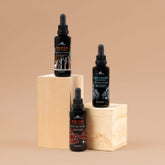
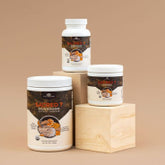
If you want targeted support — specifically for sleep and stress relief, or for cognitive function — Naturealm also makes single-mushroom tinctures for Reishi, Chaga, and Lion's Mane. Each is dual-extracted for full-spectrum potency and drops easily under the tongue or into a drink.
The goal is just to make it easy to be consistent. That's where the benefits actually live.
Naturealm Sacred 7 Mushroom Extract Powder is made from 100% fruiting bodies, USDA Organic certified, and tested by third-party independent labs. The statements made on this website have not been evaluated by the FDA. This product is not intended to diagnose, treat, cure, or prevent any disease; always consult a healthcare professional before starting a new supplement.
References
-
Supaporn Pitakpawapan et al. (2025). CO₂-based supercritical extraction of reishi, lion's mane, and snow fungus: anti-inflammatory and antioxidant activity. PubMed. https://pubmed.ncbi.nlm.nih.gov/41271333/
-
Cordyceps sinensis supplementation and aerobic performance: a meta-analysis of controlled trials. PubMed (2025). https://pubmed.ncbi.nlm.nih.gov/41280379/
-
Beta-glucan structure, immune modulation, and gut microbiome interactions. PubMed (2025). https://pubmed.ncbi.nlm.nih.gov/41274724/
-
Reishi (Ganoderma lucidum) polysaccharides reduce inflammation and modulate gut microbiome in ulcerative colitis model. Begell House (2025). https://www.dl.begellhouse.com/references/708ae68d64b17c52,forthcoming,63846.html
-
Lion's mane (Hericium erinaceus) mycelium combined with undenatured type II collagen reduces cartilage degradation in osteoarthritis model. International Journal of Medical Sciences (2025). https://pmc.ncbi.nlm.nih.gov/articles/PMC12964575/pdf/ijmsv23p0815.pdf
-
Hericium coralloides: beta-glucan content, neuroactive compounds, and NGF/BDNF upregulation in preclinical models. Springer (2026). https://link.springer.com/article/10.1007/s44187-026-00938-5
-
Reishi, oyster mushroom, and poplar mushroom: antioxidant enzyme preservation and lipid oxidation reduction in stress models. New Zealand Journal of Botany (2025). https://rsnz.onlinelibrary.wiley.com/doi/abs/10.1002/nzb2.70056
-
Shiitake (Lentinula edodes) supplementation reduces total cholesterol, LDL, and cardiac risk markers over 9 weeks. Korean Journal of Agricultural Science (2026). https://cdn.apub.kr/journalsite/sites/kjoas/2026-053-01/N0030530107/N0030530107.pdf
-
Enoki mushroom (Flammulina rossica) extract restores immune cell balance and spleen immune activity in immunosuppressed mice. Molecules (2023). https://pmc.ncbi.nlm.nih.gov/articles/PMC10421243/pdf/molecules-28-05825.pdf
-
Naturealm / Shroomer. Chaga ORAC value and antioxidant properties. Naturealm Blog. https://www.naturealm.co/blogs/news/is-chaga-mushroom-an-antioxidant-whats-chagas-orac