
Decaf Mushroom Coffee: How to Make It at Home
Decaf mushroom coffee is decaffeinated coffee with mushroom extract mixed in. You can buy it as a ready-made mix, or make it at home by stirring 1 level teaspoon of mushroom extract powder into the decaf you already like. Decaf isn't caffeine-free: the FDA says an 8-ounce cup typically has 2 to 15mg, compared with about 96mg in regular brewed coffee. The home version lets you pick your coffee, your decaf method, and your mushroom dose, and a teaspoon of Sacred 7 adds 1,000mg of seven fruiting body mushrooms for about 31 cents. Mushroom research is still small, so drink it because you like the cup, not for a promise.

What Is Decaf Mushroom Coffee?
Decaf mushroom coffee is decaffeinated coffee blended with powdered mushroom extract, usually Lion's Mane, Chaga, Reishi, or Cordyceps.
It comes two ways. Ready-made mixes combine decaf coffee and mushroom extract in one bag or packet, so the coffee, the mushrooms, and the ratio are chosen for you. The do-it-yourself version starts with any decaf you already drink and adds a measured scoop of mushroom extract powder. Both give you a familiar cup with very little caffeine. The difference is how much control you have over what's in it.
How Much Caffeine Is in Decaf Mushroom Coffee?
Expect about 2 to 15mg of caffeine in an 8-ounce cup, the same as plain decaf, because mushroom extract adds no caffeine.
The FDA puts typical decaf at 2 to 15mg per 8 ounces. When researchers at the University of Florida tested decaf from coffee shops, McCusker and colleagues found 0 to 13.9mg in a 16-ounce cup, and 3 to 15.8mg in a single shot of decaf espresso (Journal of Analytical Toxicology, 2006). That's a small fraction of regular coffee, which runs about 96mg per 8 ounces. If your doctor has told you to avoid caffeine completely, decaf still counts, so ask before you rely on it. For zero-caffeine options, see Mushroom Coffee Without Caffeine: Your Real Options.
Free tool
Decaf isn't the only place caffeine hides. Tea, soda, and chocolate add up too (here's how much caffeine is in dark chocolate). Total your day in our caffeine calculator, decaf cups included.
What's the Easiest Way to Make Decaf Mushroom Coffee?
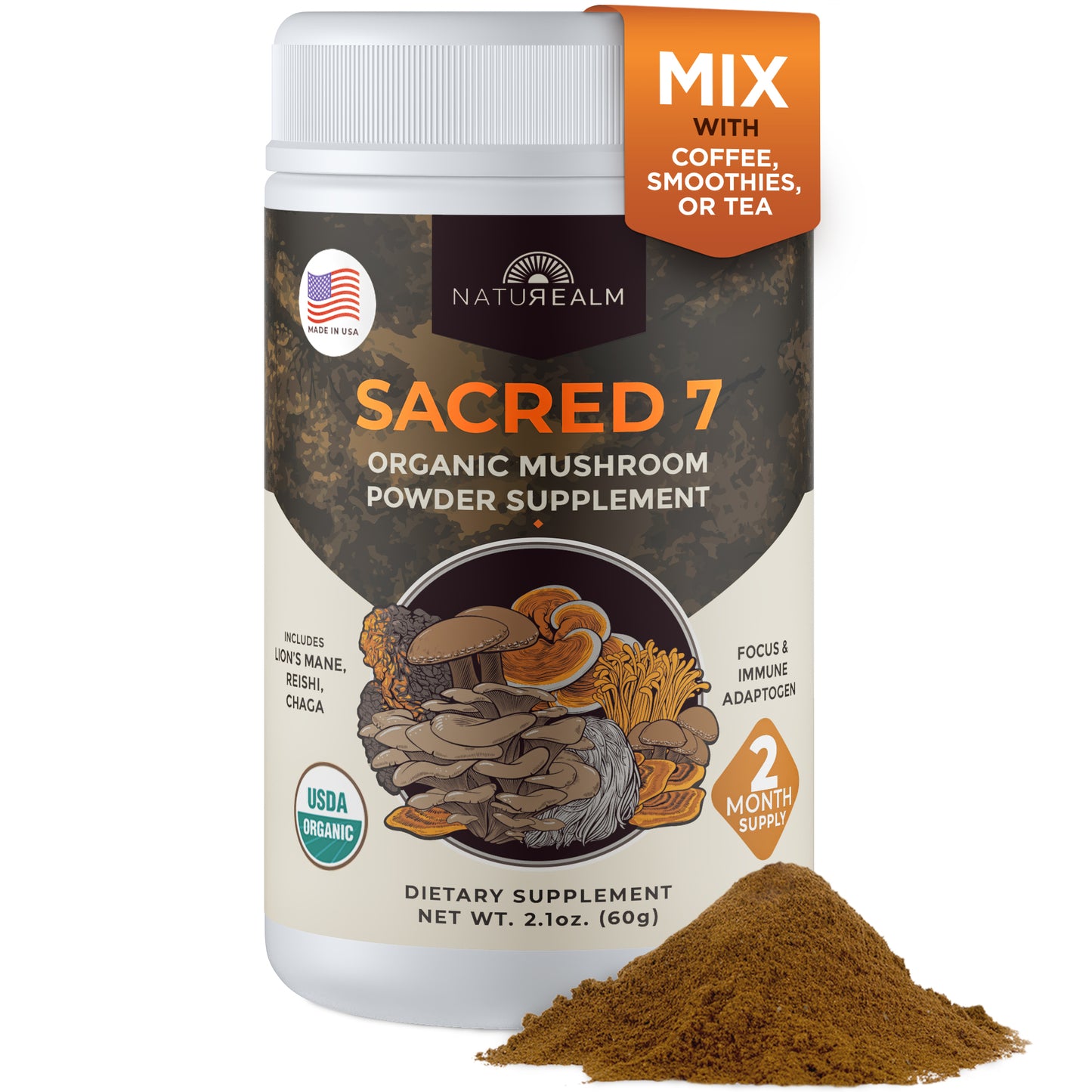
Brew the decaf you already like, then stir in 1 level teaspoon of Sacred 7 Powder.
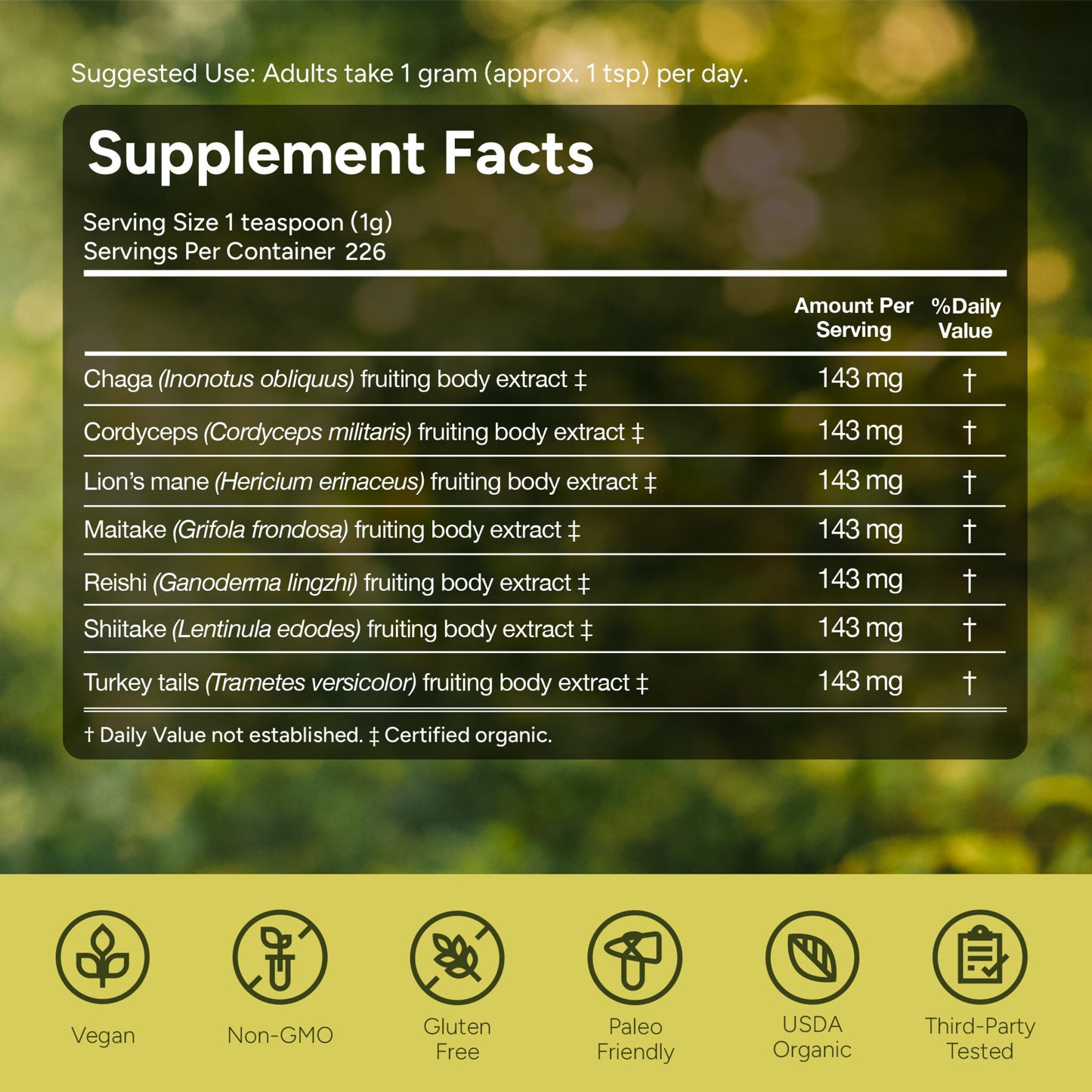
Sacred 7 has no caffeine and no coffee in it. One level teaspoon is 1,000mg of seven mushrooms, 143mg each of Lion's Mane, Reishi, Chaga, Cordyceps, Turkey Tail, Shiitake, and Maitake, all 100% fruiting body, hot water extracted, certified organic, and third-party tested by an independent lab. The 8-ounce bag is $69.99 for about 226 teaspoons, or roughly 31 cents a cup before the coffee. A Mushroom Coffee Frother mixes it in about 15 seconds.
- Brew your decaf. Drip, pour-over, French press, or a decaf espresso shot all work.
- Add the powder. Spoon 1 level teaspoon of Sacred 7 into the mug.
- Mix. Pour in a splash of the hot coffee and froth or stir until smooth, then add the rest.
- Finish it your way. Milk, oat milk, cinnamon, or a little maple syrup all fit.
More on ratios and mixing in Can You Add Mushroom Powder to Coffee?
Should You Buy a Ready-Made Mix or Make Your Own?
Make your own if you want to choose the coffee, the decaf method, and the mushroom dose; buy a mix if one packet is the whole point.
| Ready-made decaf mushroom coffee | Your decaf + 1 tsp Sacred 7 | |
|---|---|---|
| Caffeine | About 2 to 15mg per 8 oz, from the decaf | About 2 to 15mg per 8 oz, from the decaf |
| Coffee | The brand's beans and roast | Any decaf you already like |
| Decaf method | Often not listed | Your choice, including Swiss Water or CO2 |
| Mushroom amount | Varies; check mg per mushroom on the label | 1,000mg of seven mushrooms, 143mg each |
| Mushroom source | Fruiting body or mycelium, depending on brand | 100% fruiting body, hot water extracted |
| Cost per cup | Varies by brand | About 31 cents for the Sacred 7, plus your coffee |
Mixes are convenient, and some are good. The catch is that you can't adjust any one part. If you like a mix's coffee but want more mushroom, or like its mushrooms but not its roast, you're stuck with the ratio. Making your own also means the mushrooms move with you to tea, cacao, or a smoothie on days you skip coffee. The full case is in Mushroom Powder vs. Mushroom Coffee: What You're Actually Getting.
What Should You Look For on a Decaf Mushroom Coffee Label?
Look for the caffeine per serving, milligrams of each mushroom, fruiting body or mycelium, the word "extract," and third-party testing.
- Caffeine per serving: a clear number, not just "low caffeine."
- Milligrams of each mushroom: a proprietary blend lists one total and hides how much of each you get.
- Fruiting body or mycelium: mycelium grown on grain can carry leftover starch into the powder.
- Extract, not just powder: look for "hot water extract" or "dual extract," since mushroom cell walls are hard to digest unextracted.
- Third-party testing: ask for certificates of analysis covering heavy metals and microbes.
Our full checklist is in How to Choose a Mushroom Supplement Blend.
How Is Coffee Decaffeinated?
Coffee is decaffeinated before roasting, using a solvent, carbon dioxide, or water.
- Solvent methods use methylene chloride or ethyl acetate to pull caffeine from the green beans.
- CO2 process uses pressurized carbon dioxide.
- Swiss Water process uses water and carbon filters, with no added solvents.
If you'd rather skip solvents, look for "Swiss Water" or "CO2 process" on the bag. Many ready-made mixes don't say which method they use, which is one more reason to start with a decaf you've chosen yourself.
Does Decaf Mushroom Coffee Work?
It works as a lower-caffeine cup with the mushrooms in it; it isn't proven to do more than that.
The mushrooms in decaf mushroom coffee are the same ones studied in supplements, and most of that research is small, often one mushroom at a time in larger amounts than a blend holds. I walk through the studies in Is Mushroom Coffee Worth It? The practical case is simpler: if decaf is already your cup, adding a teaspoon of mushroom extract is the easiest way to take your mushrooms every day. Consistency matters more than format.
These statements have not been evaluated by the Food and Drug Administration. This product is not intended to diagnose, treat, cure, or prevent any disease.