


Natural Nootropics: How Mushrooms Compare to Caffeine and L-Theanine
Natural nootropics are plant and food compounds people use to support focus, memory, and mental energy. The three most common are caffeine, L-theanine (from tea), and Lion's Mane mushroom, and they work on very different timelines. Caffeine sharpens alertness within an hour and fades in a few. L-theanine paired with caffeine smooths the edge; in one trial the pair improved attention-switching more than caffeine alone. Lion's Mane is the slow one: it's studied for memory and cognitive function over weeks of daily use, with a small single-dose effect on focus in one pilot study. Many people stack them, coffee or tea in the morning with Lion's Mane alongside, rather than choosing one.
What Is a Natural Nootropic?
A nootropic is anything taken to support thinking: focus, memory, alertness, or mental stamina. "Natural" usually means it comes from food, tea, herbs, or mushrooms.
The word gets stretched to cover everything from a cup of coffee to synthetic compounds sold online. This guide sticks to the three natural options with the most human research behind them and that people actually combine every day: caffeine, L-theanine, and Lion's Mane (Hericium erinaceus). Cordyceps comes up too, since it's often added to morning stacks for energy. None of these are prescription stimulants, and none of them replace sleep, which is still the most reliable focus tool there is.
How Do Mushrooms Compare to Caffeine and L-Theanine?
Caffeine and L-theanine are fast and short. Lion's Mane is slow and cumulative. They answer different questions.

| Caffeine | Caffeine + L-theanine | Lion's Mane | |
|---|---|---|---|
| Where it comes from | Coffee, tea, cacao | Tea (L-theanine) plus caffeine | Mushroom fruiting body |
| Studied for | Alertness, reaction time | Calmer focus, attention-switching | Memory, cognitive function |
| How fast | Within about an hour | Within about an hour | Mostly over weeks |
| How long | A few hours | A few hours | Builds with daily use |
| Watch for | Jitters, sleep, tolerance | Still has caffeine | Mild stomach upset |
Caffeine: Fast Alertness
Caffeine is the world's most used nootropic. It blocks adenosine, the molecule that builds sleep pressure through the day, which is why it works fast and fades. In the Owen trial below, 50mg of caffeine (about half a cup of coffee) improved self-rated alertness at 60 minutes. The trade-offs are familiar: tolerance builds, more isn't better, and an afternoon cup can cost you sleep. The FDA cites about 400mg a day as an amount not generally linked to negative effects in healthy adults. More in mushroom coffee vs. regular coffee.
Free tool
How much caffeine are you already getting? Coffee, tea, soda, and even dark chocolate all count (here's how much caffeine is in dark chocolate). Add up your day in our caffeine calculator and see where you land against the FDA's 400mg.
L-Theanine: Calmer Focus
L-theanine is an amino acid found almost only in tea leaves, and it's the reason a cup of green tea feels steadier than espresso. It's most studied as a partner to caffeine. In a randomized crossover trial of 27 healthy adults, 50mg caffeine plus 100mg L-theanine improved both speed and accuracy on an attention-switching task at 60 minutes and reduced distraction on a memory task, more than caffeine alone (Owen et al., 2008). It's a short-term effect, measured in the hour or two after a dose.
Lion's Mane: Slow and Cumulative
Lion's Mane is the mushroom most studied for the brain. Its fruiting body contains hericenones, compounds linked in lab studies to nerve growth factor. In a Japanese trial, older adults with mild cognitive impairment who took Lion's Mane daily for 16 weeks scored better on a cognitive test than placebo, and the gains faded after they stopped (Mori et al., 2009). In a 2023 pilot study, healthy young adults were faster on a focus test 60 minutes after a single 1.8g dose (Docherty et al., 2023). Both studies were small. The takeaway: Lion's Mane is a daily habit, not a pre-meeting shot. More in our complete guide to Lion's Mane and what the cognitive research shows.
Cordyceps: The Energy Add-On
Cordyceps (Cordyceps militaris) isn't a focus mushroom, but it often joins morning stacks because it's studied for energy and endurance. In a small 3-week trial, active adults taking a Cordyceps blend improved VO2max compared with placebo (Hirsch et al., 2015). It isn't a stimulant either, so it sits easily next to coffee. See Cordyceps for endurance.
What Does a Natural Nootropic Stack Look Like?
The simplest stack is your usual coffee or tea in the morning, with Lion's Mane taken alongside it every day.

- Morning: coffee or tea as usual, plus Lion's Mane. Green tea gives you caffeine and L-theanine in one cup. A serving of Lion's Mane Capsules with breakfast, or Lion's Mane Powder stirred into the cup, is the easiest habit. More in Lion's Mane for focus.
- Late morning: if you want a second dose of caffeine, make it tea rather than a second espresso.
- After early afternoon: stop caffeine. Lion's Mane isn't a stimulant, so it doesn't need a cutoff.
- Every day for a month: judge Lion's Mane after four weeks, not one morning. Here's when to take mushroom supplements.
Want to cut back on caffeine? Some people use Lion's Mane as part of a slow taper. See mushroom coffee without caffeine for options. For combining more mushrooms, see how to stack mushroom supplements.
Where Can You Get Lion's Mane?
Lion's Mane Mushroom Extract Capsules are certified organic, 100% fruiting body, and hot water extracted.
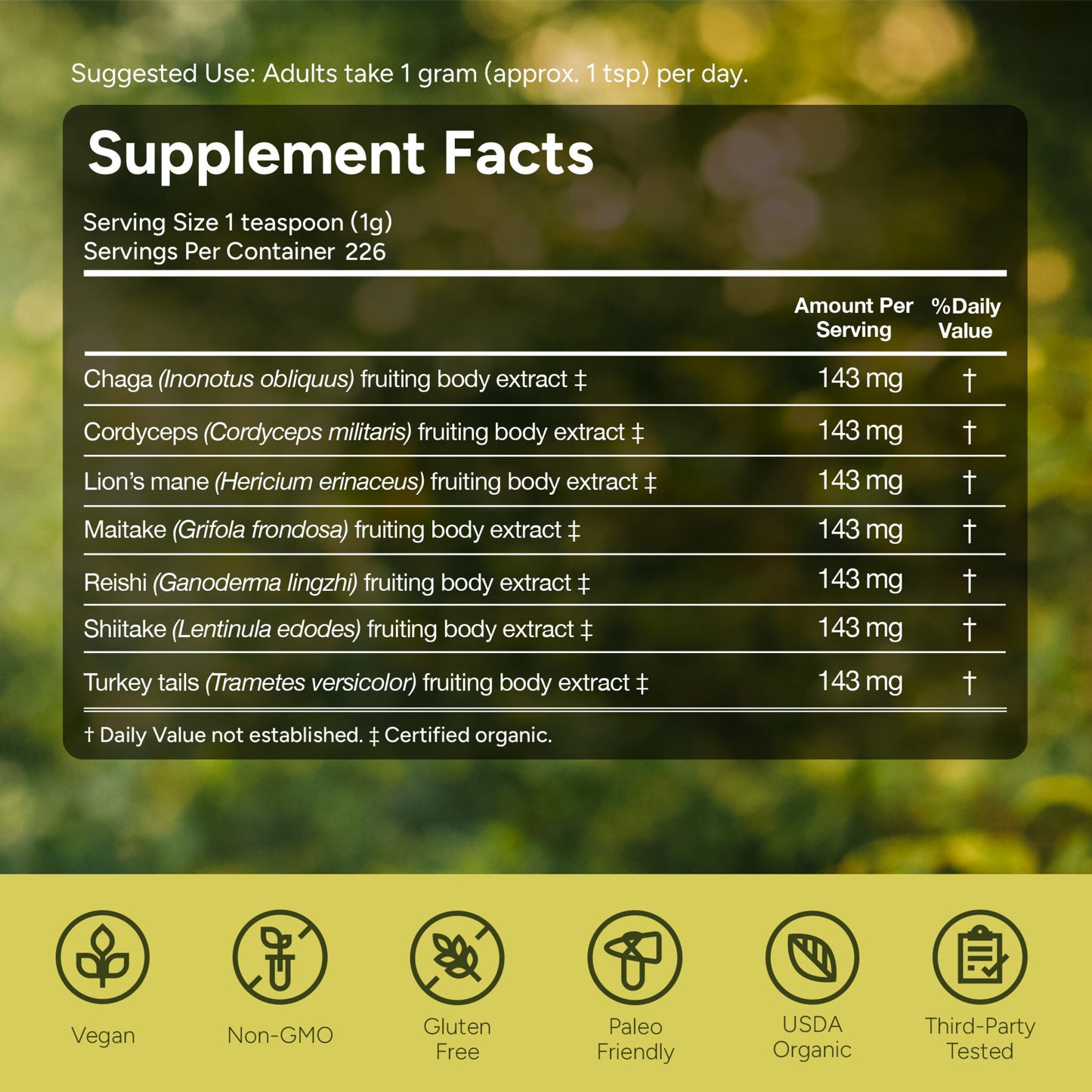
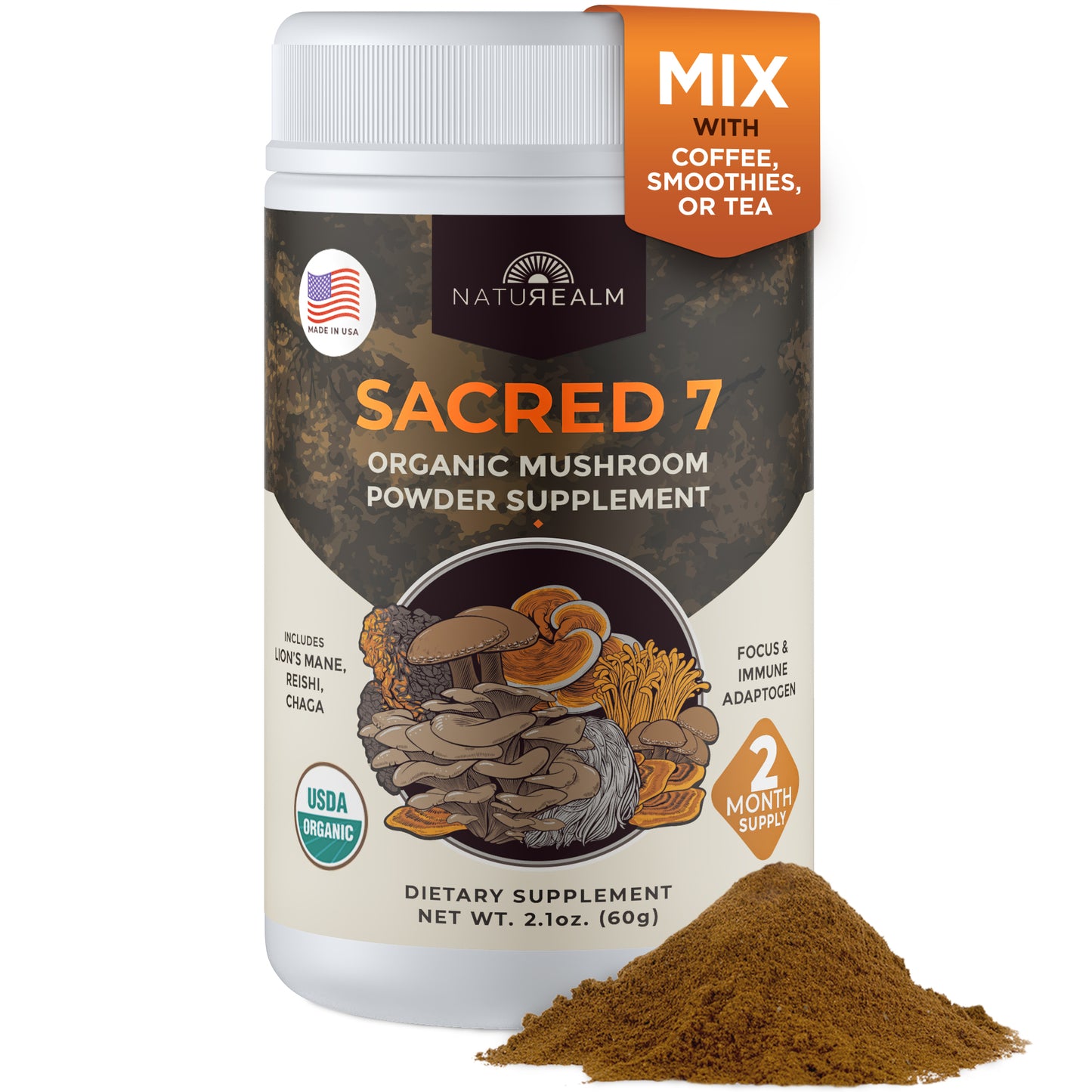
Prefer it in your coffee? Lion's Mane Powder stirs straight in. If you want Lion's Mane plus Cordyceps and five more mushrooms in one teaspoon, Sacred 7 has more than 11,000 reviews on Amazon. Finished batches are third-party tested by an independent lab.
Is It Safe to Combine Natural Nootropics?
For most healthy adults, coffee or tea with Lion's Mane is a common, low-key combination. The caffeine is the part to watch.
Check with your provider first if you're pregnant or breastfeeding, have heart rhythm issues or anxiety that caffeine makes worse, take prescription medication for focus, mood, or blood pressure, or take blood thinners or diabetes medication. Mild stomach upset is the most common side effect of Lion's Mane, and taking it with food helps. Our guide on how to talk to your doctor about mushroom supplements covers what to ask.
Frequently Asked Questions
Is Lion's Mane a Nootropic?
Yes, in the sense that it's taken to support memory and cognitive function, and it's the mushroom most studied for that. It works over weeks of daily use rather than within an hour like caffeine.
Can You Take Lion's Mane With Coffee?
Yes. It's the most popular way to take it. Lion's Mane isn't a stimulant, so it doesn't add to the caffeine.
What Is the Best Natural Nootropic Stack?
For most people: coffee or green tea in the morning plus Lion's Mane daily, with caffeine stopped by early afternoon. It pairs a fast, short effect with a slow, cumulative one.
Do Natural Nootropics Work Right Away?
Caffeine and caffeine with L-theanine work within about an hour. Lion's Mane is mainly studied over weeks; one small study saw a faster focus test an hour after a single dose.
Shop Lion's Mane Capsules →Find your mushroom match →
References
- Owen GN, Parnell H, De Bruin EA, Rycroft JA. "The Combined Effects of L-Theanine and Caffeine on Cognitive Performance and Mood." Nutritional Neuroscience, 2008. doi:10.1179/147683008X301513
- Mori K, et al. "Improving Effects of the Mushroom Yamabushitake (Hericium erinaceus) on Mild Cognitive Impairment: A Double-Blind Placebo-Controlled Clinical Trial." Phytotherapy Research, 2009. doi:10.1002/ptr.2634
- Docherty S, Doughty FL, Smith EF. "The Acute and Chronic Effects of Lion's Mane Mushroom Supplementation on Cognitive Function, Stress and Mood in Young Adults." Nutrients, 2023. doi:10.3390/nu15224842
- Hirsch KR, et al. "Chronic Supplementation of a Mushroom Blend on Oxygen Kinetics, Peak Power, and Time to Exhaustion." Journal of the International Society of Sports Nutrition, 2015 (conference abstract). doi:10.1186/1550-2783-12-S1-P45
- U.S. Food and Drug Administration. "Spilling the Beans: How Much Caffeine Is Too Much?" fda.gov
These statements have not been evaluated by the Food and Drug Administration. This product is not intended to diagnose, treat, cure, or prevent any disease.