

Medicinal Mushrooms for Cats: What the Research Says About Cancer and Immune Support
The medicinal mushrooms for cats that integrative vets discuss most are Turkey Tail, Reishi, Maitake, and Shiitake, especially for cats with cancer. Their beta-glucans and other polysaccharides interact with the immune system, and a few compounds, like Turkey Tail's PSP, have been tested in pets. The honest picture: most of the research is in people, mice, and dogs, not cats, and no mushroom has been shown to treat cancer in cats. Commercial mushroom extracts are generally considered safe for cats, but cats process supplements differently than we do, alcohol tinctures aren't a good fit, and dosing should come from your veterinarian. Use them alongside, never instead of, your vet's treatment plan.
Can Cats Take Medicinal Mushrooms?
Yes, with your vet's guidance. The common medicinal mushrooms aren't toxic to cats, but cats need careful dosing and the right format.
Cats are obligate carnivores with a liver that handles many compounds more slowly than ours, so anything new, even something as gentle as a mushroom powder, deserves a conversation with your vet first. A few ground rules:
- Never give wild mushrooms. Some wild species are deadly to cats. Stick to cultivated, tested products.
- Skip alcohol tinctures. Cats are sensitive to alcohol. A powder or capsule opened over wet food is the better fit.
- Check every ingredient. Avoid products with added flavorings, sweeteners, garlic, or onion, which are unsafe for cats.
- Start low and watch. Mild stomach upset is the most common side effect. Your vet can set a dose by weight.

How Do Medicinal Mushrooms Support a Cat's Immune System?
Medicinal mushrooms contain beta-glucans and other polysaccharides that immune cells recognize, which is why they're studied for immune support rather than as a direct treatment.
The main bioactive compounds in functional mushrooms are polysaccharides, especially beta-glucans, along with triterpenes in species like Reishi. In lab and animal research, beta-glucans bind to receptors on immune cells and help modulate the immune system, nudging immune function rather than simply switching it up or down. Researchers think this is why mushrooms are studied alongside chemotherapy, when a body's immune defenses are under strain.
Several of these mushrooms are also studied as antioxidants and anti-inflammatory compounds, and some of their polysaccharides act as prebiotics that feed beneficial gut bacteria. That matters for gut health in cats whose appetite and digestion take a hit during treatment.
What Does the Research Say About Mushrooms and Cancer in Pets?
The research is promising but early. The strongest data comes from people in Japan and China, one small dog study, and lab work. Cat-specific research is very limited.

| Mushroom compound | Who was studied | What was found |
|---|---|---|
| Turkey Tail PSP | 15 dogs with hemangiosarcoma | Dogs on the highest dose lived a median of 199 days, longer than the 86 days previously reported for untreated dogs. No placebo group, so it's a lead, not proof (Brown and Reetz, 2012). |
| Turkey Tail PSK and Shiitake lentinan | People with cancer, mostly in Japan | Used in Japan as add-ons to conventional cancer treatment since the 1970s and 1980s. |
| Maitake D-Fraction | People with cancer | Increased natural killer cell activity in a small trial (Kodama et al., 2003). |
| Chaga extract | Mice | Mice drinking Chaga extract had smaller tumors than controls (Arata et al., 2016). |
| Mushroom beta-glucan blend | 20 healthy cats | Small shifts in gut bacteria over 12 weeks, with no change in stool quality or blood chemistry (Broughton et al., 2026, conference abstract). |
In other words, there's a real scientific reason vets are interested, and there's no evidence yet that a mushroom supplement shrinks tumors or extends life in cats. Anyone promising that is ahead of the research.
Which Medicinal Mushrooms Are Most Studied for Cats?
Turkey Tail, Reishi, Maitake, Shiitake, Chaga, Cordyceps, and Lion's Mane are the medicinal mushrooms most often discussed for cats.

Turkey Tail Mushroom (Trametes versicolor)
The most researched mushroom for pets. Its polysaccharides PSK and PSP are studied for immune support, and PSP is the compound tested in the dog study above. The FDA has also allowed clinical trials of Turkey Tail in people with breast cancer. More in our Turkey Tail guide.
Reishi Mushroom (Ganoderma lucidum)
Used in Traditional Chinese Medicine for about 2,000 years. Reishi's triterpenes and beta-glucans are studied for immune support, anti-inflammatory activity, and liver function. It's often grouped with adaptogens like ashwagandha, though no one has studied it for stress in cats. Reishi may increase bleeding risk, so tell your vet before any surgery. See emerging Reishi research.
Maitake (Grifola frondosa)
Maitake's D-Fraction is a beta-glucan studied for natural killer cell activity in people. Maitake is also studied for blood sugar, which matters for diabetic cats on insulin. Read more about Maitake.
Shiitake (Lentinula edodes)
A culinary mushroom whose beta-glucan, lentinan, was first isolated by Japanese researchers in 1970 (Chihara et al.). Lentinan is found in both the mycelium and fruiting body, and Shiitake also supplies minerals like zinc and selenium. More in our Shiitake guide.
Chaga (Inonotus obliquus)
Among the most antioxidant-rich mushrooms, and studied in the lab for antiviral and antibacterial activity. Chaga is high in oxalates, so it's not a fit for cats with a history of oxalate bladder stones. See Chaga's antioxidant profile.
Cordyceps
Studied in people and animals for energy, oxygen use, and circulation. Some integrative vets use it for older cats who've slowed down. Learn more about Cordyceps.
Lion's Mane (Hericium erinaceus)
The mushroom most studied for brain health and cognitive function. Its hericenones and erinacines support nerve growth factor in lab studies, which is why it comes up for aging cats with signs of cognitive decline. See Lion's Mane and cognitive function.
Where Can You Get a Simple Mushroom Extract to Discuss With Your Vet?
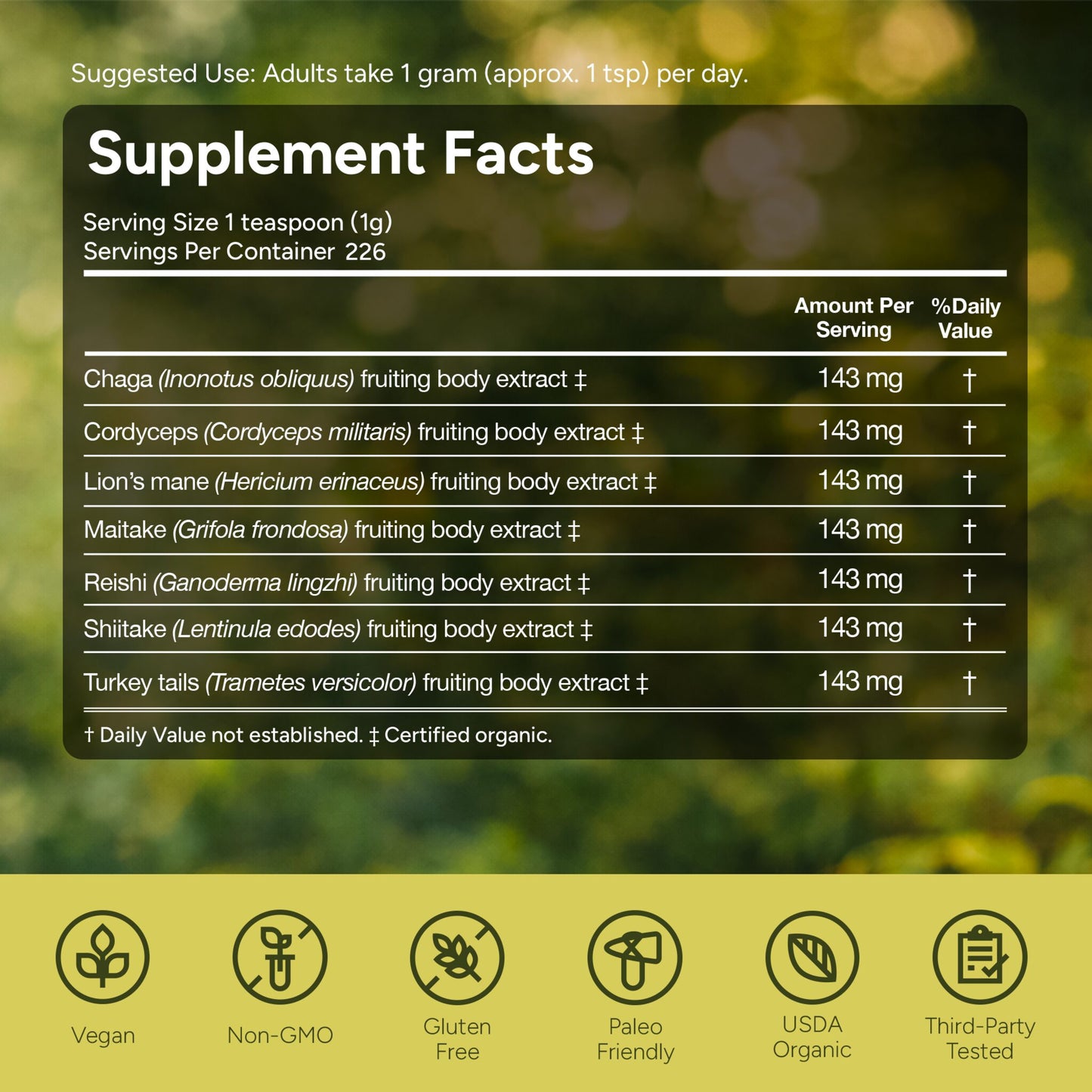
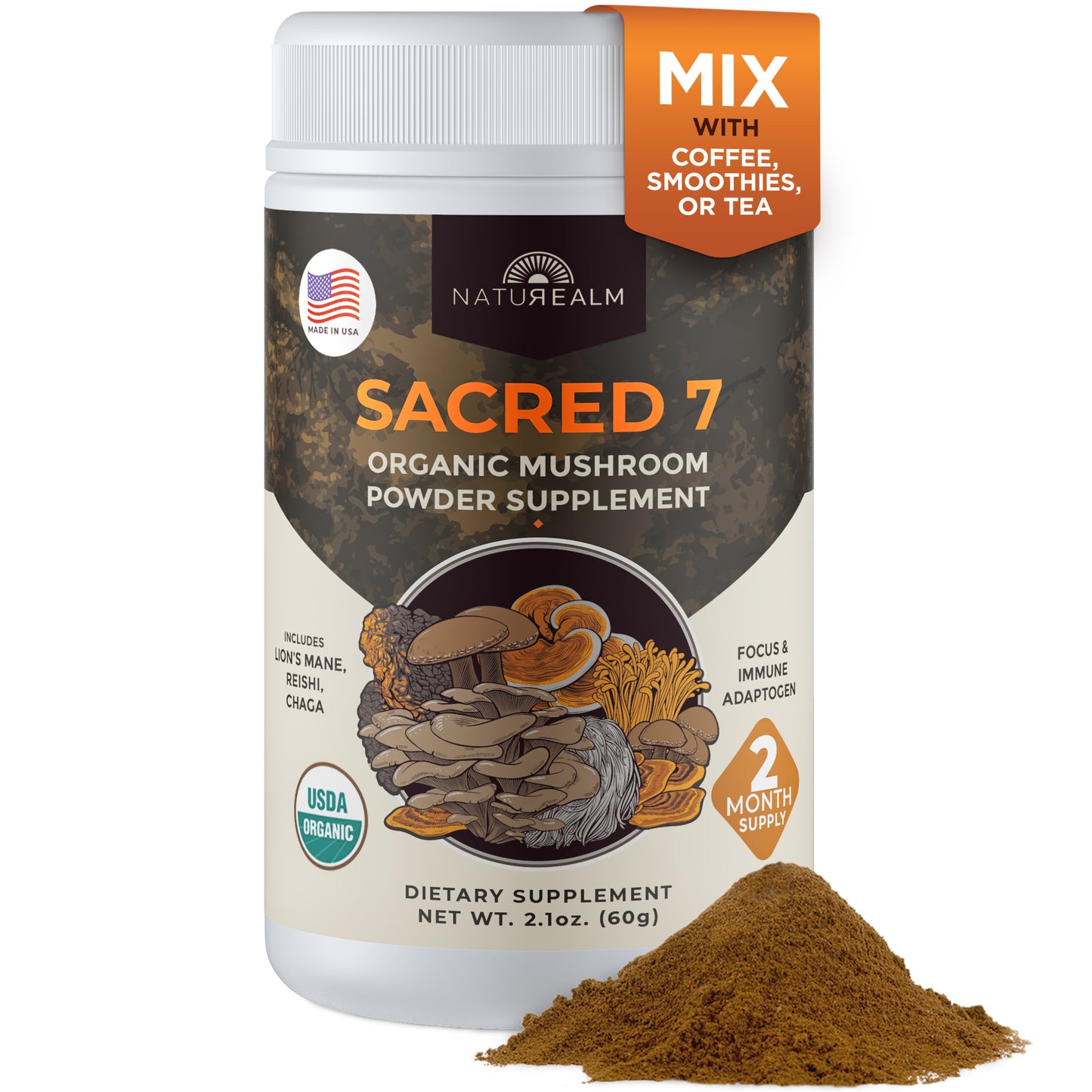
Sacred 7 Mushroom Extract Powder is made for people, but its label is the kind integrative vets ask to see: just seven mushroom extracts and nothing else.
Each level teaspoon has 143mg each of Turkey Tail, Reishi, Maitake, Shiitake, Chaga, Cordyceps, and Lion's Mane: 100% fruiting body, hot water extracted at 215°F, USDA Certified Organic, and spray dried with no carriers, flavorings, or sweeteners. It's alcohol-free, and finished batches are tested by an independent third-party lab. Bring the label to your vet, and let them decide whether it fits your cat's plan and how much to use.
Can Mushrooms Help With Other Conditions in Older Cats?
Mushrooms are studied for several issues common in senior cats, but the research is mostly outside cats, so treat these as questions for your vet.
- Arthritis: Reishi and Chaga are studied for anti-inflammatory activity. Never combine supplements with pain medication without your vet's okay.
- Diabetes: Maitake and Reishi are studied for blood sugar effects. In a cat on insulin, that could change how much insulin they need, so this one needs close monitoring.
- Brain health: Lion's Mane is studied for cognitive function in older people and animals.
- Gut health: Turkey Tail and Shiitake polysaccharides act as prebiotics in lab and human studies.
- Energy and circulation: Cordyceps is studied for oxygen use and endurance in people.
How Do You Choose a Mushroom Supplement for Your Cat?
Choose a fruiting body extract with a named extraction method, third-party testing, no alcohol, and no added flavorings.
- Fruiting body, not grain-grown mycelium. The research compounds are concentrated in fruiting body extracts, and mycelium grown on grain can carry starch filler. Here's why the difference matters.
- A named extraction method. Hot water extraction pulls out beta-glucans. Dual extraction adds alcohol for triterpenes, but for cats, ask your vet whether an alcohol-free powder is the better choice. Compare extraction methods.
- Powder over liquid extract. Mushroom powder mixes easily into wet food and lets your vet set a precise amount. Skip alcohol-based liquid extracts.
- Third-party testing. Mushrooms absorb heavy metals from where they grow, and small bodies are more sensitive to contaminants. Ask for certificates of analysis.
- Single species or a blend. A mushroom blend covers several species at once. A single species may be easier for your vet to dose and adjust.
What Should You Ask Your Vet About Mushrooms for Your Cat?
Ask whether a mushroom supplement fits your cat's diagnosis and medications, how much to give, and what to watch for.
- Is a mushroom supplement safe alongside my cat's chemotherapy, radiation, or other medications?
- Which species makes sense for my cat, and how much should I give based on weight?
- Should we stop it before surgery or dental work?
- Does my cat have diabetes, kidney disease, or a history of bladder stones that changes the choice?
- What changes in appetite, stool, or energy should make me call you?
A veterinary oncologist or an integrative vet who works with herbs and medicinal mushrooms can help build a plan. For the human version of this conversation, see how to talk to your doctor about mushroom supplements.
Frequently Asked Questions
How Much Mushroom Powder Should I Give My Cat?
Your veterinarian should set the amount, based on your cat's weight. There's no standard cat dose, and a serving made for people is not a cat serving. Start with a small amount mixed into wet food, then watch appetite, stool, and energy. Mild stomach upset is the most common side effect, so call your vet if it appears.
What Side Effects Should I Watch for in My Cat?
Mild stomach upset is the most common side effect, so watch appetite, stool, and energy after starting. Reishi may increase bleeding risk, so tell your vet before surgery or dental work. Maitake and Reishi are studied for blood sugar effects, which matters for diabetic cats on insulin. Call your vet about any change.
Can Medicinal Mushrooms Replace My Cat's Cancer Treatment?
No. There's no evidence that a mushroom supplement shrinks tumors or extends life in cats, and most of the research is in people, mice, and dogs. Mushrooms belong alongside your vet's plan, never instead of it. Ask your veterinary oncologist whether a supplement fits with chemotherapy or radiation before starting anything.
Can I Give My Cat the Mushroom Supplement I Take?
Only if your vet approves it and the label fits a cat. Skip alcohol tinctures and anything with added flavorings, sweeteners, garlic, or onion. A powder with nothing but mushroom extracts is easiest for a vet to review, so bring the label along. More in mushrooms for dogs and cats.
Shop Sacred 7 Powder →Find your own mushroom match →
Important: This article is not veterinary advice. Always talk with a licensed veterinarian before adding any mushroom supplement or medicinal herbs to your cat's routine, especially during cancer treatment.
References
- Brown DC, Reetz J. "Single Agent Polysaccharopeptide Delays Metastases and Improves Survival in Naturally Occurring Hemangiosarcoma." Evidence-Based Complementary and Alternative Medicine, 2012. doi:10.1155/2012/384301
- Kodama N, et al. "Effect of Maitake (Grifola frondosa) D-Fraction on the Activation of NK Cells in Cancer Patients." Journal of Medicinal Food, 2003. doi:10.1089/109662003772519949
- Arata S, et al. "Continuous Intake of the Chaga Mushroom (Inonotus obliquus) Aqueous Extract Suppresses Cancer Progression and Maintains Body Temperature in Mice." Heliyon, 2016. doi:10.1016/j.heliyon.2016.e00111
- Chihara G, et al. "Fractionation and Purification of the Polysaccharides with Marked Antitumor Activity, Especially Lentinan, from Lentinus edodes." Cancer Research, 1970.
- Saleh MH, et al. "Immunomodulatory Properties of Coriolus versicolor: The Role of Polysaccharopeptide." Frontiers in Immunology, 2017. doi:10.3389/fimmu.2017.01087
- Jeitler M, et al. "Significance of Medicinal Mushrooms in Integrative Oncology: A Narrative Review." Frontiers in Pharmacology, 2020. doi:10.3389/fphar.2020.580656
- Broughton M, et al. "Effects of a Mushroom-Based Beta-Glucan Blend on the Gastrointestinal Health and Immune Function of Healthy Adult Cats." Journal of Animal Science (conference abstract), 2026. doi:10.1093/jas/skag272.063
These statements have not been evaluated by the Food and Drug Administration. This product is not intended to diagnose, treat, cure, or prevent any disease.